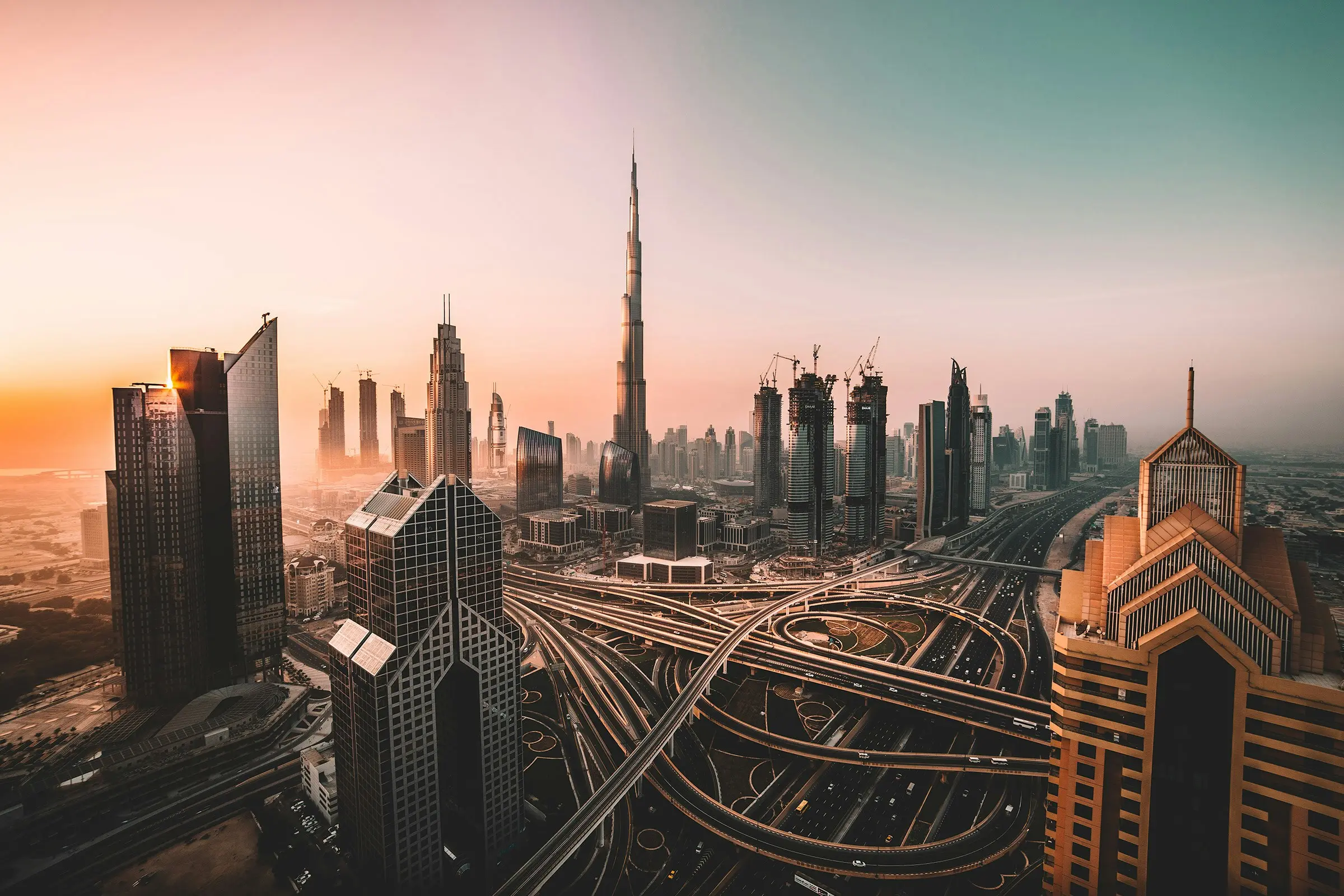
Downtown Dubai Investment Guide 2025: Premium Properties Near Burj Khalifa
Complete guide to investing in Downtown Dubai - home to Burj Khalifa and Dubai Mall. Price trends, rental yields, best addresses, Golden Visa properties, and premium investment strategies.

Key Takeaways
- Downtown Dubai is the crown jewel of Emaar Properties, home to the Burj Khalifa, Dubai Mall, and the Dubai Fountain, representing the city's most recognized and liquid real estate market.
- Average prices in 2026 range from AED 2,900 to AED 3,250+ per square foot, with ultra-luxury residences in the Opera District and Burj Khalifa commanding prices up to AED 6,000+ per square foot.
- While mid-market communities offer higher yields, Downtown Dubai provides stable, low-risk gross rental yields of 4% to 6% for long-term lets, and up to 7% to 10% for short-term holiday homes.
- As a mature master community, Downtown Dubai has very little remaining undeveloped land, meaning future price appreciation will be driven by scarcity and secondary market transactions.
- High-end apartments starting from AED 2 Million qualify international buyers for the 10-year UAE Golden Visa, offering long-term residency benefits.
Downtown Dubai Investment Guide 2026: Premium Properties Near Burj Khalifa
TL;DR — Key Takeaways
- Prestige Location: Downtown Dubai is the crown jewel of Emaar Properties, home to the Burj Khalifa, Dubai Mall, and the Dubai Fountain, representing the city's most recognized and liquid real estate market.
- Premium Pricing: Average prices in 2026 range from AED 2,900 to AED 3,250+ per square foot, with ultra-luxury residences in the Opera District and Burj Khalifa commanding prices up to AED 6,000+ per square foot.
- Yield Profile: While mid-market communities offer higher yields, Downtown Dubai provides stable, low-risk gross rental yields of 4% to 6% for long-term lets, and up to 7% to 10% for short-term holiday homes.
- Supply Constraints: As a mature master community, Downtown Dubai has very little remaining undeveloped land, meaning future price appreciation will be driven by scarcity and secondary market transactions.
- Golden Visa Eligibility: High-end apartments starting from AED 2 Million qualify international buyers for the 10-year UAE Golden Visa, offering long-term residency benefits.
Why Downtown Dubai Stands Alone
Downtown Dubai, originally launched by Emaar Properties in the early 2000s, has transformed from a large military base into the world's most prestigious urban square mile. Spanning approximately 500 acres, this master-planned community has become the focal point of global interest in the United Arab Emirates. It is not merely a residential area; it is a global tourist hub, a cultural center, and a commercial district all rolled into one.
For real estate investors, Downtown Dubai represents a defensive "blue-chip" asset. Just like buying real estate in Manhattan's Upper East Side, London's Mayfair, or Paris's 1st Arrondissement, owning a property in Downtown Dubai is a bet on long-term value preservation, high liquidity, and international appeal. Even during market cycles of consolidation, the proximity to world-famous landmarks protects property values from the high volatility seen in younger, outlying communities.

The Landmarks Shaping Value
The premium command of Downtown Dubai real estate is directly driven by its proximity to four world-renowned landmarks. Property values within the community are highly stratified based on views of these icons:
- Burj Khalifa: Standing at 828 meters, the world’s tallest building is not just an engineering marvel but a premium address. Residences inside the tower, including the Armani Residences, trade at a substantial premium.
- The Dubai Mall: Attracting over 80 million visitors annually (according to Emaar Properties' official disclosures), the mall is a massive economic driver. Having direct, air-conditioned access to the mall increases the rental appeal and occupancy rates of surrounding residential towers.
- The Dubai Fountain: The world's largest choreographed fountain system draws thousands of tourists daily. Apartments with a direct, unobstructed view of the fountain command a 20% to 35% premium in both the sales and rental markets.
- Dubai Opera: A 2,000-seat multi-format performing arts center that has anchored the "Opera District," turning the surrounding sub-community into a hub for luxury residential towers like Il Primo, Opera Grand, and Act One Act Two.
Location & Connectivity
Downtown Dubai occupies a strategic, central position on the map of Dubai, nestled between Sheikh Zayed Road (E11) and Financial Centre Road. This positioning places it directly adjacent to the Dubai International Financial Centre (DIFC) and Business Bay, making it highly convenient for corporate professionals.
| Destination | Distance | Commute Time |
|---|---|---|
| Dubai International Financial Centre (DIFC) | 2.5 km | 5 mins |
| Business Bay | 2 km | 5 mins |
| Dubai International Airport (DXB) | 15 km | 15 mins |
| Dubai Marina & JBR | 21 km | 20 mins |
| Palm Jumeirah | 18 km | 18 mins |
Public Transport and Walkability
The community is served by the Burj Khalifa/Dubai Mall Metro Station, which connects directly to the mall via an air-conditioned, 820-meter glass bridge. Furthermore, the district is highly pedestrian-friendly. The Sheikh Mohammed bin Rashid Boulevard is a 3.5-kilometer palm-lined loop filled with cafes, restaurants, and retail options, encouraging an active outdoor lifestyle during the cooler months.
Property Market Dynamics: 2026 Data
According to official Dubai Land Department (DLD) and industry transaction logs, Downtown Dubai continues to set benchmarks for prime residential values. The average price per square foot across the entire community hovers between AED 2,900 and AED 3,250, showing a steady appreciation trend as ready inventory becomes increasingly scarce.
Sales Price & Rental Rate Breakdown (Ready Properties)
The table below illustrates the typical pricing tiers and annual rental income for standard-to-premium apartments in the secondary market as of 2026:
| Property Type | Typical Size (sqft) | Average Sales Price (AED) | Average Annual Rent (AED) |
|---|---|---|---|
| Studio | 450 – 600 | AED 1,450,000 – 1,900,000 | AED 85,000 – 110,000 |
| 1-Bedroom | 750 – 950 | AED 2,200,000 – 3,100,000 | AED 135,000 – 180,000 |
| 2-Bedroom | 1,200 – 1,500 | AED 3,600,000 – 5,200,000 | AED 200,000 – 290,000 |
| 3-Bedroom | 1,700 – 2,200 | AED 5,500,000 – 8,500,000 | AED 310,000 – 420,000 |
| 4-Bedroom / Penthouse | 3,000 – 6,000 | AED 10,000,000 – 35,000,000 | AED 500,000 – 900,000+ |
Note: Individual units with full Burj Khalifa and Fountain views in signature towers (like the Address branded residences or Il Primo) can trade at AED 4,500 to AED 6,500+ per square foot.

Investment Analysis: Rental Yields & ROI
When evaluating Downtown Dubai, investors must understand that this is a capital preservation and capital appreciation market, rather than a high-yield play. If you are seeking double-digit rental yields, communities like Jumeirah Village Circle (JVC) or Arjan are more appropriate. However, if you seek lower vacancy risk, institutional-grade management, and high capital growth, Downtown is unmatched.
Long-Term vs. Short-Term Rental Strategy
- Long-Term Rentals: Yields typically range between 4.0% and 5.5% net. Because of the high demand from executives working in DIFC and Downtown, occupancy rates consistently exceed 92%.
- Short-Term Rentals (Holiday Homes): Yields can reach 7.0% to 10.0% gross (approx. 5.5% to 7% net after management fees and utility costs). The proximity to Dubai Mall and the Burj Khalifa ensures a steady stream of tourists year-round, resulting in occupancy rates averaging 78% to 85% annually.
Financial and Corporate Tax Considerations
In the UAE, individual property investors holding assets in their personal names are exempt from personal income tax and capital gains tax. Furthermore, the 9% UAE federal corporate tax (introduced in 2023) does not apply to rental income or capital gains generated by individuals from personal real estate holdings. However, investors purchasing properties through a corporate structure (such as a Free Zone or LLC company) should consult a tax professional, as corporate profits exceeding AED 375,000 are subject to the 9% rate.
Top Residential Clusters & Buildings
Downtown Dubai features several distinct residential enclaves, each offering a different lifestyle and price point:
1. The Opera District
Located adjacent to the Dubai Opera, this is the newest and most luxurious enclave in Downtown. It is characterized by ultra-premium finishes, large layouts, and direct Burj Khalifa views.
- Il Primo: The pinnacle of luxury, offering full-floor and half-floor apartments with massive balconies.
- Opera Grand: Known for its sleek design, theater-style layouts, and proximity to the opera house.
- Act One Act Two: A more accessible premium option within the Opera District, popular for rental investments.
2. The Boulevard & Old Town
- Old Town / Old Town Island: A complete contrast to the vertical towers, Old Town features low-rise, Arabic-vernacular architecture. With thick walls, clay plaster finishes, and leafy courtyards, it offers a quieter, traditional lifestyle that is highly popular with European expats.
- Burj Plaza & Boulevard Residences: Towers built along the main boulevard loop, providing immediate access to the street-level retail and dining options.
3. Branded Residences
Branded residences command the highest rental premiums in the market due to their five-star hotel services, concierge facilities, and elite status:
- The Address Sky View: Features a sky bridge connecting two towers, offering a famous infinity pool and panoramic views.
- The Address Boulevard: Directly connected to Dubai Mall, popular with business travelers and luxury tourists.
- Armani Residences: Located inside the Burj Khalifa itself, featuring custom interiors designed personally by Giorgio Armani.
The Purchasing Process for Expats
As a designated freehold zone, foreigners of any nationality can purchase and own 100% of properties in Downtown Dubai.
One-Time Transaction Fees
To buy a property, investors should budget approximately 6% to 7% of the purchase price in one-time fees:
- Dubai Land Department (DLD) Fee: 4% of the purchase price (mandatory).
- Real Estate Agent Commission: 2% of the purchase price (+ 5% VAT).
- DLD Registration Trustee Fee: AED 2,000 to AED 4,000 depending on the property value.
- Developer NOC Fee: AED 1,000 to AED 5,000 for secondary market transfers.
Golden Visa Integration
For properties valued at AED 2,000,000 (approx. USD 545,000) or more, foreign buyers are eligible to apply for the UAE 10-year Golden Visa. This visa allows the investor, their spouse, children, and domestic staff to reside in the UAE without the need for local employment sponsorship. The property can be purchased off-plan or ready, and can be mortgaged through local UAE banks, provided the buyer's equity in the property is at least AED 2 Million.
Frequently Asked Questions
What is the average price per square foot in Downtown Dubai in 2026?
The average price per square foot in Downtown Dubai ranges between AED 2,900 and AED 3,250 for standard to premium ready properties. Ultra-luxury projects or those with unobstructed Burj Khalifa views can command between AED 4,500 and AED 6,500+ per square foot.
Can expats own 100% of a property in Downtown Dubai?
Yes, Downtown Dubai is a designated freehold area. Foreign investors, whether resident or non-resident, have complete 100% ownership rights over the property and land, registered directly with the Dubai Land Department (DLD).
What rental yields can an investor expect in Downtown Dubai?
Investors can expect gross rental yields of 4.0% to 5.5% for standard long-term rental agreements. For properties optimized for short-term holiday homes (Airbnb), gross yields can range from 7.0% to 10.0%, driven by Downtown's status as a major tourism destination.
Conclusion
Downtown Dubai remains the benchmark for premium urban living and real estate investment in the Middle East. While newer communities continue to launch across the city, none can replicate the iconic combination of the Burj Khalifa, the Dubai Mall, and the prestige of Emaar's master planning.
With average sales prices holding strong at AED 2,900 to AED 3,250/sqft and stable 4% to 6% long-term yields, the area represents a safe-haven asset for international capital. Whether you are seeking a luxury home for your family or a high-performing rental property that qualifies for the Golden Visa, Downtown Dubai is an essential cornerstone of any global real estate portfolio.
Interested in Downtown Dubai? Browse all properties or contact our expert advisors to find your next prime investment.
Data sourced from the Dubai Land Department (DLD) and Emaar Properties investor relations reports. Last updated: May 2026. Prices and yields are subject to change based on market conditions.
Sources and further reading
Area due diligence checklist
Use this guide to understand the community, then validate the exact building or project. Check recent transaction prices, current listings, service charges, access to main roads, commute times, parking, public transport, schools, retail, nearby construction, and future supply. Two properties in the same area can perform very differently if one has a better view, layout, handover date, or building reputation.
For investors, compare gross yield with realistic net yield after service charges, vacancy, furnishing, management, and maintenance. For end users, prioritize daily convenience, noise, traffic patterns, walkability, and long-term livability. The right area decision should balance lifestyle fit with liquidity: a property that is easy to rent or resell gives you more flexibility if your plans change.
How to evaluate this area in practice
Use this area guide to understand the community, then narrow the analysis to the exact building, project, or cluster. Start with recent transactions, current asking prices, service charges, parking, commute routes, public transport, retail, schools, parks, and nearby construction. The same area can contain premium buildings, average buildings, and weak resale stock, so avoid relying on community-level averages alone.
For investment decisions, compare realistic net yield after service charges, vacancy, maintenance, furnishing, and management. For end-use decisions, compare daily convenience: traffic at peak hours, noise, walkability, access to work, school runs, and lifestyle fit. Future supply also matters; a large handover pipeline can affect rents and resale values if demand does not absorb it quickly.
A strong area choice usually has three things working together: livability, liquidity, and price discipline. If the property is easy to rent, easy to resell, and bought at a sensible entry price, the decision has more flexibility. Use this guide as the map, but validate the asset itself before making an offer.
Frequently Asked Questions
What is the average price per square foot in Downtown Dubai in 2026?
The average price per square foot in Downtown Dubai ranges between AED 2,900 and AED 3,250 for standard to premium ready properties. Ultra-luxury projects or those with unobstructed Burj Khalifa views can command between AED 4,500 and AED 6,500+ per square foot.
Can expats own 100% of a property in Downtown Dubai?
Yes, Downtown Dubai is a designated freehold area. Foreign investors, whether resident or non-resident, have complete 100% ownership rights over the property and land, registered directly with the Dubai Land Department (DLD).
What rental yields can an investor expect in Downtown Dubai?
Investors can expect gross rental yields of 4.0% to 5.5% for standard long-term rental agreements. For properties optimized for short-term holiday homes (Airbnb), gross yields can range from 7.0% to 10.0%, driven by Downtown's status as a major tourism destination.
Editorial Team
AiGentsRealtyThe AiGentsRealty editorial team consists of real estate experts, market analysts, and property consultants with over 20 years of combined experience in the Dubai real estate market.
Related Articles
Dubai Hills Villas for Sale: Asking-Price Changes by Subcommunity This Week
A dated 22 August 2026 asking-price ledger for Maple, Sidra Villas and Park Gate, with a clear evidence gap for weekly same-listing changes.
Area GuidesDubai Marina Apartments for Sale: New Listings and Asking-Price Changes This Week
A dated 16–22 August 2026 ledger of Dubai Marina apartment asking-price observations, with clear limits on new-listing and price-change claims.
Area GuidesBusiness Bay Apartments for Sale: What Different Asking-Price Budgets Show This Week
Compare Business Bay apartments for sale across dated asking-price budget bands, with portal examples, practical filters, and clear limits on what the data shows.
Ready to Invest in Dubai?
Use Sophia AI to compare Dubai property options based on your budget, goals, and preferences.
Ask Sophia AI