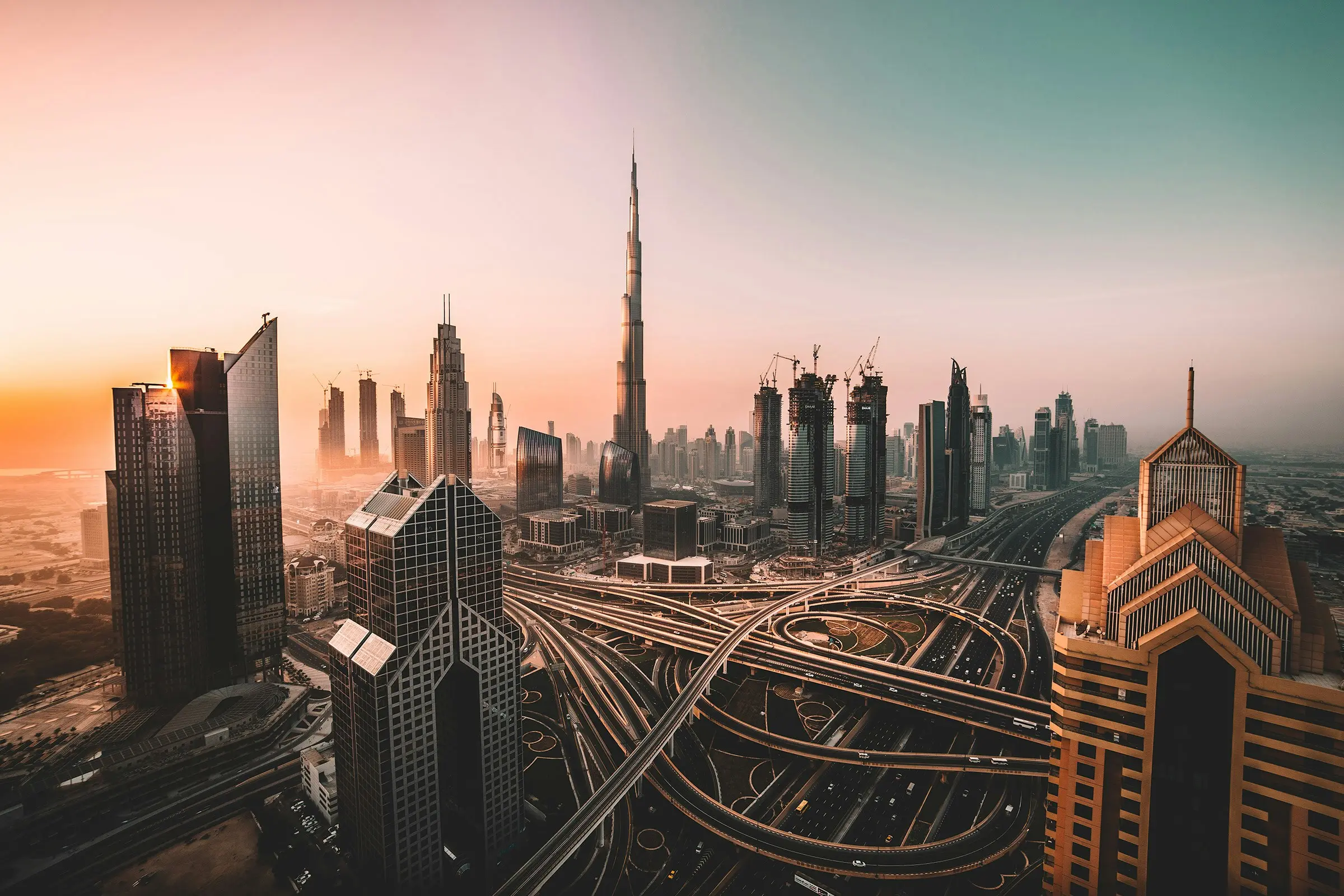
Why Wait-and-See is the Wrong Strategy for Dubai Real Estate in 2026
Geopolitical noise often causes hesitation. Discover why adopting a 'wait-and-see' approach in Dubai's 2026 market could mean missing out on significant capital appreciation.

Key Takeaways
- - **The Cost of Geopolitical Hesitation:** Historically, regional Middle Eastern tensions drive a 'flight to safety' rather than a market crash, channeling global wealth directly into Dubai's real estate sector.
- - **Record Q1 2026 Market Performance:** The Dubai Land Department (DLD) recorded a staggering AED 252 billion in transaction values in Q1 2026, registering a 31% year-on-year increase.
- - **Maturing and Stabilizing Capital:** An 8% growth in the investor base—driven by over 29,000 new investors—coupled with cash-heavy transaction profiles, reduces the risk of leverage-induced sell-offs.
- - **Prime Scarcity and Appreciation:** High-end villas and branded residences are facing tight supply, with investments in the luxury segment growing 26% year-on-year to AED 87.71 billion.
Why Wait-and-See is the Wrong Strategy for Dubai Real Estate in 2026
TL;DR / Key Takeaways
- The Cost of Geopolitical Hesitation: Historically, regional Middle Eastern tensions drive a 'flight to safety' rather than a market crash, channeling global wealth directly into Dubai's real estate sector.
- Record Q1 2026 Market Performance: The Dubai Land Department (DLD) recorded a staggering AED 252 billion in transaction values in Q1 2026, registering a 31% year-on-year increase.
- Maturing and Stabilizing Capital: An 8% growth in the investor base—driven by over 29,000 new investors—coupled with cash-heavy transaction profiles, reduces the risk of leverage-induced sell-offs.
- Prime Scarcity and Appreciation: High-end villas and branded residences are facing tight supply, with investments in the luxury segment growing 26% year-on-year to AED 87.71 billion.

Introduction
Human psychology dictates caution during times of geopolitical uncertainty. When tensions escalate in the Middle East, a common investor reflex is to adopt a "wait-and-see" approach. However, in the context of Dubai's 2026 real estate market, historical data and current transaction volumes prove that hesitation is often the most expensive strategy.
Rather than looking at real estate as a passive, local asset class, modern investors look at Dubai as an international liquidity sink. When global markets face uncertainty, capital moves rapidly toward jurisdictions that offer political neutrality, security, tax optimization, and strong infrastructure. In 2026, Dubai has solidified this role, meaning that waiting for the "perfect moment" usually means buying at a higher entry point.
The Cost of Hesitation
Missing the "Flight to Safety" Surge
Dubai operates on a counter-cyclical basis regarding regional tensions. While conflict creates hesitation globally, it actively drives regional and international wealth directly into the UAE. High-net-worth individuals (HNWIs) and institutional funds seek safe-haven assets to park capital, and Dubai's real estate market is one of the primary beneficiaries. Investors who wait for the dust to settle often find that the influx of "safety-seeking" capital has already driven up prices, particularly in the prime and ultra-prime sectors.
By delaying purchasing decisions, buyers are not avoiding risk; rather, they are taking on the opportunity cost of missed appreciation. In Dubai's top-tier master communities, the window to secure prime properties at reasonable valuations closes rapidly as international capital flows in.
The Illusion of a Broader Crash
Some investors wait, hoping that regional tensions will trigger a massive price crash across Dubai, allowing them to buy at a steep discount. However, the market's structural reliance on global Foreign Direct Investment (FDI) and the cash-heavy nature of recent purchases mean a systemic crash is highly unlikely. While oversupplied mass-market apartments in secondary locations may see mild price adjustments, prime assets continue to show strong upward momentum.
In previous cycles, such as in 2008, the Dubai market was highly leveraged, making it vulnerable to credit freezes. Today, the landscape is entirely different. Most transactions in the premium and luxury spaces are executed in cash or with high equity deposits, insulating the market from sudden mortgage defaults or interest rate shocks.
Q1 2026 Market Data: A Reality Check for Hesitant Buyers
To understand why waiting is a flawed strategy, one must examine the actual figures released by the Dubai Land Department (DLD) for the first quarter of 2026. The numbers show that instead of pausing, the market has accelerated.
| Metric | Q1 2026 Performance | Year-on-Year (YoY) Change |
|---|---|---|
| Total Transaction Value | AED 252 Billion | +31% YoY |
| Transaction Volume | 60,303 Transactions | +6% YoY |
| Total Real Estate Investments | AED 173 Billion | +22% YoY |
| Total Investor Base | 48,448 Investors | +8% YoY |
| New Investors Entering Market | 29,312 Investors | +14% YoY |
| Foreign Investment Value | AED 148.35 Billion | +26% YoY |
| Luxury Segment Investments | AED 87.71 Billion | +26% YoY |
The divergence between the 31% increase in transaction value and the more modest 6% increase in volume is highly telling. It indicates that the average deal size in Dubai has surged significantly. This trend is driven by intense competition in the luxury and super-luxury segments, where wealthy buyers are purchasing higher-value units, branded residences, and prime villas.

Structural Foundations Shielding the Market
Dubai's resilience in 2026 is built on solid regulatory and economic foundations:
- Economic Agenda D33: The Dubai government's D33 agenda aims to double the size of the emirate's economy by 2033, attracting foreign investment and driving population growth. This long-term framework gives developers and buyers confidence that demand is supported by public policy.
- Residency and Golden Visa Reforms: The UAE's Golden Visa program continues to act as a powerful demand driver. By lowering barrier-to-entry thresholds and decoupling residency from employment, the government has transformed Dubai from a temporary work destination into a permanent home for global talent and wealth.
- Strict Escrow Regulations: The DLD enforces stringent regulations on off-plan sales. Developer escrow accounts ensure that investor funds are used solely for the construction of that specific project, minimizing development risk and protecting buyers.
Comparison of Asset Classes: Where to Be Selective
While the overall market is strong, a wait-and-see strategy is particularly damaging in specific high-demand segments:
- Luxury Villas and Townhouses: Master-planned villa communities like Dubai Hills Estate, Arabian Ranches, and newer developments in Dubai South are experiencing severe supply constraints. Buyers waiting for price drops in these areas are likely to face higher prices and fewer options.
- Branded Residences: The branded segment (collaborations with luxury hospitality and fashion brands) is drawing massive capital from HNWI buyers. These assets are highly liquid and sell out quickly during project launches.
- Mid-Market Apartments: For apartments in peripheral or higher-density areas (such as Jumeirah Village Circle or Al Furjan), a minor correction is possible due to the incoming supply pipeline. In this specific segment, a slight wait might offer better negotiating power, but it must be weighed against rental costs paid in the interim.
Frequently Asked Questions
Shouldn't I wait until regional tensions in the Middle East subside?
Historically, waiting for regional tensions to subside has led to missed opportunities in Dubai. Geopolitical uncertainty often drives a "flight to safety" where high-net-worth individuals (HNWIs) and international buyers relocate their capital to the UAE due to its political neutrality, safety, and strong legal framework. By the time tensions ease, price appreciation has typically occurred, raising the cost of entry.
Is there any sector or neighborhood where waiting is actually a viable strategy?
Waiting may yield slightly better negotiation leverage in oversupplied secondary-market apartments in mid-market or peripheral communities. However, for prime locations (such as Downtown Dubai, Palm Jumeirah, and Dubai Hills Estate) and luxury asset classes (like villas and branded residences), waiting is generally counterproductive as these sectors are characterized by limited supply and high domestic and international demand.
How does the cash-heavy nature of Dubai property transactions protect my investment?
Unlike highly leveraged markets, a substantial portion of Dubai real estate purchases is cash-based. This cash-heavy profile significantly reduces the risk of default cascades, foreclosure waves, or panic selling during periods of economic or interest rate volatility, contributing to overall market stability and long-term capital preservation.
How can Sophia AI assist me in timing my purchase?
Sophia AI monitors live listings, historical DLD transaction spreadsheets, and active mortgage registry databases on a daily basis. This allows for real-time tracking of net rental yields by factoring in the Mollak service charge index for specific buildings, which varies substantially even within the same neighborhood. For example, in Downtown Dubai, service charges can range from AED 15 to AED 45 per square foot, dramatically altering the net profitability of an investment. By querying Sophia, buyers can access these granular datasets instantly to make informed decisions.
Conclusion
In 2026, the Dubai real estate market rewards decisive action backed by data. While a "wait-and-see" approach feels emotionally safe, it is a strategy that fundamentally misunderstands Dubai's role as a primary beneficiary of global capital flight and structural growth. By utilizing advanced tools like Sophia AI to perform unit-level due diligence, buyers can confidently enter the market and capture value before the next wave of appreciation.
Related AiGentsRealty resources
Sources and further reading
- Dubai Land Department
- Dubai REST real estate data
- Zawya Press Release: The UAE real estate market is no longer a short-term trade
- UAE Government Services Portal
Practical due diligence checklist
Use this article as a shortlist filter, then validate the specific asset before making a decision. Confirm the current asking price against recent transactions, check the total acquisition cost rather than only the headline price, and review service charges, payment-plan obligations, handover assumptions, and resale liquidity. For off-plan purchases, verify escrow registration, construction progress, developer delivery history, and the exact clauses in the sales and purchase agreement. For ready property, inspect the unit condition, building maintenance, occupancy profile, parking, views, and realistic rental demand.
Before committing, compare at least three alternatives in the same budget band. The strongest option is usually the one where location, entry price, floor plan, developer quality, future supply, and exit strategy all align. Avoid relying on generic area averages or marketing brochures when unit-level evidence is available.
How to turn this guide into a decision
Use this article to form a shortlist, then test each option against current evidence. Check recent transactions, live asking prices, payment terms, service charges, handover assumptions, rental demand, and resale liquidity. A good Dubai property decision depends on the exact asset, not only the area, developer, or broad market narrative.
For investors, compare total acquisition cost and holding cost before looking at headline returns. Include DLD fees, agency fees, service charges, maintenance, vacancy, furnishing, management, and potential exit costs. For end users, compare livability factors such as commute, noise, parking, amenities, building quality, and future construction nearby.
The safest decision process has four steps: verify the data, compare alternatives, pressure-test the downside, and confirm all terms in writing. If a property still looks attractive after those checks, it is a stronger candidate. If the numbers only work under optimistic assumptions, keep searching or negotiate better terms.
Frequently Asked Questions
Shouldn't I wait until regional tensions in the Middle East subside?
Historically, waiting for regional tensions to subside has led to missed opportunities in Dubai. Geopolitical uncertainty often drives a 'flight to safety' where high-net-worth individuals (HNWIs) and international buyers relocate their capital to the UAE due to its political neutrality, safety, and strong legal framework. By the time tensions ease, price appreciation has typically occurred, raising the cost of entry.
Is there any sector or neighborhood where waiting is actually a viable strategy?
Waiting may yield slightly better negotiation leverage in oversupplied secondary-market apartments in mid-market or peripheral communities. However, for prime locations (such as Downtown Dubai, Palm Jumeirah, and Dubai Hills Estate) and luxury asset classes (like villas and branded residences), waiting is generally counterproductive as these sectors are characterized by limited supply and high domestic and international demand.
How does the cash-heavy nature of Dubai property transactions protect my investment?
Unlike highly leveraged markets, a substantial portion of Dubai real estate purchases is cash-based. This cash-heavy profile significantly reduces the risk of default cascades, foreclosure waves, or panic selling during periods of economic or interest rate volatility, contributing to overall market stability and long-term capital preservation.
How can Sophia AI assist me in timing my purchase?
Sophia AI monitors live listings, historical DLD transaction spreadsheets, and active mortgage registry databases on a daily basis. This allows for real-time tracking of net rental yields by factoring in the Mollak service charge index for specific buildings, which varies substantially even within the same neighborhood. For example, in Downtown Dubai, service charges can range from AED 15 to AED 45 per square foot, dramatically altering the net profitability of an investment. By querying Sophia, buyers can access these granular datasets instantly to make informed decisions.
Editorial Team
AiGentsRealtyThe AiGentsRealty editorial team consists of real estate experts, market analysts, and property consultants with over 20 years of combined experience in the Dubai real estate market.
Related Articles
Dubai Property Market News: This Week's Transaction, Listing and Source Dates
A date-aware Dubai property market news guide separating DLD registration reporting, portal asking-price observations, and developer availability snapshots for the 17–22 August 2026 reporting period.
Market NewsCedre Villas in Dubai Silicon Oasis: Buyer Research Guide
A source-aware guide to researching Cedre Villas in Dubai Silicon Oasis: documented home formats and sizes, dated portal asking-price examples, comparison questions and unit-specific due diligence.
Market NewsHow to Ask Sophia a Property Research Question in Dubai
A practical Dubai property-research framework: define your goal, location, requirements, budget, timing, constraints and desired output, then separate published information from details needing advisor or official confirmation.
Ready to Invest in Dubai?
Use Sophia AI to compare Dubai property options based on your budget, goals, and preferences.
Ask Sophia AI