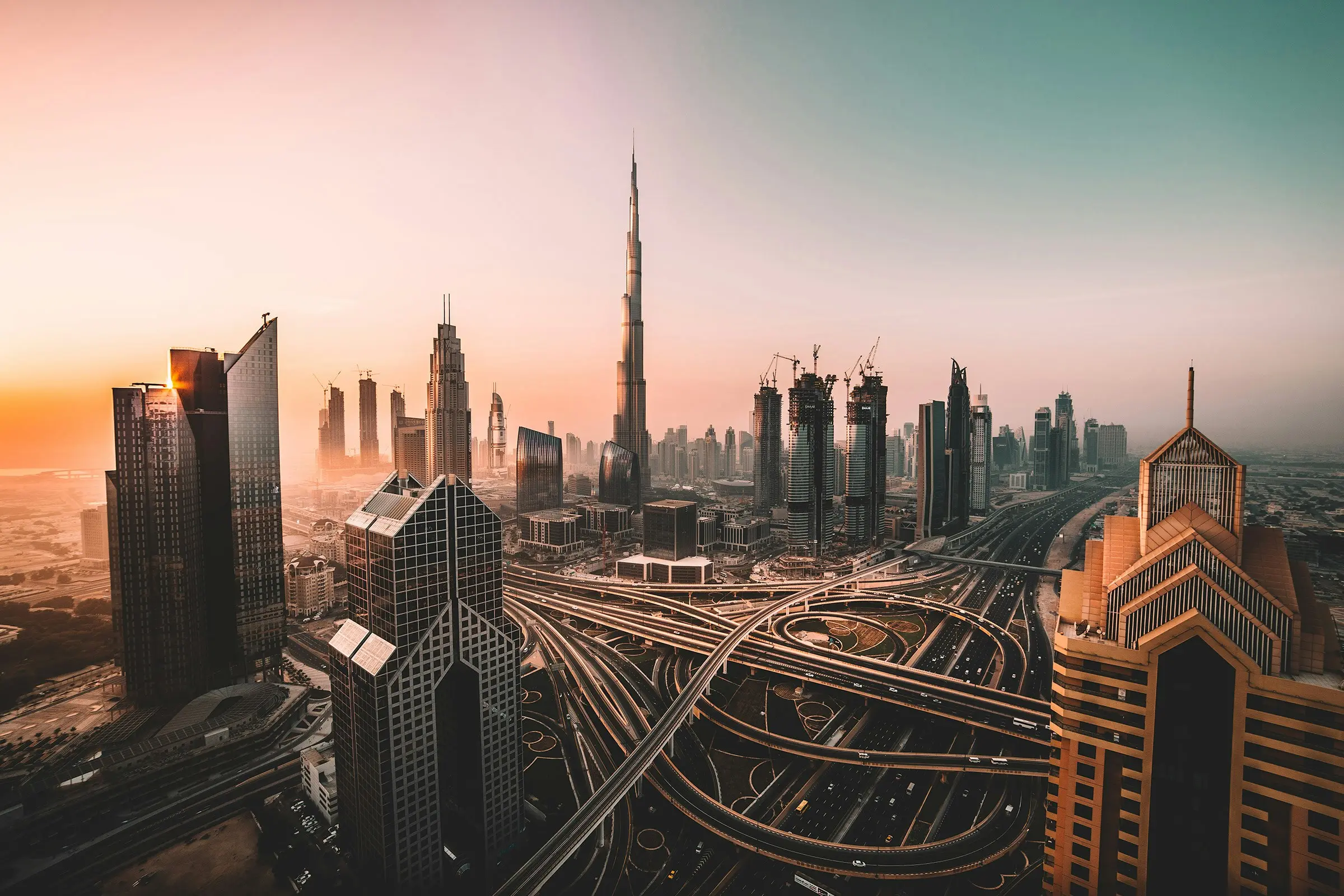
Why Dubai Remains Untouched: Geopolitics and Property Investment
Understand the structural disconnect between regional geopolitical noise and the continuous growth of Dubai's property investment market in 2026.

Key Takeaways
- The UAE's diplomatic stance of proactive neutrality isolates its economy and infrastructure from regional geopolitical volatility.
- A highly globalized non-oil GDP driven by logistics, technology, finance, and tourism decouples Dubai from regional energy sectors.
- With buyers representing over 150 nationalities, the property market has no single geographic concentration risk.
- The currency peg to the US Dollar (3.6725) makes Dubai real estate a stable, dollar-equivalent asset class for capital preservation.
Why Dubai Remains Untouched: Geopolitics and Property Investment
TL;DR / Key Takeaways
- Proactive Neutrality: The UAE's strict policy of diplomatic and economic neutrality insulates its domestic economy from regional geopolitical tensions.
- Global Buyer Diversification: Capital flows from over 150 nationalities ensure the property market does not rely on any single geographic region or demographic.
- Economic Diversification: Non-oil GDP growth driven by logistics, finance, tourism, and real estate decouples Dubai from regional energy volatility.
- Currency Peg Stability: The AED-USD peg (fixed at 3.6725 since 1997) provides a robust hedge against currency devaluation, anchoring global investor confidence.
Introduction: The Geopolitical Safe Haven of 2026
To the outside observer, the shifting geopolitical landscapes of the Middle East in 2026 might suggest caution for international real estate investment. Yet, the registered transaction data from the Dubai Land Department (DLD) tells a completely different story. Dubai's property market continues to record unprecedented volumes and capital values.
Understanding why Dubai remains functionally "untouched" by geopolitical instability is not just a matter of marketing; it is a lesson in economic engineering, proactive diplomacy, and structured safe-haven capital migration.
1. The Strategy of Proactive Neutrality
The primary shield protecting the UAE is its foreign policy framework of "proactive neutrality." As a sovereign state, the UAE has carefully built a diplomatic stance that prioritizes international trade, diplomatic resolution, and open economic boundaries.
By remaining non-aligned in regional active conflicts involving nations like Iran, Israel, or broader global blocs, the UAE has turned itself into a neutral zone. Much like Switzerland in 20th-century Europe, Dubai serves as a functional, secure, and neutral bridge in 2026 where global businesses, logistics firms, and international investors can operate without political interference. This diplomatic insulation is the direct foundation of the emirate's economic continuity.
Furthermore, the expansion of the UAE's bilateral ties, including its formal entry into the BRICS alliance and strong diplomatic relations with the European Union, the United States, China, and India, secures its status as a global mediator. This balanced foreign policy allows the country to bypass trade restrictions and sanctions, maintaining frictionless capital entry pathways and ensuring financial stability.

2. A Globalized, Decoupled Economy
Dubai's economic engine is structurally decoupled from regional volatility. While it is geographically located in the Arabian Gulf, its economic ties are bound to global trade networks.
- Logistics & Trade: Jebel Ali Port (DP World) and Dubai International Airport (DXB) are central nodes in international supply chains, linking manufacturing hubs in Asia directly to consumers in Europe and the Americas. Jebel Ali Port handles over 14 million TEUs annually, highlighting its role in global maritime logistics.
- Finance & Technology: The Dubai International Financial Centre (DIFC) operates under an independent, English common law judiciary, hosting thousands of global financial institutions, hedge funds, and private wealth offices. It is an autonomous legal zone that insulates global investors from local administrative fluctuations.
- Commodities & Free Zones: The Dubai Multi Commodities Centre (DMCC) hosts over 24,000 active businesses, driving gold, diamond, tea, and crypto trade under tax-free corporate regulations.
- Tourism & Hospitality: Dubai remains a top-three global tourist destination, attracting millions of visitors annually through leisure and business conventions.
Because Dubai's wealth is driven by these diversified global service sectors, its non-oil GDP has maintained a strong, upward trajectory, showing resilience against regional energy shocks or diplomatic tensions.
3. The Unrivaled Diversification of the Buyer Pool
A key vulnerability of any real estate market is concentration risk. If a market relies on buyers from a single nation, an economic crisis or political change in that nation can trigger a property crash. Dubai has systematically solved this problem.
According to demographic data from the Dubai Land Department, property buyers in Dubai represent over 150 nationalities.
- European Capital: Sustained inflows from the UK, Germany, France, and Italy seeking tax-efficient wealth preservation.
- Asian Expansion: High-net-worth individuals (HNWIs) from India, Pakistan, China, and the CIS region establishing secondary residences.
- GCC Stability: Capital from neighboring Gulf states seeking high-yielding commercial and residential assets.
- Fractional Breakdown: Typically, no single nationality represents more than 12-15% of the overall transaction volumes in any quarter. This distributed demographic portfolio creates a highly liquid marketplace, preventing localized shocks from destabilizing the entire property landscape.
This massive geographic diversity creates an automatic balancing mechanism. If economic conditions or regional tensions cause capital flows from one country to contract, they are immediately counterbalanced by increased capital migrations from another region looking for a safe harbor.
4. The Flight to Safety: Capital Influx During Volatility
Historically, geopolitical tensions do not cause capital to exit Dubai; they accelerate capital entry. When regional or global uncertainty escalates, wealth seeks three key assurances:
- Tax Neutrality: Dubai's 0% personal income tax, 0% capital gains tax, and tax-free rental income remain highly competitive.
- Currency Stability: The UAE Dirham (AED) has been pegged to the US Dollar (USD) at a fixed rate of 3.6725 since 1997. This peg eliminates currency risk for international buyers, serving as a reliable dollar-equivalent asset store during times of macroeconomic stress.
- Safety and Law Enforcement: The UAE ranks among the safest countries globally, offering a secure environment for families, which is a major driver for HNWIs choosing to relocate permanently via the Golden Visa program.
| Growth Driver | Investor Benefit | Market Impact |
|---|---|---|
| AED-USD Peg | Eliminates currency volatility | Stable wealth preservation |
| 0% Personal Tax | Maximizes net rental yields | Continuous capital inflows |
| 150+ Nationalities | Protects against concentration risk | Market liquidity and stability |

5. Maturing Market Dynamics: From Speculation to Wealth Preservation
As we navigate 2026, the Dubai property market is undergoing a healthy transition from a speculative "boom-town" to a mature global capital hub. Investors are shifting away from rapid off-plan flipping toward long-term hold strategies.
- Focus on Yields: Average residential yields remain high at 6-8% net, compared to 2-3% in major European capitals.
- Golden Visa Integration: Over 200,000 Golden Visas have been issued, anchoring families who reside in their properties, thereby reducing market volatility.
- Regulatory Oversight: Strict escrow compliance under Dubai Law No. 8 of 2007 ensures all construction milestones are met before funds are released, protecting foreign investors.
6. Infrastructure Protection and Supply Chain Security
Another pillar of Dubai's resilience is its focus on food, water, and energy security. The UAE has invested heavily in desalination plants, solar energy infrastructure (such as the Mohammed bin Rashid Al Maktoum Solar Park), and strategic food reserves.
- Aviation Routing: Dubai-based carriers Emirates and flydubai maintain global air corridors that bypass active conflict zones, ensuring that flight paths, passenger transit, and high-value cargo transport remain uninterrupted.
- Alternative Trade Pathways: The country's advanced highway systems and integration with regional transit routes allow for overland logistics backups if maritime straits face temporary shipping disruptions.
This level of physical and logistics planning guarantees that day-to-day life and business operations in Dubai remain unaffected, even during broader regional tensions. Historically, during major global conflicts like the Gulf War, the 2008 financial crisis, and post-2020 geopolitical realignments, the UAE has seen accelerated capital inflows as HNWIs prioritize safe physical relocation and asset protection. This structural stability is expected to sustain the 8% to 12% average annual growth rate in premium residential districts through the late 2020s and early 2030s.
Frequently Asked Questions
Why is Dubai unaffected by Middle East geopolitical tensions?
Dubai maintains a strict policy of economic and political neutrality, serving as an open, global trade hub. Its diversified economy (logistics, finance, tourism) and investor base of over 150 nationalities insulate it from localized regional issues.
How does the AED-USD currency peg benefit foreign property buyers?
The UAE Dirham has been pegged to the US Dollar at 3.6725 since 1997. This eliminates foreign exchange risk, allowing international investors to park capital in a stable, dollar-backed asset class.
Does regional conflict impact property construction timelines in Dubai?
No. Dubai's major developers (like Emaar and Nakheel) rely on global supply chains that bypass regional conflict zones. Construction material imports and project execution continue uninterrupted.
What is the primary driver of property demand in Dubai during global uncertainty?
The primary driver is the "flight to safety." Investors and HNWIs migrate their wealth to Dubai to take advantage of the tax-neutral environment, safety, stable legal framework, and long-term residency options like the Golden Visa.
Conclusion
The resilience of the Dubai real estate market is not accidental. It is the result of a deliberate, multi-decade strategy of economic diversification, proactive international neutrality, and regulatory transparency. By establishing itself as a secure oasis of stability, Dubai remains the premier safe haven for global real estate capital in 2026.
Related Guides
- Dubai Real Estate Tax Guide 2026 - In-depth tax and transaction cost breakdown
- Golden Visa Property Guide - How to secure long-term residency
- DLD Transaction Guide - Navigating official property records
Frequently Asked Questions
Why is Dubai unaffected by Middle East geopolitical tensions?
Dubai maintains a strict policy of economic and political neutrality, serving as an open, global trade hub. Its diversified economy (logistics, finance, tourism) and investor base of over 150 nationalities insulate it from localized regional issues.
How does the AED-USD currency peg benefit foreign property buyers?
The UAE Dirham has been pegged to the US Dollar at 3.6725 since 1997. This eliminates foreign exchange risk, allowing international investors to park capital in a stable, dollar-backed asset class.
Does regional conflict impact property construction timelines in Dubai?
No. Dubai's major developers (like Emaar and Nakheel) rely on global supply chains that bypass regional conflict zones. Construction material imports and project execution continue uninterrupted.
What is the primary driver of property demand in Dubai during global uncertainty?
The primary driver is the "flight to safety." Investors and HNWIs migrate their wealth to Dubai to take advantage of the tax-neutral environment, safety, stable legal framework, and long-term residency options like the Golden Visa.
Editorial Team
AiGentsRealtyThe AiGentsRealty editorial team consists of real estate experts, market analysts, and property consultants with over 20 years of combined experience in the Dubai real estate market.
Related Articles
Dubai Property Market News: This Week's Transaction, Listing and Source Dates
A date-aware Dubai property market news guide separating DLD registration reporting, portal asking-price observations, and developer availability snapshots for the 17–22 August 2026 reporting period.
Market NewsCedre Villas in Dubai Silicon Oasis: Buyer Research Guide
A source-aware guide to researching Cedre Villas in Dubai Silicon Oasis: documented home formats and sizes, dated portal asking-price examples, comparison questions and unit-specific due diligence.
Market NewsHow to Ask Sophia a Property Research Question in Dubai
A practical Dubai property-research framework: define your goal, location, requirements, budget, timing, constraints and desired output, then separate published information from details needing advisor or official confirmation.
Ready to Invest in Dubai?
Use Sophia AI to compare Dubai property options based on your budget, goals, and preferences.
Ask Sophia AI