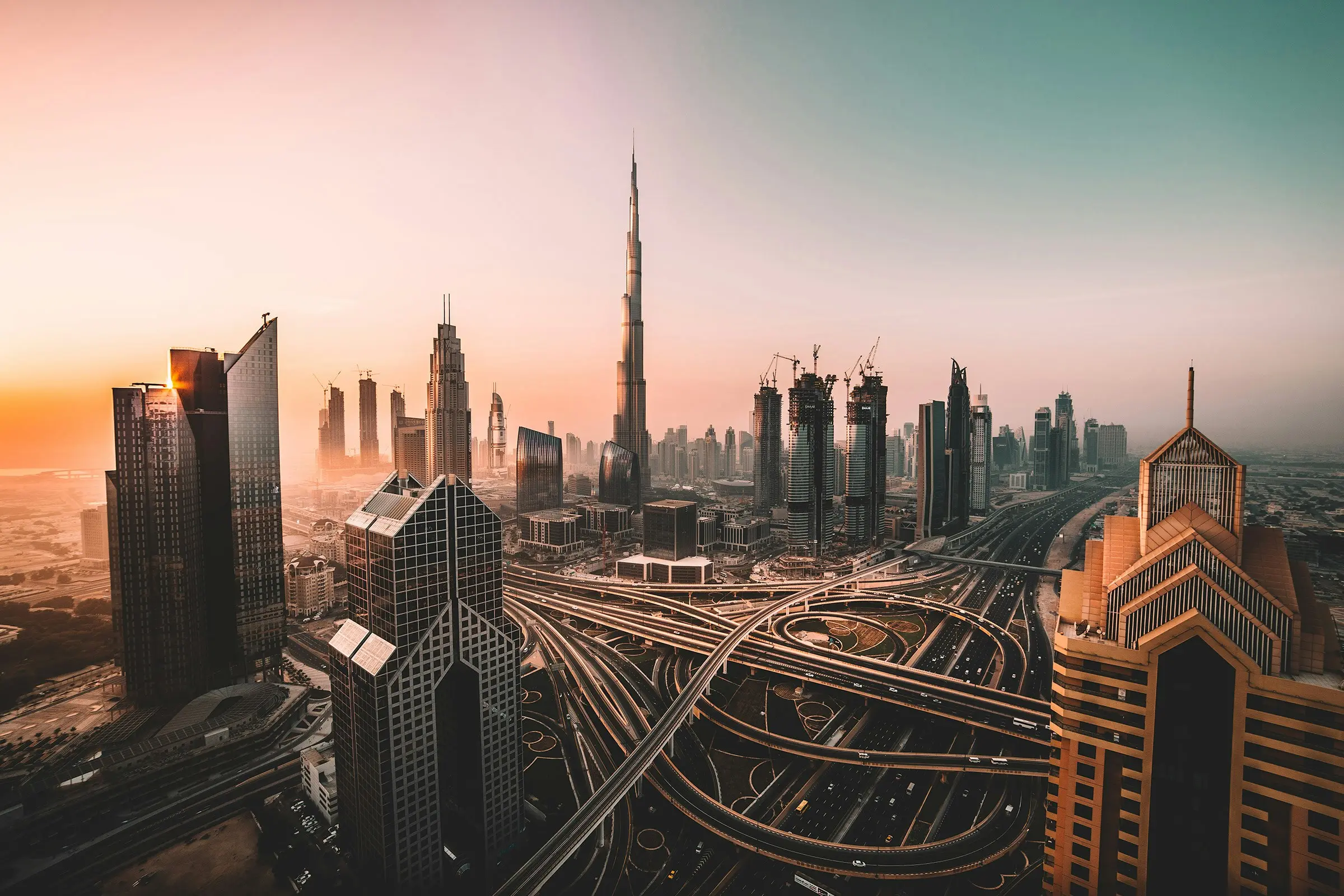
How the UAE's Neutrality is Fueling Dubai's Property Market Boom
Analyze how the UAE's strategic diplomatic neutrality in 2026 is directly translating into a massive boom for Dubai's commercial and residential property markets.

Key Takeaways
- Geopolitical Shield: The UAE's proactive diplomatic neutrality insulates Dubai's local business and banking environment from global and regional instability.
- Grade A Vacancies at Historic Lows: Corporate relocations to prime free zones like DIFC and DMCC are driving intense demand for premium office space and residential housing.
- Cash-Driven Resilience: Prime transactions are heavily cash-dominant (exceeding 80% in luxury segments), insulating Dubai property values from global interest rate hikes.
- Golden Visa Anchor: A minimum property investment of AED 2 million qualifies foreign investors for a 10-year self-sponsored visa, transforming transient capital into long-term residency.
How the UAE's Neutrality is Fueling Dubai's Property Market Boom (2026 Analysis)
Introduction: The Geopolitical Sanctuary of the Modern World
In an increasingly fragmented global landscape, the concept of neutrality has transitioned from a diplomatic stance into a powerful economic asset. As regional tensions in the Middle East and broader global geopolitical conflicts challenge international business continuity in 2026, the United Arab Emirates (UAE) has maintained a policy of proactive, strategic diplomatic neutrality.
This non-aligned diplomatic stance is not merely a political doctrine; it serves as the foundation for Dubai's modern real estate boom. By positioning itself as a secure, neutral ground that is open to international commerce from all regions, the UAE has created a "safe haven" for capital, businesses, and families seeking stability. This guide analyzes how the UAE’s neutrality policy directly fuels demand for commercial and residential properties in Dubai, the structural capital flows driving this trend, and what this means for long-term real estate investors.

1. The Economics of Neutrality: Capital Safe Havens
Real estate markets thrive on stability, transparency, and predictability. When geopolitical conflicts arise, global wealth seeks "safe havens"—jurisdictions where assets are protected from confiscation, currency devaluation, and physical conflict. The UAE’s commitment to neutrality has made Dubai one of the primary beneficiaries of these global capital shifts.
Insulating the Domestic Economy
Throughout the recent geopolitical tensions, the UAE government has clearly stated that its territory, airspace, and financial systems will not be utilized in regional conflicts. This proactive stance provides international investors with a level of security that is rare in the modern global landscape.
Key economic indicators of this safe haven flow include:
- Cash-Dominant Market: A significant majority of property acquisitions in the prime segment (often exceeding 80%) are conducted as cash transactions. This cash dominance protects the market from credit-tightening cycles and global interest rate hikes.
- Diversified Capital Inflow: Rather than relying on a single nationality, capital flows into Dubai are highly diversified, originating from Western Europe, the UK, the CIS region, South Asia, and East Asia. If one regional economy experiences a downturn, capital flows from other regions compensate, maintaining market stability.
2. Wealth Migration: The Millionaire Magnet
Alongside corporate relocations, Dubai is experiencing a historic migration of high-net-worth individuals (HNWIs). According to recent wealth migration statistics, Dubai consistently ranks as a top global destination for migrating millionaires.
Driving Factors Behind Wealth Relocation
- Tax Efficiency: The UAE’s zero-tax regime on personal income, capital gains, and inheritance is highly attractive to wealth owners facing rising tax burdens in Europe and North America.
- Safety and Quality of Life: In global safety rankings, Dubai consistently places among the safest cities in the world. For wealthy families, the combination of world-class private education, premium healthcare, and a secure environment is a major draw.
- Residency Integration: The integration of property investment and residency provides a clear pathway for families to establish long-term roots.
According to the Henley Private Wealth Migration Report, the UAE recorded a record-breaking net inflow of 6,700 millionaires in 2024, followed by a projected net inflow of 9,800 millionaires in 2025. This influx has created a strong demand for prime beachfront properties (such as Palm Jumeirah) and premium villa communities (such as Dubai Hills Estate and Emirates Hills), driving the luxury segment to historic highs.
3. Residency Innovation: The 10-Year Golden Visa in 2026
The property-linked Golden Visa has been one of the most successful policy tools in the UAE's modern history. In 2026, the regulatory framework has matured to provide even greater stability for long-term investors.
Requirements & Procedural Updates
To qualify for the 10-year self-sponsored Golden Visa through real estate, the following criteria must be met:
- Minimum Investment: A total property value of AED 2 million or more (approx. $545,000 USD). This can be split across multiple properties or accumulated via joint ownership.
- Project Eligibility: Ready properties or RERA-registered off-plan properties from approved developers are eligible.
- Enhanced Due Diligence: By 2026, the application process includes stricter capital checks, such as a 6-month verifiable banking history, to ensure the quality and legitimacy of incoming funds.
- Benefits: Visa holders receive a 10-year residency card, the ability to sponsor family members and domestic staff, and access to local banking, driving licenses, and corporate registrations.
By linking long-term residency to real estate investment, the UAE has successfully anchored transient expatriate capital. Buyers are no longer purchasing properties as short-term speculative assets; they are investing in permanent homes, which stabilizes secondary market transaction volumes.
4. Corporate Relocations and Commercial Real Estate Demand
The most direct link between diplomatic neutrality and real estate is the rapid relocation of multinational corporate operations to Dubai.
Free Zones as Enclaves of Security
Firms operating in sensitive sectors—such as finance, technology, logistics, and legal services—require uninterrupted operational continuity. The UAE's diplomatic neutrality, combined with its established free zones like the Dubai International Financial Centre (DIFC), the Abu Dhabi Global Market (ADGM), and the Dubai Multi Commodities Centre (DMCC), makes it an ideal relocation target.
- Commercial Vacancies: Office vacancy rates in prime business districts (Business Bay, DIFC, and Downtown Dubai) have dropped to historic lows, with Grade A office space commanding substantial premiums.
- Regional Consolidation: Major multinational corporations are consolidating their Middle East, North Africa, and South Asia (MEASA) operations into Dubai, relocating entire divisions from other regional capitals to ensure operational continuity.
This commercial expansion directly impacts the residential sector. When a corporate headquarters relocates, it brings hundreds of senior executives, managers, and specialized staff who require immediate residential housing, driving demand in both the rental and ready-purchase markets.

5. Infrastructure Commitment: The 2026 Sovereign Budget & Urban Development
A critical pillars of Dubai's real estate resilience is the government's aggressive reinvestment of public revenues into national infrastructure. The UAE's strategic neutrality allows it to focus state resources entirely on internal modernization rather than regional defense expenditures.
The Record 2026 Budget
In late 2025, the Dubai government approved a record three-year budget cycle, with the 2026 sovereign budget set at AED 106.3 billion (approximately $29 billion). This represent a major capital injection into the local economy, prioritizing:
- Infrastructure Expansion: Over 46% of the budget is allocated to infrastructure, transportation, and urban development projects.
- The Blue Line Metro: Direct funding for the upcoming Dubai Metro Blue Line expansion, which will connect mature communities (like Mirdif and International City) to key tourism and commercial hubs.
- Urban Master Plan 2040: Ongoing development of green spaces, public beaches, and pedestrian-friendly zones, enhancing the city's overall livability index.
This high level of public spending reassures global investors that the city's infrastructure will expand in step with its population, preventing bottlenecks and sustaining long-term property values.
6. Sustainability and Market Maturity in 2026
A common concern among investors is whether this neutrality-driven boom is a speculative bubble or a sustainable trend. Market indicators in 2026 suggest that the market is transitioning into a mature, stable phase.
From Speculators to End-Users
The current real estate cycle is fundamentally different from the speculative booms of 2008 and 2014:
- Longer Holding Periods: Buyers are increasingly purchasing properties to occupy them or hold them for long-term rental income, rather than flipping them immediately. This reduces volatility and stabilizes the market.
- Population Growth: Dubai’s population continues to grow steadily, passing the 4 million mark in 2025/2026. This organic population growth generates real demand for housing, supporting rental yields across mid-market and luxury communities.
- Stringent RERA Regulations: The Real Estate Regulatory Authority (RERA) enforces strict rules regarding project registration, advertising, escrow account management, and developer licensing, protecting buyer capital from project delays or developer default.
- Single-Digit Sustainable Growth: Following the rapid double-digit post-pandemic appreciation, the market in 2026 is seeing a shift toward a sustainable, single-digit growth trajectory (e.g., luxury property value increases are projected at around 5% for 2026). This stabilization is welcomed by institutional investors as a sign of market maturity.
7. Summary Table: Dubai's Neutrality Appeal vs. Other Global Hubs
The table below outlines how Dubai's investment appeal compares to other global real estate hubs in early 2026:
| Indicator | Dubai | London | Singapore | New York |
|---|---|---|---|---|
| Diplomatic Profile | Proactive Neutrality | Western-Aligned | Neutral-Aligned | Western-Aligned |
| Personal Income Tax | 0% | Up to 45% | Up to 24% | Up to 37% + State |
| Property Tax | 0% (4% DLD Fee) | Annual Council Tax | High Stamp Duties | Annual Property Tax |
| Average Gross Yield | 5.5% - 7.5% | 2.5% - 3.5% | 3.0% - 4.0% | 3.5% - 4.5% |
| Residency Incentive | 10-Year Golden Visa | Tier-Based / Limited | Highly Restricted | Capital Investment |
| Luxury Growth (2026) | Projected ~5% | Projected 1-2% | Projected 1-3% | Projected 2-3% |
8. Investment Recommendations for 2026
For investors seeking to capitalize on Dubai’s safe haven status, we recommend the following strategies:
- Focus on Ready Properties: High-net-worth tenants and corporate relocators require immediate housing. Ready-to-move-in apartments and villas in established locations command premium rents and experience minimal vacancy.
- Target Commercial & Grade A Assets: The corporate relocation trend makes commercial office space in Business Bay and DIFC highly attractive, offering steady rental yields and corporate covenants.
- Leverage the Golden Visa: Structure your property acquisitions to meet the AED 2 million threshold, securing your long-term residency and simplifying local banking and business operations.
Sources and further reading
- Dubai Land Department Real Estate Reports
- UAE Government Official Portal on Golden Visa Rules
- Knight Frank Dubai Research Portal
- Henley & Partners Private Wealth Migration Reports
- Zawya Business & Real Estate News
Area due diligence checklist
Before investing in any Dubai community, verify the following:
- Title Deed Registration: Ensure the seller holds a clean, DLD-registered title deed without any bank mortgages or legal disputes.
- Escrow Validation: For off-plan purchases, check the developer’s active escrow account status on the Dubai REST application.
- Service Charges: Verify the building's historical service charges to ensure they do not erode your net rental returns.
- Commute Times: Test the peak-hour transit times from the property to central business hubs like DIFC or Business Bay.
Frequently Asked Questions
How does the UAE's diplomatic neutrality impact Dubai real estate?
Diplomatic neutrality provides global corporations and high-net-worth individuals with operational security and asset protection. This safe haven status attracts capital from regions experiencing friction, driving high demand for prime commercial spaces (like DIFC Grade A offices) and luxury residential developments.
What is the minimum investment required to obtain a Golden Visa through property in Dubai?
Under current rules, investors must purchase ready or RERA-registered off-plan properties valued at a minimum of AED 2 million. Joint ownership and multi-unit purchases are allowed, provided the applicant's equity meets the threshold. Additionally, 2026 regulations require a 6-month verifiable banking history.
Is the 2026 Dubai property market boom speculative like in 2008?
No. The current cycle is anchored by end-users, record millionaire inflows (6,700 in 2024 and 9,800 projected in 2025), and corporate headquarter relocations. The cash-dominant nature of the purchases (over 80% cash in luxury sectors) and strict RERA escrow regulations greatly reduce the debt-driven default risks seen in 2008.
How can Sophia, AiGentsRealty's AI assistant, help me invest in neutral-safe havens like Dubai?
Sophia can monitor real-time developer escrow registries, DLD historical transaction yields, and district vacancy levels. She can instantly simulate yield profiles for Grade A offices versus residential ready properties in areas like Business Bay to help you align your portfolio with Dubai's high-demand corporate relocation corridors.
Editorial Team
AiGentsRealtyThe AiGentsRealty editorial team consists of real estate experts, market analysts, and property consultants with over 20 years of combined experience in the Dubai real estate market.
Related Articles
Dubai Property Market News: This Week's Transaction, Listing and Source Dates
A date-aware Dubai property market news guide separating DLD registration reporting, portal asking-price observations, and developer availability snapshots for the 17–22 August 2026 reporting period.
Market NewsCedre Villas in Dubai Silicon Oasis: Buyer Research Guide
A source-aware guide to researching Cedre Villas in Dubai Silicon Oasis: documented home formats and sizes, dated portal asking-price examples, comparison questions and unit-specific due diligence.
Market NewsHow to Ask Sophia a Property Research Question in Dubai
A practical Dubai property-research framework: define your goal, location, requirements, budget, timing, constraints and desired output, then separate published information from details needing advisor or official confirmation.
Ready to Invest in Dubai?
Use Sophia AI to compare Dubai property options based on your budget, goals, and preferences.
Ask Sophia AI