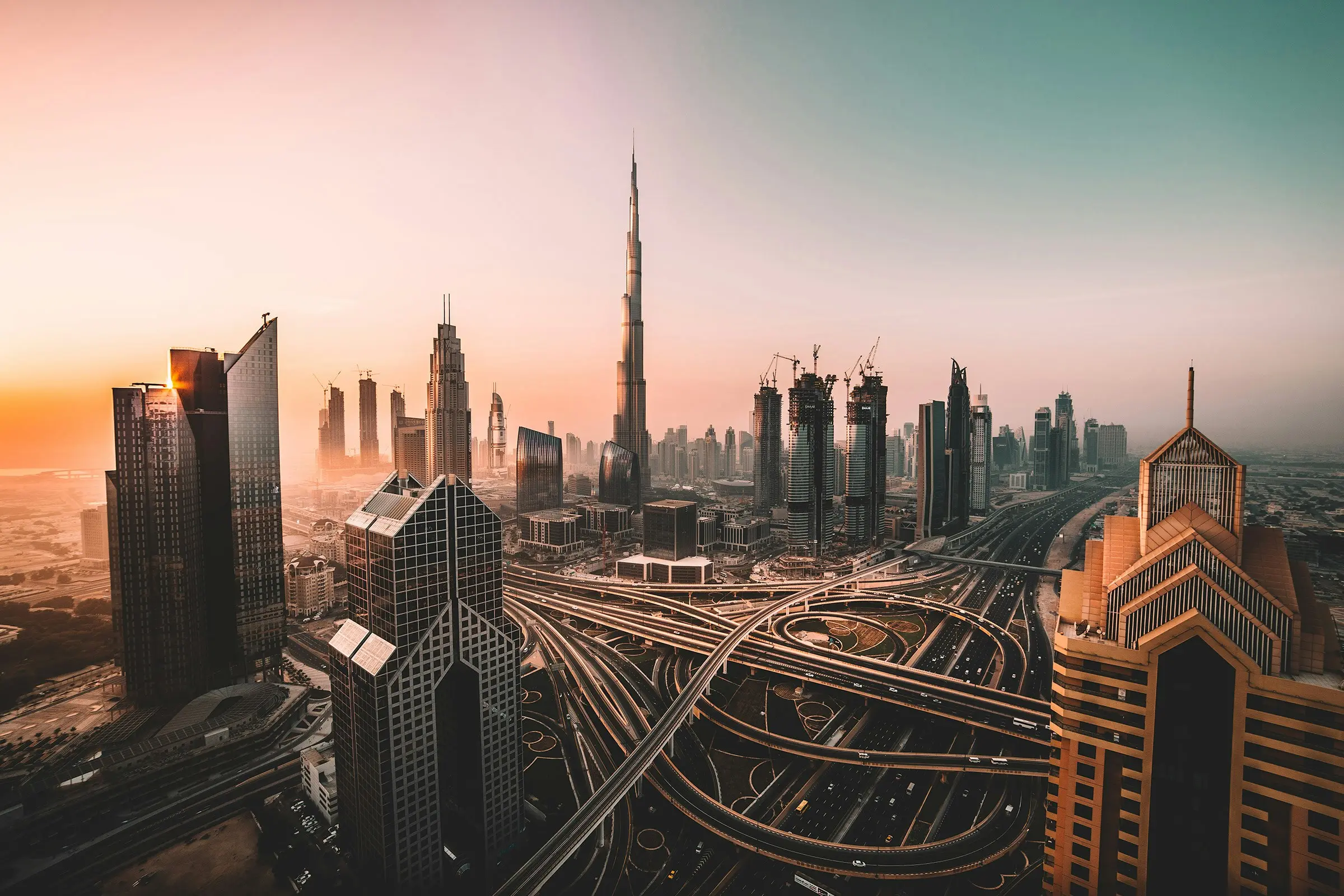
Tiger Properties Spotlight 2026: Affordable Luxury Pioneer
Complete guide to Tiger Properties Dubai. 29+ projects, affordable luxury positioning, quality finishes at competitive prices.

Key Takeaways
- - **The Affordable Luxury Pioneer:** Tiger Properties specializes in premium-spec finishes at price points 20% to 30% below tier-1 developers like Emaar or Select Group.
- - **Tiger Sky Tower in Business Bay:** A monumental 122-storey, 532-meter residential skyscraper under development with an estimated handover in Q4 2029. It will feature the world's highest infinity pool (431m), highest restaurant (439m), and a rainforest at 447m.
- - **Strong Footprint in JVT & JVC:** Key mid-market towers include Volga Tower (Q4 2026), Red Square Tower (Q2 2027), and Auresta Tower (Q4 2028), offering gross rental yields of 7% to 9%.
- - **Deep Conglomerate Backing:** As part of the Tiger Group (est. 1976), the developer controls its own contracting, building material supply, and facility management services, minimizing construction delays.
Tiger Properties Spotlight 2026: Affordable Luxury Pioneer
Tiger Properties has established itself as one of the most prominent developers in the United Arab Emirates, specifically noted for its distinct market positioning: bridging the gap between budget properties and high-end, premium developments. By delivering what they term "affordable luxury," the developer has carved out a highly profitable and popular niche, catering to middle-income families, first-time home buyers, and yields-focused investors.
As part of the massive Tiger Group—a multi-industry conglomerate founded in 1976—Tiger Properties benefits from deep structural backing, enabling the company to maintain a massive construction and engineering infrastructure. In 2026, their portfolio spans more than 29 active projects and hundreds of completed towers across Dubai and the wider UAE. With their latest flagship launch in Business Bay, Tiger Properties has also shown an ambition to redefine iconic luxury, moving beyond mid-market developments to design record-breaking skyscrapers.
This developer spotlight analyzes the history, current project portfolio, market positioning, and investment potential of Tiger Properties in 2026.

TL;DR / Key Takeaways
- The Affordable Luxury Pioneer: Tiger Properties specializes in premium-spec finishes at price points 20% to 30% below tier-1 developers like Emaar or Select Group.
- Tiger Sky Tower in Business Bay: A monumental 122-storey, 532-meter residential skyscraper under development with an estimated handover in Q4 2029. It will feature the world's highest infinity pool (431m), highest restaurant (439m), and a rainforest at 447m.
- Strong Footprint in JVT & JVC: Key mid-market towers include Volga Tower (Q4 2026), Red Square Tower (Q2 2027), and Auresta Tower (Q4 2028), offering gross rental yields of 7% to 9%.
- Deep Conglomerate Backing: As part of the Tiger Group (est. 1976), the developer controls its own contracting, building material supply, and facility management services, minimizing construction delays.
- Highly Flexible Payment Plans: Tiger Properties projects frequently offer customizable payment terms that appeal to end-users looking for accessible entry paths into the Dubai market.
The History of Tiger Group & Tiger Properties
To understand the reliability of Tiger Properties, one must understand its parent company, the Tiger Group. Established in 1976 by the Al Haza family, the Group initially focused on contracting, manufacturing, and industrial trade. Over the next five decades, the conglomerate expanded into education, hospitality, agriculture, and real estate development.
Because Tiger Properties owns its in-house contracting company (Tiger Contracting) and multiple manufacturing units for cement, steel, and wooden interiors, it is highly vertically integrated. Unlike many developers who must outsource construction to third-party contractors—often leading to delays and quality disputes—Tiger maintains direct control over its supply chain and construction milestones. This has allowed the company to deliver thousands of units on time, even during global supply chain disruptions.
Market Positioning: The Affordable Luxury Model
In the hyper-competitive Dubai real estate market, developers usually fall into two categories: high-end luxury (such as Omniyat, Emaar, and Sobha) or budget-driven (such as Danube or certain private local developers). Tiger Properties occupies the middle ground.
They offer a value proposition characterized by:
- Upgraded Specifications: Using high-grade porcelain tiling, quartz kitchen countertops, and modern European bathroom fixtures that look and feel premium.
- Accessible Entry Prices: Keeping price per square foot significantly lower than tier-1 waterfront developments, often ranging from AED 1,200 to AED 1,700 per square foot in areas like JVT and JVC.
- Generous Community Amenities: Equipping even their mid-market buildings with resort-style swimming pools, professional-grade gyms, landscaped running tracks, and dedicated children's activity zones.
- Investor-Friendly Yields: Because purchase prices are competitive, the net rental income translates to gross yields of 7% to 8.5%, outperforming prime luxury areas where high acquisition costs compress yields.
The Active 2026-2029 Project Pipeline
Tiger Sky Tower (Business Bay)
Launched in mid-2024 with site preparation starting immediately, the Tiger Sky Tower is the developer's most ambitious project to date. Standing at a projected height of 532 meters and rising 122 storeys, it is designed to be one of the tallest residential structures on the planet.
Key features of this landmark Business Bay development:
- Location: Heart of Business Bay, offering panoramic views of Downtown Dubai, Burj Khalifa, and the Dubai Canal.
- The World's Highest Rainforest: A full tropical rainforest situated 447 meters above the ground, complete with a roller glider ride.
- World's Highest Infinity Pool: A luxury infinity pool located at a height of 431 meters.
- World's Highest Restaurant: A fine dining destination at 439 meters.
- Completion Target: Q4 2029.
This project represents Tiger's entry into the ultra-luxury segment, utilizing custom-designed penthouses and bespoke interiors to attract global high-net-worth investors.

Jumeirah Village Triangle (JVT) Portfolio
JVT is a major growth node for Tiger Properties, offering high-rise living in a quiet, villa-dominated master community:
- Volga Tower: A modern residential tower featuring private pools on balconies for select apartments, set for completion in Q4 2026.
- Red Square Tower: Designed with a striking geometric exterior, offering affordable studios, 1-bedroom, and 2-bedroom units, scheduled for handover in Q2 2027.
- Sky Gate Tower: Offering high-quality finishes and prime connectivity to Al Khail Road, set for completion in Q1 2028.
Jumeirah Village Circle (JVC) Developments
- Auresta Tower: A contemporary high-rise targeting young professionals and families, featuring smart-home integrations and a completion target of Q4 2028.
Investment Analysis: Yields & Exit Liquidity
For real estate investors, Tiger Properties represents a reliable cash-flow play.
Rental Yield Breakdown (JVC & JVT)
Because Tiger's entry prices are relatively low, they are highly attractive for long-term rental portfolios.
- Studios & 1-Bedrooms: Consistently deliver gross rental yields of 7.5% to 9.0%. These layouts are favored by expats working in nearby hubs like Dubai Marina, JLT, and Barsha Heights.
- 2-Bedrooms: Deliver yields of 7.0% to 8.0%, attracting young families who require proximity to international schools in JVC and JVT.
Capital Appreciation Potential
While Tiger Properties properties are not typically bought for rapid speculative flips, they offer steady capital growth. Projects located in JVT are benefiting from the community's transition, as new retail developments (like the Al Khail Avenue Mall) open up. The entry value is protected by Tiger's low starting prices, leaving plenty of room for capital appreciation as the surrounding infrastructure matures.
Frequently Asked Questions
What is Tiger Properties known for?
Tiger Properties is known for its "affordable luxury" model, delivering modern residential buildings with premium-looking finishes, rich amenities, and flexible payment plans at prices that are 20% to 30% below major tier-1 developers.
What is the tallest project by Tiger Properties?
The tallest project by Tiger Properties is the 122-storey Tiger Sky Tower in Business Bay. Standing at 532 meters, it is currently under construction and features a rainforest, the world's highest infinity pool (431m), and the world's highest restaurant (439m), with completion estimated in Q4 2029.
In which communities does Tiger Properties primarily build?
While Tiger has launched their flagship tower in Business Bay, their residential portfolio is heavily concentrated in Jumeirah Village Circle (JVC), Jumeirah Village Triangle (JVT), Dubailand, and Liwan.
Are Tiger Properties developments good for investment?
Yes. Due to their competitive pricing and strong demand from middle-income tenants, Tiger Properties developments yield gross rental returns of 7% to 9% in areas like JVT and JVC, making them ideal cash-flow assets.
How can Sophia AI help me analyze Tiger Properties?
Sophia AI monitors live listings, historical DLD transaction databases, and active mortgage registry databases on a daily basis. This allows for real-time tracking of net rental yields by factoring in the Mollak service charge index for specific buildings, which varies substantially even within the same neighborhood. For example, in JVC and JVT, service charges can range from AED 10 to AED 16 per square foot, dramatically altering the net profitability of an investment. By querying Sophia, buyers can access these granular datasets instantly to make informed decisions.
Sources and further reading
- PropSearch Dubai Project Database: Tiger Sky Tower
- Tiger Group Official Corporate Portal
- JVT Community Guide and Construction Progress
- Dubai Land Department (DLD) Official Developer Registry
- Property Finder UAE Market Reports
Practical due diligence checklist
Use this article as a shortlist filter, then validate the specific asset before making a decision. Confirm the current asking price against recent transactions, check the total acquisition cost rather than only the headline price, and review service charges, payment-plan obligations, handover assumptions, and resale liquidity. For off-plan purchases, verify escrow registration, construction progress, developer delivery history, and the exact clauses in the sales and purchase agreement. For ready property, inspect the unit condition, building maintenance, occupancy profile, parking, views, and realistic rental demand.
Before committing, compare at least three alternatives in the same budget band. The strongest option is usually the one where location, entry price, floor plan, developer quality, future supply, and exit strategy all align. Avoid relying on generic area averages or marketing brochures when unit-level evidence is available.
How to turn this guide into a decision
Use this article to form a shortlist, then test each option against current evidence. Check recent transactions, live asking prices, payment terms, service charges, handover assumptions, rental demand, and resale liquidity. A good Dubai property decision depends on the exact asset, not only the area, developer, or broad market narrative.
For investors, compare total acquisition cost and holding cost before looking at headline returns. Include DLD fees, agency fees, service charges, maintenance, vacancy, furnishing, management, and potential exit costs. For end users, compare livability factors such as commute, noise, parking, amenities, building quality, and future construction nearby.
The safest decision process has four steps: verify the data, compare alternatives, pressure-test the downside, and confirm all terms in writing. If a property still looks attractive after those checks, it is a stronger candidate. If the numbers only work under optimistic assumptions, keep searching or negotiate better terms.
Frequently Asked Questions
What is Tiger Properties known for?
Tiger Properties is known for its "affordable luxury" model, delivering modern residential buildings with premium-looking finishes, rich amenities, and flexible payment plans at prices that are 20% to 30% below major tier-1 developers.
What is the tallest project by Tiger Properties?
The tallest project by Tiger Properties is the 122-storey Tiger Sky Tower in Business Bay. Standing at 532 meters, it is currently under construction and features a rainforest, the world's highest infinity pool (431m), and the world's highest restaurant (439m), with completion estimated in Q4 2029.
In which communities does Tiger Properties primarily build?
While Tiger has launched their flagship tower in Business Bay, their residential portfolio is heavily concentrated in Jumeirah Village Circle (JVC), Jumeirah Village Triangle (JVT), Dubailand, and Liwan.
Are Tiger Properties developments good for investment?
Yes. Due to their competitive pricing and strong demand from middle-income tenants, Tiger Properties developments yield gross rental returns of 7% to 9% in areas like JVT and JVC, making them ideal cash-flow assets.
How can Sophia AI help me analyze Tiger Properties?
Sophia AI monitors live listings, historical DLD transaction databases, and active mortgage registry databases on a daily basis. This allows for real-time tracking of net rental yields by factoring in the Mollak service charge index for specific buildings, which varies substantially even within the same neighborhood. For example, in JVC and JVT, service charges can range from AED 10 to AED 16 per square foot, dramatically altering the net profitability of an investment. By querying Sophia, buyers can access these granular datasets instantly to make informed decisions.
Genie AI
AI Property AdvisorGenie AI is an advanced artificial intelligence system that analyzes thousands of data points to provide personalized real estate investment recommendations. Powered by Dubai Land Department data, market trends, and sophisticated algorithms, Genie AI helps investors make data-driven decisions.
Related Articles
Wasl Properties Dubai: Separate Corporate, Community and Asset Roles
An evidence-led framework for separating corporate, developer, community, management, asset and operator roles when researching Wasl-linked Dubai property.
Developer SpotlightNakheel 2026: Luxury Waterfront Repositioning & Palm 360 Revival
Nakheel’s 2026 waterfront push spans Palm Jumeirah densification, gateway and scarcity towers, and larger island expansion—while Palm 360 is best read as a historical luxury benchmark until a primary relaunch is verified.
Developer SpotlightDeveloper Spotlight 2026: Azizi Venice & Dubai South Water-Infrastructure Strategy
Azizi Venice is a bold water-led megaproject in Dubai South, riding the long-term Al Maktoum Airport growth story. This 2026 developer spotlight weighs the lagoon lifestyle appeal against early-stage risk, service-charge economics and off-plan due diligence.
Ready to Invest in Dubai?
Use Sophia AI to compare Dubai property options based on your budget, goals, and preferences.
Ask Sophia AI