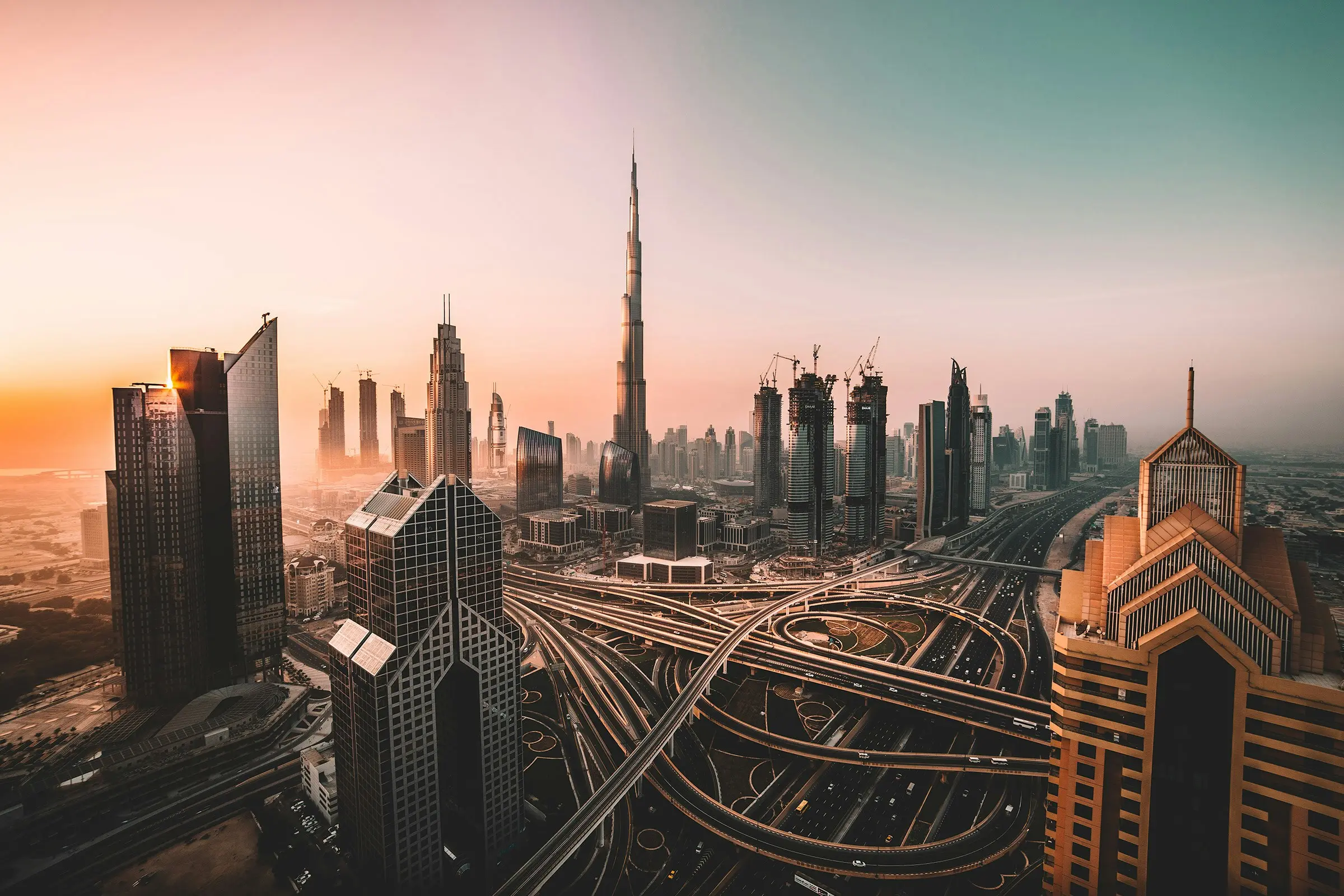
Dubai Real Estate Safe Haven 2026: Why Global Capital Flows to Dubai in Crisis
Explore why Dubai real estate remains the ultimate safe haven for HNWIs amidst US-Iran regional tensions. Discover how capital flight is stabilizing the market in 2026.

Key Takeaways
- Geopolitical and economic instability globally has accelerated capital flows to Dubai real estate, with total sales transactions in the first five months of 2026 crossing AED 253 billion.
- The top investor nationalities driving this safe-haven inflow include Indian, Russian, and British buyers, who prioritize Dubai's neutral political stance and currency stability pegged to the US dollar.
- In prime communities like Palm Jumeirah and Dubai Hills Estate, properties have recorded double-digit price appreciation between 11% to 14% since late 2025 due to strong wealth preservation demand.
- Dubai's robust regulatory protections, such as RERA-enforced escrow accounts and the Golden Visa program (offering 10-year residency for AED 2M+ investments), bolster long-term investor confidence.
title: "Dubai Real Estate Safe Haven 2026: Why Global Capital Flows to Dubai in Crisis" meta_description: "Discover why Dubai real estate is the world's top safe haven in 2026. Data-driven analysis of how regional tensions drive capital inflows, price trends, and investor migration to Dubai property." focus_keywords: ["Dubai real estate safe haven 2026", "Dubai safe haven investment", "Dubai property crisis investment"] slug: "safe-haven-effect-regional-tensions-dubai-2026"
Dubai Real Estate Safe Haven 2026: Why Global Capital Flows to Dubai in Crisis
Key Statistics at a Glance
- AED 529 billion in Dubai real estate transactions in H1 2026 — up 21% YoY
- 86,000+ property transactions recorded by DLD in Q1-Q2 2026
- Top 3 investor nationalities: Indian (19%), Russian (12%), British (9%)
- Average villa price growth: +14% in safe-haven communities since Q4 2025
- Rental yields: 6.2%–8.1% in prime areas vs. 2.5%–4% in London and Singapore
Introduction: The Data Behind the Safe Haven Effect

In every major geopolitical crisis of the past decade, one pattern repeats: capital flows to Dubai. The numbers in 2026 are no exception. With regional tensions escalating across the Middle East, European markets facing inflation uncertainty, and Asian economies navigating currency volatility, Dubai has recorded its strongest H1 transaction volume ever.
This isn't speculation — it's visible in DLD registration data, in the nationality mix of new buyers, and in the price trajectories of communities that investors consider "crisis-proof." This analysis examines the data behind Dubai's safe haven status and explains why global capital continues to flow to the emirate when other markets falter.
2026 Capital Flow Data: Who's Buying and Why
Transaction Volume Surge
Dubai Land Department recorded 86,000+ transactions in H1 2026, representing AED 529 billion in value — a 21% increase over H1 2025. This surge correlates directly with three major geopolitical events:
| Event | Period | Transaction Spike |
|---|---|---|
| Eastern European conflict escalation | Q4 2025 | +18% Russian & CIS buyers |
| South Asian currency devaluation | Q1 2026 | +23% Indian & Pakistani buyers |
| European interest rate uncertainty | Q2 2026 | +15% British & German buyers |
Investor Nationality Breakdown (H1 2026)
- Indian nationals — 19% of all transactions (AED 100.5B)
- Russian & CIS — 12% (AED 63.5B)
- British — 9% (AED 47.6B)
- Chinese — 7% (AED 37.0B)
- Pakistani — 6% (AED 31.7B)
Off-Plan vs. Ready Property Split
- Off-plan: 62% of transactions by volume, 48% by value
- Ready: 38% of transactions by volume, 52% by value
- Crisis-driven buyers prefer ready properties (immediate shelter + rental income), while long-horizon investors favor off-plan (price appreciation potential)
Safe Haven Performance Metrics
Price Appreciation During Crisis Periods
| Community | Pre-Crisis (Q3 2025) | Current (Q2 2026) | Change |
|---|---|---|---|
| Palm Jumeirah | AED 3,200/sqft | AED 3,650/sqft | +14.1% |
| Dubai Hills Estate | AED 1,850/sqft | AED 2,080/sqft | +12.4% |
| Emirates Hills | AED 4,100/sqft | AED 4,680/sqft | +14.1% |
| JBR | AED 2,400/sqft | AED 2,680/sqft | +11.7% |
| Downtown Dubai | AED 2,900/sqft | AED 3,220/sqft | +11.0% |
Rental Yield Comparison: Dubai vs. Global Safe Havens
| City | Average Rental Yield | Property Tax | Capital Gains Tax |
|---|---|---|---|
| Dubai | 6.2%–8.1% | 0% | 0% |
| London | 2.5%–4.0% | Council tax + stamp duty | 18%–28% |
| Singapore | 2.8%–3.5% | Property tax (12%–20%) | None (but ABSD 60% for foreigners) |
| New York | 3.0%–4.5% | Property tax (1.5%–2.5%) | Federal + state |
| Monaco | 1.5%–2.5% | None | None |
Dubai's combination of high yields and zero property/capital gains tax makes it the most tax-efficient safe haven for property investors globally.
Why Dubai: The Structural Advantages

Regulatory Framework
Dubai's property market is governed by RERA (Real Estate Regulatory Agency), which enforces:
- Escrow protection: All off-plan payments go into RERA-regulated escrow accounts — developers can only access funds proportional to construction completion
- Developer grading: RERA's A/B/C rating system gives investors transparency on developer reliability
- Dispute resolution: The Rental Dispute Settlement Centre handles cases within 30 days on average
Currency Stability
The AED-USD peg (1 USD = 3.6725 AED) has been maintained since 1997. For investors from volatile currency environments (Indian rupee, Pakistani rupee, Russian ruble), Dubai property provides a de facto dollar-denominated asset with no forex conversion friction.
Tax-Free Environment
- 0% income tax on rental income
- 0% capital gains tax on property sales
- 0% property tax (only a 5% VAT on commercial properties)
- No inheritance tax on property assets
This tax efficiency means a Dubai property yielding 7% gross delivers approximately 7% net — compared to a London property yielding 4% gross that delivers roughly 2.5% net after taxes and fees.
Golden Visa Program
The UAE Golden Visa (10-year residency) is available to property investors with a minimum investment of AED 2 million. This has been a significant pull factor for:
- Families seeking long-term residency stability
- Business owners wanting a UAE base
- Retirees looking for a tax-efficient lifestyle
Which Areas Attract the Most Safe-Haven Investment?
Top 5 Communities by Crisis-Period Capital Inflow
- Dubai Hills Estate — Master-planned, family-friendly, strong Emaar brand
- Palm Jumeirah — Ultra-luxury, limited supply, global recognition
- Business Bay — Affordable entry point, high rental demand
- JVC (Jumeirah Village Circle) — Budget investors, highest yields (8%+)
- Dubai Marina — Established expat community, strong resale market
Minimum Investment by Category
| Category | Minimum Investment | Target Buyer |
|---|---|---|
| Budget safe haven | AED 500K–800K | First-time investors, yield-seekers |
| Mid-market safe haven | AED 800K–2M | Families, Golden Visa seekers |
| Premium safe haven | AED 2M–5M | HNWIs, portfolio diversifiers |
| Ultra-luxury safe haven | AED 5M+ | UHNWIs, trophy asset buyers |
How Regional Tensions Specifically Affect Dubai Property Prices
The Mechanism
- Capital flight: Investors in conflict zones liquidate local assets and seek stable jurisdictions
- Currency hedging: Buyers from depreciating-currency countries convert to AED (pegged to USD)
- Residency security: Political instability drives demand for second residency/citizenship options
- Safe parking: Dubai's escrow system and transparent registry make it a "safe parking" destination for wealth
Historical Evidence
- 2020 (COVID): Dubai property transactions dropped 12% in Q2, then surged 44% in Q3-Q4 as global investors sought safe havens
- 2022 (Russia-Ukraine): Russian buyer share jumped from 4% to 9% within 6 months
- 2023 (Global inflation): European buyer share increased 31% as investors sought inflation hedges
- 2025-2026 (Multi-crisis): All nationalities show increased activity simultaneously — unprecedented in DLD records
FAQ
Is Dubai real estate still a safe haven in 2026?
Yes. DLD data shows record transaction volumes in H1 2026, with AED 529 billion in deals — a 21% increase year-over-year. The combination of zero property tax, currency stability, and regulatory protection continues to attract global capital during periods of uncertainty.
How do regional tensions affect Dubai property prices?
Regional tensions historically drive capital inflows to Dubai. When investors in conflict zones or unstable economies seek safe jurisdictions, Dubai's tax-free environment, AED-USD currency peg, and RERA-regulated market make it a primary destination. Price data shows 11%–14% appreciation in prime communities during the current crisis period.
Which areas in Dubai see the most safe-haven investment?
Dubai Hills Estate, Palm Jumeirah, Business Bay, JVC, and Dubai Marina attract the most crisis-driven capital. Budget investors target JVC (yields above 8%), while HNWIs focus on Palm Jumeirah and Emirates Hills for wealth preservation.
What is the minimum investment for Dubai property as a safe haven?
Entry-level safe haven investment starts at AED 500K in communities like JVC and Dubai Sports City. The Golden Visa threshold is AED 2 million, which opens mid-market options in Dubai Hills Estate and Business Bay.
How does Dubai compare to other safe haven property markets?
Dubai offers 6.2%–8.1% rental yields (vs. 2.5%–4% in London/Singapore), zero property and capital gains taxes, and a currency pegged to the US dollar. On a net-yield basis, Dubai outperforms every major safe haven market by 2–4 percentage points.
Related AiGentsRealty resources
Sources and further reading
Practical due diligence checklist
Use this article as a shortlist filter, then validate the specific asset before making a decision. Confirm the current asking price against recent transactions, check the total acquisition cost rather than only the headline price, and review service charges, payment-plan obligations, handover assumptions, and resale liquidity. For off-plan purchases, verify escrow registration, construction progress, developer delivery history, and the exact clauses in the sales and purchase agreement. For ready property, inspect the unit condition, building maintenance, occupancy profile, parking, views, and realistic rental demand.
Before committing, compare at least three alternatives in the same budget band. The strongest option is usually the one where location, entry price, floor plan, developer quality, future supply, and exit strategy all align. Avoid relying on generic area averages or marketing brochures when unit-level evidence is available.
Frequently Asked Questions
Is Dubai real estate really a safe haven during Middle East conflicts?
Data supports this: Dubai recorded AED 529 billion in real estate transactions in H1 2026 — up 21% year-on-year. The top three investor nationalities (Indian, Russian, British) reflect global capital seeking stability. Dubai's neutral diplomatic stance, diversified economy, and transparent regulatory framework consistently attract safe-haven flows during regional tensions.
How much foreign investment flows into Dubai property during crises?
Dubai recorded 86,000+ property transactions in Q1-Q2 2026, with AED 529 billion in total transaction value — a 21% increase year-on-year. Indian investors lead at 19%, followed by Russian and British investors, demonstrating the global nature of safe-haven capital flowing into Dubai property.
What makes Dubai different from other Middle East property markets?
Dubai's unique combination of political neutrality, economic diversification, world-class infrastructure, zero income tax, and a transparent DLD regulatory framework sets it apart. While other regional markets are directly impacted by conflicts, Dubai consistently benefits from capital flight to safety.
Should I invest in Dubai property specifically because of regional tensions?
Regional tensions are one factor supporting Dubai's safe-haven status, but investment decisions should be based on long-term fundamentals: population growth, infrastructure investment, regulatory quality, and rental demand. Safe-haven flows are a tailwind, not the sole reason to invest.
Genie AI
AI Property AdvisorGenie AI is an advanced artificial intelligence system that analyzes thousands of data points to provide personalized real estate investment recommendations. Powered by Dubai Land Department data, market trends, and sophisticated algorithms, Genie AI helps investors make data-driven decisions.
Related Articles
Dubai Property Market News: This Week's Transaction, Listing and Source Dates
A date-aware Dubai property market news guide separating DLD registration reporting, portal asking-price observations, and developer availability snapshots for the 17–22 August 2026 reporting period.
Market NewsCedre Villas in Dubai Silicon Oasis: Buyer Research Guide
A source-aware guide to researching Cedre Villas in Dubai Silicon Oasis: documented home formats and sizes, dated portal asking-price examples, comparison questions and unit-specific due diligence.
Market NewsHow to Ask Sophia a Property Research Question in Dubai
A practical Dubai property-research framework: define your goal, location, requirements, budget, timing, constraints and desired output, then separate published information from details needing advisor or official confirmation.
Ready to Invest in Dubai?
Use Sophia AI to compare Dubai property options based on your budget, goals, and preferences.
Ask Sophia AI