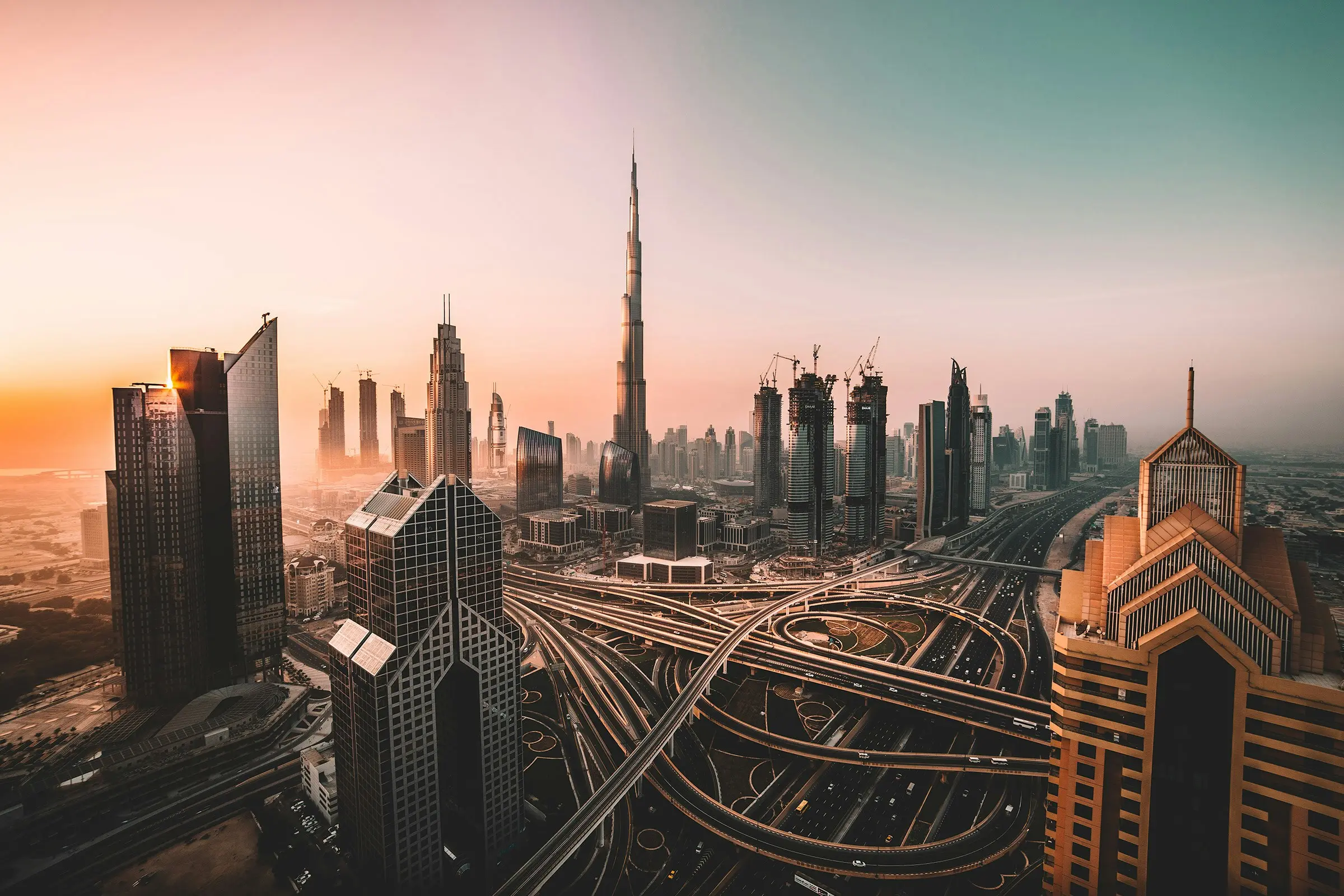
Post-Conflict Real Estate Surges: Historical Data and Dubai's 2026 Trajectory
Analyzing historical data to understand how Dubai's real estate market typically surges following periods of regional geopolitical tension, and what it means for 2026.

Key Takeaways
- Geopolitical conflicts historically act as capital catalysts for Dubai, transforming regional macroeconomic instability into domestic real estate growth.
- During Q1 2026, Dubai's real estate transactions reached a record AED 252 billion, representing a 31% year-on-year increase driven by safety-seeking global capital.
- The primary drivers for wealth migration to Dubai include the zero personal tax regime, a stable AED-USD peg, golden visa residency programs, and a neutral foreign policy.
- Investors should focus on highly liquid assets such as central waterfront apartments and ready family townhouses to hedge against sudden shifts in capital flow.
Post-Conflict Real Estate Surges: Historical Data and Dubai's 2026 Trajectory
TL;DR / Key Takeaways
- Geopolitical Safe Haven: Dubai consistently acts as a capital magnet during periods of global and regional crisis, turning external instability into local real estate growth.
- Q1 2026 Record Performance: Total transactions reached a historic AED 252 billion (a 31% year-on-year increase), with AED 173 billion in direct investments.
- Capital Stability Drivers: Zero personal income tax, a fixed AED-USD currency peg, and 10-year Golden Visa residency options attract long-term wealth.
- Sophia AI Insights: Sophia allows investors to monitor weekly DLD volumes and price-per-square-foot movements to track real-time capital flow.
Introduction: The "Flight to Safety" Phenomenon
To understand the trajectory of Dubai's real estate market in 2026, one must look at historical macroeconomic precedents. The United Arab Emirates has built a robust regulatory and economic infrastructure designed to act as a global buffer zone. During periods of geopolitical tensions, currency inflation, or banking sector vulnerabilities in Europe, Asia, or the broader Middle East, global wealth actively migrates to safe-haven jurisdictions. This phenomenon, known as a "flight to safety," consistently benefits Dubai's property market.
Analyzing these post-conflict capital surges reveals that Dubai's real estate is not merely a local housing market; it is an international financial asset class. Wealthy individuals (HNWIs) do not just purchase properties for residential utility—they purchase them to hedge against currency depreciation and asset seizures in their home nations.
Historically, capital flows do not move randomly. They follow paths of least resistance toward jurisdictions that provide asset protection, legal clarity, and quality of life. The UAE's strategic posture of active diplomatic neutrality has reinforced this positioning. By remaining open to international markets while ensuring domestic security, the city has created a unique ecosystem where capital is both protected and productive.
The Historical Roadmap: Geopolitics and Real Estate Surges
1. The Post-9/11 Realignment (2001-2003)
Following the events of September 11, 2001, and subsequent changes in global banking compliance, substantial Middle Eastern capital previously held in Western financial centers returned to the region. Dubai capitalized on this shift by passing the landmark Freehold Law of 2002, which allowed foreign nationals to own real estate in designated areas. This legal reform transformed returning Arab capital into the foundation of Dubai's first modern freehold property boom.
2. The Arab Spring (2011)
During the widespread political unrest across Egypt, Libya, Syria, and Yemen in 2011, billions of dollars of capital fled the Levant and North Africa. Much of this capital settled in Dubai, where investors purchased ready-to-move-in apartments and villas in emerging master communities like Downtown Dubai and Dubai Marina. This influx triggered a multi-year bull run, establishing Dubai's reputation as the ultimate safe haven in the Middle East.

3. The COVID-19 Pandemic Response (2020-2021)
While not a traditional conflict, the pandemic represented a global crisis of governance and public health. Dubai’s decision to implement a balanced lockdown strategy, rapid vaccination programs, and continuous border access made it a magnet for Western European and Indian entrepreneurs seeking to escape restrictive domestic policies. This period triggered an unprecedented boom in luxury villas, with areas like Palm Jumeirah seeing prices double within 18 months.
4. The Russia-Ukraine Conflict (2022-2024)
The escalation of the conflict in Ukraine and the subsequent implementation of international sanctions on Russian financial institutions triggered a historic wave of wealth migration. Tens of thousands of high-net-worth individuals and corporate entities relocated to the UAE, which maintained a neutral foreign policy. According to global wealth migration logs, the UAE became the world's top destination for migrating millionaires. This influx drove luxury villa and branded residence prices up by over 40% in prime areas like Palm Jumeirah and Emirates Hills.
5. The 2026 Geopolitical Inflows
In 2026, the pattern continues. Escalating regional tensions and fiscal instability in parts of Europe and the Americas have prompted another wave of defensive capital relocation. High-net-worth families are systematically transferring wealth into the UAE banking system and deploying it directly into cash-heavy real estate acquisitions. Rather than dampening demand, negative global headlines have accelerated the pace of capital inflows into Dubai's central districts.
Data Analysis: The Q1 2026 Transaction Surge
Official statistics from the Dubai Land Department (DLD) for the first quarter of 2026 verify this massive inflow of capital. The numbers show that Dubai real estate is performing at record levels, driven by both returning investors and a surge in new market participants:
- Total Transaction Value: Reached AED 252 billion in Q1 2026, representing a 31% increase compared to Q1 2025.
- Total Transaction Volume: 60,303 real estate transactions were registered, showing a solid 6% increase in volume.
- Direct Investment Value: Totaled AED 173 billion across 57,744 transactions, marking a 22% increase in value compared to the previous year.
- Foreign Capital Flow: Inbound foreign real estate investment grew by 26% year-on-year to hit AED 148.35 billion.
- Investor Depth: Over 48,448 individual investors registered transactions (an 8% YoY rise), with a highly significant 14% surge in brand-new investors (29,312 individuals making their first purchase in Dubai).
- Demographic Shifts: Female investment saw high engagement, with 15,540 women investors registering transactions worth a total of AED 32 billion.
- Luxury Sector Growth: Investments in high-end, prime developments rose by 26% year-on-year to AED 87.71 billion, reflecting strong HNWI demand for premium waterfront residences.
| Geopolitical Event | Inflow Vector | Primary Areas Targeted | Typical Yield Impact |
|---|---|---|---|
| Arab Spring (2011) | MENA Capital | Downtown, Dubai Marina | +15% Rent Growth |
| Russia-Ukraine (2022) | East Euro Wealth | Palm Jumeirah, Dubai Hills | +25% Capital Growth |
| 2026 Tensions | Global Safe-Haven | Business Bay, JLT, Palm | Stable 6.5% - 8% Yields |
Mechanics of the Safe Haven: Why Capital Chooses Dubai
Dubai's ability to absorb migrating wealth is not accidental. It is the result of deliberate policy frameworks designed to attract and retain international investors:
Zero Personal Income and Capital Gains Taxes
Foreign buyers can acquire, lease, and sell real estate without being subject to local income taxes, wealth taxes, or capital gains taxes. While corporate tax was introduced in 2023 at 9%, individual real estate investment yields and capital gains remain exempt. This makes Dubai an extremely efficient tax shelter for individuals coming from high-tax jurisdictions in Europe or North America.
The Stable AED-USD Currency Peg
The UAE Dirham (AED) has been pegged to the United States Dollar (USD) at a fixed rate of 3.6725 since 1997. Because real estate is bought and sold in Dirhams, international buyers are protected against local currency devaluations. Buying Dubai property is functionally equivalent to holding a dollar-denominated asset, providing a critical hedge against global inflation.
The Golden Visa Program
Under current immigration laws, foreign nationals who invest AED 2 million or more in Dubai real estate are eligible for a 10-year renewable Golden Visa. This program provides residency for the investor, their spouse, children, and domestic staff, offering a secure fallback option and encouraging families to set up primary residences in the UAE. The removal of the initial minimum down payment barrier for off-plan properties has further lowered entry barriers.

Neutral Foreign Policy and Family Office Infrastructure
The UAE’s diplomatic neutrality allows it to maintain commercial relations with all global powers. This stability is supported by advanced corporate structures in the Dubai International Financial Centre (DIFC) and Abu Dhabi Global Market (ADGM), which offer foundation and trust laws tailored for family offices and generational wealth preservation.
Investment Recommendations for 2026
Investors looking to navigate this geopolitically accelerated market should adopt a disciplined approach, separating short-term sentiment from long-term fundamentals:
- Focus on Highly Liquid Districts: During a flight to safety, capital seeks prime, established locations. Target areas with high tenant demand and mature infrastructure, such as Business Bay, Downtown Dubai, and Dubai Hills Estate.
- Prioritize Ready or Near-Completion Assets: If you are buying property as a defensive hedge, ready properties provide immediate rental income and face lower construction delay risks compared to early off-plan launches.
- Calculate Net Yields Conservatively: Geopolitically driven market surges can temporarily inflate asking prices. Ensure your investment models account for DLD transfer fees, broker commissions, property management fees, and annual service charges to verify the net ROI remains attractive.
- Monitor the Supply Pipeline: While demand is currently at record levels, a substantial pipeline of new residential units is scheduled for handover between 2026 and 2030. Focus on unique properties—such as waterfront canal views or boutique design-led towers—that enjoy natural protection against future supply additions.
Conclusion: The Safe Haven Outlook
As 2026 unfolds, Dubai's position as a macroeconomic safe haven is stronger than ever. Geopolitical shifts will continue to trigger rapid movements of global capital. By aligning investment strategies with highly liquid, structurally protected assets, investors can capitalize on the capital inflows while shielding their wealth from international headwinds.
Related AiGentsRealty resources
What to verify before you act
Before making an investment decision, verify the latest pricing, transaction evidence, rental demand, service charges, payment-plan terms, and exit liquidity for the specific property. Market-wide guidance can help you shortlist opportunities, but final due diligence should happen at project, building, and unit level. Compare the total cost of ownership and avoid assuming that historic returns will repeat automatically.
Frequently Asked Questions
How does regional conflict affect Dubai real estate?
Historically, regional conflict triggers a 'flight to safety' where High-Net-Worth Individuals (HNWIs) relocate capital and families to secure jurisdictions. Dubai's proactive neutrality, dollar-pegged currency, and advanced infrastructure make it the primary beneficiary, driving transaction volumes and property prices higher.
What were the transaction figures for Dubai real estate in early 2026?
According to the Dubai Land Department (DLD), the real estate sector recorded a massive start in Q1 2026, with total transactions reaching AED 252 billion (a 31% year-on-year increase) across 60,303 individual transactions.
Does property demand drop after conflicts stabilize?
No. Historical data shows that while the initial wave of emergency capital flight slows down, the wealth that relocates to Dubai generally stays. The market stabilizes at a higher pricing baseline and transitions into sustainable, organic growth driven by local economic development.
How does the Golden Visa program support wealth migration?
The UAE Golden Visa program grants a 10-year residency visa to investors who purchase property valued at AED 2 million or more. This long-term security encourages HNWIs to relocate their businesses, family offices, and primary residences to Dubai.
How does Sophia help investors analyze geopolitical market surges?
Sophia, AiGentsRealty's AI property assistant, connects directly to real-time DLD database records. She allows investors to monitor transaction velocities, check daily sales figures, and compare historic price surges (such as the 2022 influx) against current 2026 market behaviors.
Editorial Team
AiGentsRealtyThe AiGentsRealty editorial team consists of real estate experts, market analysts, and property consultants with over 20 years of combined experience in the Dubai real estate market.
Related Articles
Dubai Property Market News: This Week's Transaction, Listing and Source Dates
A date-aware Dubai property market news guide separating DLD registration reporting, portal asking-price observations, and developer availability snapshots for the 17–22 August 2026 reporting period.
Market NewsCedre Villas in Dubai Silicon Oasis: Buyer Research Guide
A source-aware guide to researching Cedre Villas in Dubai Silicon Oasis: documented home formats and sizes, dated portal asking-price examples, comparison questions and unit-specific due diligence.
Market NewsHow to Ask Sophia a Property Research Question in Dubai
A practical Dubai property-research framework: define your goal, location, requirements, budget, timing, constraints and desired output, then separate published information from details needing advisor or official confirmation.
Ready to Invest in Dubai?
Use Sophia AI to compare Dubai property options based on your budget, goals, and preferences.
Ask Sophia AI