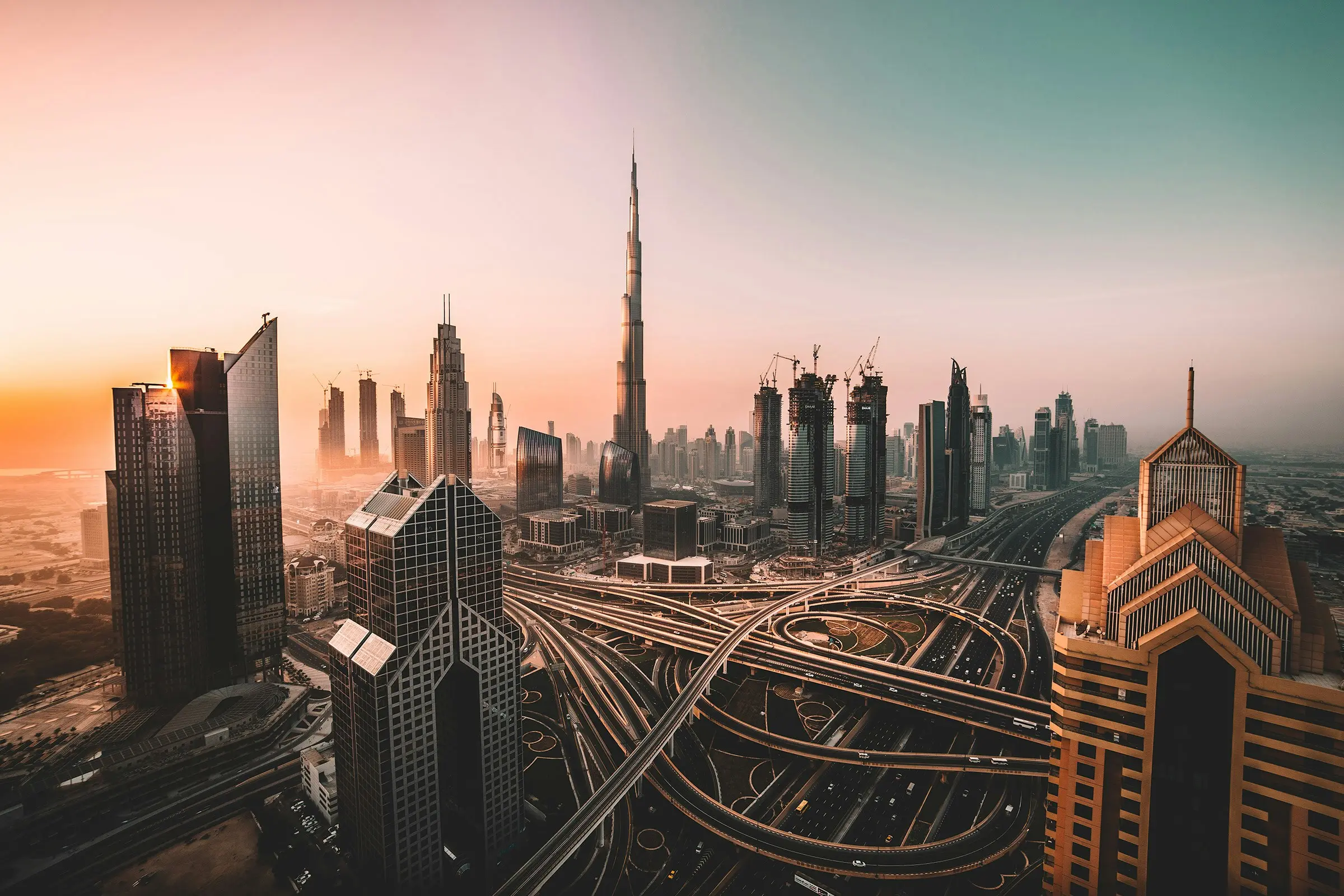
Off-Plan Property in Dubai: Complete Buyer Guide 2026
Complete guide to buying off-plan property in Dubai 2026. Payment plans, risks, top projects, developer trust signals, and handover timelines.

Key Takeaways
- Off-plan properties in Dubai typically launch at a 15% to 25% discount compared to ready-made units, offering potential capital appreciation by completion.
- Developers compete heavily with flexible payment plans (such as 70/30, 60/40, or monthly post-handover schedules) allowing buyers to leverage small initial capital investments.
- Under RERA regulations, all buyer installments must be deposited into project-specific escrow accounts, which has historically protected 98.6% of active projects through to completion.
- Purchasing an off-plan property with a value of AED 2,000,000 or higher qualifies the owner for the 10-year UAE Golden Visa, even prior to handover once Oqood registration is processed.
Off-Plan Property in Dubai: Complete Buyer Guide 2026
Dubai's real estate market continues to attract global investors, and off-plan property in Dubai remains one of the most compelling entry points for those seeking premium returns. Whether you are a first-time buyer or a seasoned portfolio builder, understanding how off plan property dubai transactions work is essential to making informed decisions in 2026. This guide breaks down everything from payment structures and developer verification to area-specific project analysis and ROI expectations, so you can invest with confidence.
For more context, see our Dubai Rental Yields by Area 2026.
For more context, see our DLD Property Registration Guide.
For more context, see our Airbnb vs Long-Term Rental ROI.
What Is Off-Plan Property?

Definition and How It Works
Off-plan property is real estate purchased directly from a developer before the building is completed — or in many cases, before construction has even begun. Buyers select a unit based on architectural renderings, floor plans, and brochures, then pay according to a staged payment plan linked to construction milestones.
The concept is simple: you are buying a promise. That promise is backed by Dubai's regulatory framework, which has matured significantly since the 2008 market correction. Today, the Dubai Land Department (DLD) and the Real Estate Regulatory Agency (RERA) enforce strict escrow and registration requirements that protect buyer funds throughout the construction period.
Why Buy Off-Plan in Dubai?
There are several strategic advantages to buying off-plan rather than ready property:
- Lower entry price: Off-plan units typically launch 15–25% below the price of comparable completed properties in the same area. This discount compensates buyers for the wait and the construction risk they assume.
- Favorable payment plans: Instead of paying the full amount upfront, buyers spread payments over 3–5 years via structured plans (70/30, 60/40, 50/50, or post-handover). This dramatically reduces the capital required at the point of purchase.
- Capital appreciation on completion: Many investors see the unit's market value increase by the time keys are handed over. According to Knight Frank's 2025 Dubai report, off-plan buyers who purchased in 2021–2022 saw average price appreciation of 20–35% by handover in established communities.
- Brand-new property: You receive a never-occupied unit with the latest finishes, smart-home technology, and full developer warranty (typically 1 year on defects, 10 years on structural elements).
- Wider unit selection: Early buyers get first pick of the best layouts, views, and floor levels — advantages that are unavailable in resale transactions.
Payment Plans Explained
Dubai developers compete on payment plan structures to attract buyers. Understanding each format helps you match a plan to your cash flow and investment timeline.
The 70/30 Payment Plan
The most traditional structure in Dubai. You pay 70% of the purchase price during construction (linked to milestones) and the remaining 30% on handover.
| Milestone | Payment |
|---|---|
| On booking (off-plan SPA) | 10–20% |
| During construction (staged) | 50–60% |
| On handover | 30% |
Best for: Buyers with strong upfront capital who want lower total payment burden. The 70/30 keeps the post-handover obligation manageable.
The 60/40 Payment Plan
You pay 60% during construction and 40% on handover. This shifts more of the financial commitment to the end of the project, giving buyers additional time to arrange financing or sell existing assets.
Best for: Investors who expect liquidity events before handover (bonuses, asset sales, or other investment maturities).
The 50/50 Payment Plan
Equal split: 50% during construction, 50% on handover. Increasingly popular among developers like Emaar and Damac for premium projects, as it makes high-value units more accessible.
Best for: Buyers who want to minimize construction-period outflow and are confident in arranging the 50% balance at completion.
Post-Handover Payment Plans
The most buyer-friendly structure — and the one that has driven much of Dubai's recent off-plan boom. You pay a small down payment (10–20%), a portion during construction, and then continue paying the remaining 30–50% in installments after receiving the keys, typically over 2–5 years post-handover.
For example, Damac's 1% monthly payment plan requires just 1% of the property price per month, with the balance due over 5–7 years. Emaar has offered similar post-handover structures on projects in Dubai Creek Harbour and Downtown Dubai.
Best for: End-users and investors who want to generate rental income from the property while still paying it off, effectively letting the asset partially finance itself.
| Plan Type | During Construction | On/After Handover | Risk Level |
|---|---|---|---|
| 70/30 | 70% | 30% | Low |
| 60/40 | 60% | 40% | Low–Medium |
| 50/50 | 50% | 50% | Medium |
| Post-handover | 20–50% | 50–80% | Medium–High |
Top Off-Plan Projects in 2026 by Area
Dubai's development pipeline for 2026 is rich with projects across price points. Here are the most notable launches and ongoing off-plan opportunities by area.
Dubai Marina
Dubai Marina remains one of the most liquid and internationally recognized communities. While the area is largely built out, select waterfront plots continue to see new launches.
- Marina Vista by Select Group — Luxury waterfront apartments with marina views, 1–3 bedrooms. Prices from AED 1.8M. Handover Q4 2027. Post-handover 60/40 plan.
- Eau de Soleil by SOL Properties — Ultra-premium tower on Marina Walk. 2–4 bedroom sky villas. Prices from AED 3.5M. Handover Q2 2028.
Dubai Marina offers strong rental yields of 6–7% and consistent capital appreciation. Explore available properties in Dubai Marina.
Jumeirah Village Circle (JVC)
JVC has emerged as the value investor's top pick in 2026. The community offers the lowest entry prices among established freehold areas while delivering improving infrastructure and growing amenity options.
- Bloom Heights by Bloom Holding — Mid-rise residential, studios to 2 bedrooms. Prices from AED 550K. Handover Q3 2027. 70/30 plan.
- Park View by Azizi — Twin-tower development facing JVC park. 1–3 bedrooms. Prices from AED 620K. Handover Q1 2027. Post-handover 50/50 plan.
- Belgravia Heights by Ellington — Design-forward residences. Studios to 2 bedrooms. Prices from AED 590K. Handover Q4 2026.
JVC studios and 1-beds deliver rental yields of 7–9%, among the highest in Dubai. See JVC area guide for community details.
Business Bay
Adjacent to Downtown Dubai and Dubai Canal, Business Bay combines commercial energy with increasingly residential character. New launches in 2026 focus on canal-side and creek-adjacent towers.
- Canal Heights 2 by DAMAC — Waterfront luxury tower with interiors by de GRISOGONO. 1–3 bedrooms + penthouses. Prices from AED 1.4M. Handover Q4 2028. 1% monthly post-handover plan.
- The Opus by Omniyat (final phase) — Zaha Hadid-designed iconic tower. Limited remaining 2–3 bedroom units. Prices from AED 2.8M. Handover Q2 2027.
Business Bay yields average 5.5–6.5% with strong appreciation driven by canal proximity. Browse Business Bay properties.
Dubai Creek Harbour
Emaar's master-planned waterfront community adjacent to the future Dubai Creek Tower is the most anticipated area in Dubai. Off-plan launches here consistently sell out in days.
- Creek Rise by Emaar — Two-tower residential with creek views. 1–3 bedrooms. Prices from AED 1.1M. Handover Q2 2028. 70/30 plan.
- Creek Beach by Emaar — Beachfront low-rise community. 1–2 bedrooms. Prices from AED 950K. Handover Q4 2027. 60/40 plan.
- Harbour Gate by Emaar — Premium tower with panoramic creek and skyline views. 2–4 bedrooms. Prices from AED 2.2M. Handover Q1 2029. 50/50 plan.
Creek Harbour is projected to see 25–40% appreciation by 2030 as infrastructure and the Creek Tower develop. For financing these purchases, see our Dubai mortgage guide for expats.
| Area | Price Range (AED) | Avg. Yield | Handover Timeline | Best For |
|---|---|---|---|---|
| Dubai Marina | 1.8M – 5M+ | 6–7% | 2027–2028 | Luxury investors |
| JVC | 550K – 1.2M | 7–9% | 2026–2027 | Yield seekers |
| Business Bay | 1.4M – 4M+ | 5.5–6.5% | 2027–2028 | Professionals |
| Dubai Creek Harbour | 950K – 3M+ | 5–6% (rising) | 2027–2029 | Long-term growth |
Developer Trust Signals and How to Verify
Not all developers are equal. Dubai's regulatory framework provides powerful tools for verifying developer credibility — but only if you use them.
RERA Escrow Accounts
By law, all off-plan developers in Dubai must deposit buyer payments into a RERA-controlled escrow account. Funds are released to the developer only when independent construction auditors confirm that specific milestones have been reached. This prevents developers from diverting buyer money to other projects.
How to verify: Request the escrow account number from the developer and confirm it with RERA (call 800 448 or check the Dubai REST app). Any developer who cannot provide an escrow account number is not compliant with Dubai law.
Oqood (Pre-Registration)
Oqood is the DLD's online system for registering off-plan property transactions. When you sign the Sales and Purchase Agreement (SPA), the developer must register it with Oqood, which issues a pre-title deed. This registration:
- Confirms your legal ownership of the unit before completion
- Prevents the developer from selling the same unit to another buyer
- Enables you to sell (flip) the property before handover on the secondary market
How to verify: After signing the SPA, check that you receive an Oqood registration certificate. You can also verify registration status through the Dubai REST app or the DLD website.
DLD Registration and Title Deed
On handover, the Oqood pre-registration converts to a full title deed registered with the Dubai Land Department. This is the definitive proof of ownership. The DLD charges a 4% transfer fee (often split 50/50 with the developer, but this varies by project — always confirm in the SPA).
How to verify: After handover, ensure the title deed is issued in your name and recorded in the DLD system. Processing typically takes 2–4 weeks after the developer submits the handover documentation.
Additional Developer Trust Signals
- Track record: How many projects has the developer completed? Were they delivered on time? Emaar, for example, has delivered 60+ communities on schedule. Nakheel has delivered over 15,000 units across The Palm and Ibn Battuta communities.
- Financial disclosures: Publicly traded developers (Damac, Aldar, Nakheel) publish audited financials. Private developers should provide project-specific escrow verification.
- RERA developer registration: Every developer must hold a valid RERA registration. Verify via the Dubai REST app or RERA's official portal.
- Third-party construction guarantees: Some developers provide bank-backed performance guarantees that cover completion even if the developer faces financial difficulty.
According to the Dubai Land Department's 2025 annual report, 98.6% of registered off-plan projects with active escrow accounts have proceeded to completion, a significant improvement from 72% in 2009 — evidence that the regulatory framework works.
Risks and How to Mitigate Them
Off-plan investment is not without risk. Understanding and mitigating these risks is what separates successful investors from those who lose money.
Construction Delays
The most common risk. Delays can range from 3–6 months (common) to 2+ years (rare but damaging). Delayed handover means delayed rental income and potential additional financing costs.
Mitigation:
- Buy from developers with a strong on-time delivery track record (Emaar, Meraas, Nakheel)
- Check the SPA for delay penalty clauses — most Dubai SPAs include a penalty of 5–10% per year of delay, capped at the developer's liability limit
- Avoid developers with a history of significant delays (search community forums like Property Finder and Bayut for buyer reports)
Market Shifts
Property values can decline between purchase and handover due to macroeconomic factors, oversupply, or regulatory changes.
Mitigation:
- Buy in established or near-complete areas rather than speculative greenfield sites
- Focus on communities with limited remaining development land (Dubai Marina, Palm Jumeirah) where supply is naturally constrained
- Maintain a holding period of 5+ years to ride out short-term fluctuations
- Use conservative yield projections (5–6% rather than 8–9%) in your financial models
Developer Default
While RERA escrow protects your funds during construction, a developer default can leave the project incomplete. Your money is returned from escrow, but you lose the property and any market appreciation.
Mitigation:
- Prioritize Tier 1 developers (Emaar, Nakheel, Meraas, Damac, Aldar, Sobha)
- Verify active escrow account status before every payment installment
- For smaller developers, require bank-backed completion guarantees
- Diversify: never put more than 30% of your investment capital into a single off-plan project
Regulatory and Legal Risks
Changes to Dubai's property laws, visa regulations, or tax policies could affect investment returns. While Dubai currently has no property tax, this could change. Similarly, golden visa eligibility thresholds may shift.
Mitigation:
- Stay current on DLD and RERA regulatory updates
- Factor a 1–2% annual "tax buffer" into your ROI calculations
- Consult a Dubai-licensed property lawyer before signing any SPA — this is non-negotiable for first-time buyers
Step-by-Step Buying Process
Step 1: Research and Shortlist
Identify 3–5 projects that match your budget, area preference, and investment goals. Use aigentsrealty.com to compare projects, check developer track records, and analyze area price trends.
Step 2: Verify the Developer
Check RERA registration, escrow account, Oqood system access, and past delivery record. Cross-reference with DLD data and community forums.
Step 3: Visit the Sales Center
Tour the show unit, review the master plan, and confirm payment plan details. Ask for the draft SPA and have your lawyer review it before committing.
Step 4: Reserve the Unit
Pay a booking fee (typically AED 10,000–50,000, deductible against the purchase price) and sign the reservation form. This holds the unit for 7–14 days while you complete due diligence.
Step 5: Sign the Sales and Purchase Agreement (SPA)
The SPA is the legally binding contract. It details the purchase price, payment schedule, handover date, delay penalties, specification commitments, and dispute resolution mechanism. Ensure Oqood registration is filed within 30 days.
Step 6: Make Payments Per Schedule
Transfer each installment to the developer's RERA escrow account by the due date. Retain proof of every payment. Missing payments can result in contract cancellation with forfeiture of up to 30% of amounts paid.
Step 7: Monitor Construction Progress
Use the Dubai REST app to track milestone completion. Visit the site periodically. Construction updates are also typically shared by the developer via email or portal.
Step 8: Snagging and Handover
When the developer issues the Notice of Completion (NOC), hire a professional snagging company to inspect the unit for defects. Submit a defect list to the developer — they are obligated to rectify issues before final handover. Once satisfied, accept the keys and complete the DLD title deed transfer.
Financing Off-Plan Property
Mortgage Options for Off-Plan
Getting a mortgage on off-plan property is more complex than for ready property, but options exist:
- Pre-approval before purchase: UAE banks (Emirates NBD, Mashreq, ADCB, FAB) offer pre-approvals that remain valid for 60–90 days. This helps you understand your budget before committing.
- Off-plan mortgages during construction: Some banks finance off-plan purchases, typically releasing funds in line with the construction payment schedule. Loan-to-value (LTV) ratios are lower: 50% for expats and 60% for UAE nationals on off-plan (vs. 80% for ready property).
- Completion financing: Many buyers plan to arrange a full mortgage at handover to cover the final installment. This is the most common approach and works well if you have strong income documentation.
For a detailed breakdown of mortgage rates, eligibility, and documentation requirements, refer to our complete Dubai mortgage guide for expats 2026.
DLD Fees and Additional Costs
| Cost | Amount | Who Pays |
|---|---|---|
| DLD Transfer Fee | 4% of purchase price | Buyer (often 50/50 split with developer) |
| Oqood Registration Fee | 4% of purchase price (paid once at SPA) | Buyer |
| Trustee Fee | AED 4,000–5,000 | Buyer |
| Admin Fee | AED 5,000–10,000 (varies) | Buyer |
| Mortgage Arrangement Fee | 1–2% of loan amount (if financing) | Buyer |
| Property Insurance | AED 2,000–5,000/year | Buyer |
| Service Charges | AED 12–25/sqft/year (area-dependent) | Buyer (from handover) |
Total closing costs: Budget 5–7% of the purchase price on top of the property price for all fees and charges.
ROI Expectations and 5-Year Outlook
Current Market Performance
Dubai's residential market delivered exceptional performance through 2024–2025, with average price growth of 10–15% across prime areas. According to CBRE's Dubai Market View Q4 2025, residential rents rose 13% year-on-year, and transaction volumes reached record levels.
Off-plan accounted for approximately 62% of all residential transactions in Dubai in 2025, per DLD data — a clear signal that buyer confidence in the off-plan segment is at an all-time high.
Projected Returns by Area (2026–2031)

| Area | Expected 5-Year Appreciation | Projected Rental Yield (2026) | Total Projected ROI |
|---|---|---|---|
| Dubai Marina | 20–30% | 6–7% | 50–65% |
| JVC | 15–25% | 7–9% | 50–70% |
| Business Bay | 18–28% | 5.5–6.5% | 45–60% |
| Dubai Creek Harbour | 25–40% | 5–6% (rising to 7%+) | 50–70% |
These projections assume continued population growth (Dubai's population is expected to reach 5.8M by 2030, up from 3.6M in 2024, per the Dubai Statistics Center), stable or declining interest rates, and no major regulatory shocks.
The 5-Year Investment Thesis
- Supply absorption: Dubai's population growth outpaces new supply delivery in prime areas, supporting price and rent fundamentals.
- Infrastructure catalysts: The Dubai Metro expansion (Route 2020 extension, future lines), Al Maktoum Airport relocation, and Dubai Creek Tower will unlock new demand centers and lift surrounding values.
- Golden visa magnetism: The 10-year golden visa (available with AED 2M+ property investment) continues to attract high-net-worth international buyers, particularly from the CIS, South Asia, and Europe.
- Diversified demand: Dubai's appeal across multiple buyer nationalities (over 200 nationalities own property in Dubai per DLD) reduces dependence on any single market.
Knight Frank projects that prime Dubai residential values will rise a further 15–20% between 2026 and 2030, with off-plan properties in emerging areas like Dubai Creek Harbour and Dubai Harbour outperforming established communities on a percentage basis.
Practical due diligence checklist
Use this article as a shortlist filter, then validate the specific asset before making a decision. Confirm the current asking price against recent transactions, check the total acquisition cost rather than only the headline price, and review service charges, payment-plan obligations, handover assumptions, and resale liquidity. For off-plan purchases, verify escrow registration, construction progress, developer delivery history, and the exact clauses in the sales and purchase agreement. For ready property, inspect the unit condition, building maintenance, occupancy profile, parking, views, and realistic rental demand.
Before committing, compare at least three alternatives in the same budget band. The strongest option is usually the one where location, entry price, floor plan, developer quality, future supply, and exit strategy all align. Avoid relying on generic area averages or marketing brochures when unit-level evidence is available.
Frequently Asked Questions
Can foreigners buy off-plan property in Dubai?
Yes. Dubai's freehold zones allow 100% foreign ownership with no residency requirement. You can buy off-plan as an individual, through a company, or via a trust. The purchase grants you the same legal ownership rights as a UAE national. Upon handover, you receive a title deed registered with the Dubai Land Department in your name.
What happens if the developer delays handover?
Most SPAs include a delay penalty clause, typically 5–10% compensation per year of delay, capped at a specified amount. If the delay exceeds the SPA's maximum grace period (usually 12 months), you may have grounds for contract cancellation with a refund from the escrow account. Always review the delay clause before signing. As a practical matter, delays of 3–6 months are common and usually do not trigger penalties; delays beyond 12 months are less common with Tier 1 developers.
Can I sell my off-plan property before handover?
Yes, provided the property is registered with Oqood. You can resell on the secondary market at any point after the Oqood registration is complete. This is known as "flipping" or assigning the contract. The buyer takes over your payment obligations and receives the unit on handover. Note that some developers charge a resale or assignment fee (typically 2–5% of the original price), and some SPAs restrict resale during the first 12–24 months — check your contract.
How much do I need to start investing in off-plan Dubai property?
Entry-level off-plan studios in JVC and Dubai South start from AED 550,000 (approximately USD 150,000). With a 10% down payment, you can secure a unit for AED 55,000 (USD 15,000). The total 5–7% closing cost on a AED 550K unit adds roughly AED 30,000–38,500. So the minimum all-in cost to enter the Dubai off-plan market is approximately AED 85,000–93,500 (USD 23,000–25,500).
Is off-plan property eligible for the Dubai Golden Visa?
Yes. Any property — off-plan or completed — with a value of AED 2,000,000 or more qualifies the owner (and family) for a 10-year Golden Visa. If the off-plan property is still under construction, you can apply for the visa once the Oqood registration is complete and the property value is confirmed at AED 2M+. This is a major driver of demand for off-plan units priced at or above the AED 2M threshold.
Genie AI
AI Property AdvisorGenie AI is an advanced artificial intelligence system that analyzes thousands of data points to provide personalized real estate investment recommendations. Powered by Dubai Land Department data, market trends, and sophisticated algorithms, Genie AI helps investors make data-driven decisions.
Related Articles
Dubai Building Age Data: What Construction Year Can and Cannot Tell a Buyer
A buyer-method guide to separating reported building dates from completion, condition, and transaction evidence in Dubai.
Investment GuidesDubai Real Estate Price Index: Read Market Movement Without Valuing a Unit
How to distinguish an official Dubai market-price series from the evidence needed for a unit-specific valuation.
Investment GuidesDubai School Commute Data: Compare Route Windows Before Choosing a Property
Use a documented, like-for-like route-window method to compare candidate Dubai homes with a selected school without turning estimates into guarantees.
Ready to Invest in Dubai?
Use Sophia AI to compare Dubai property options based on your budget, goals, and preferences.
Ask Sophia AI