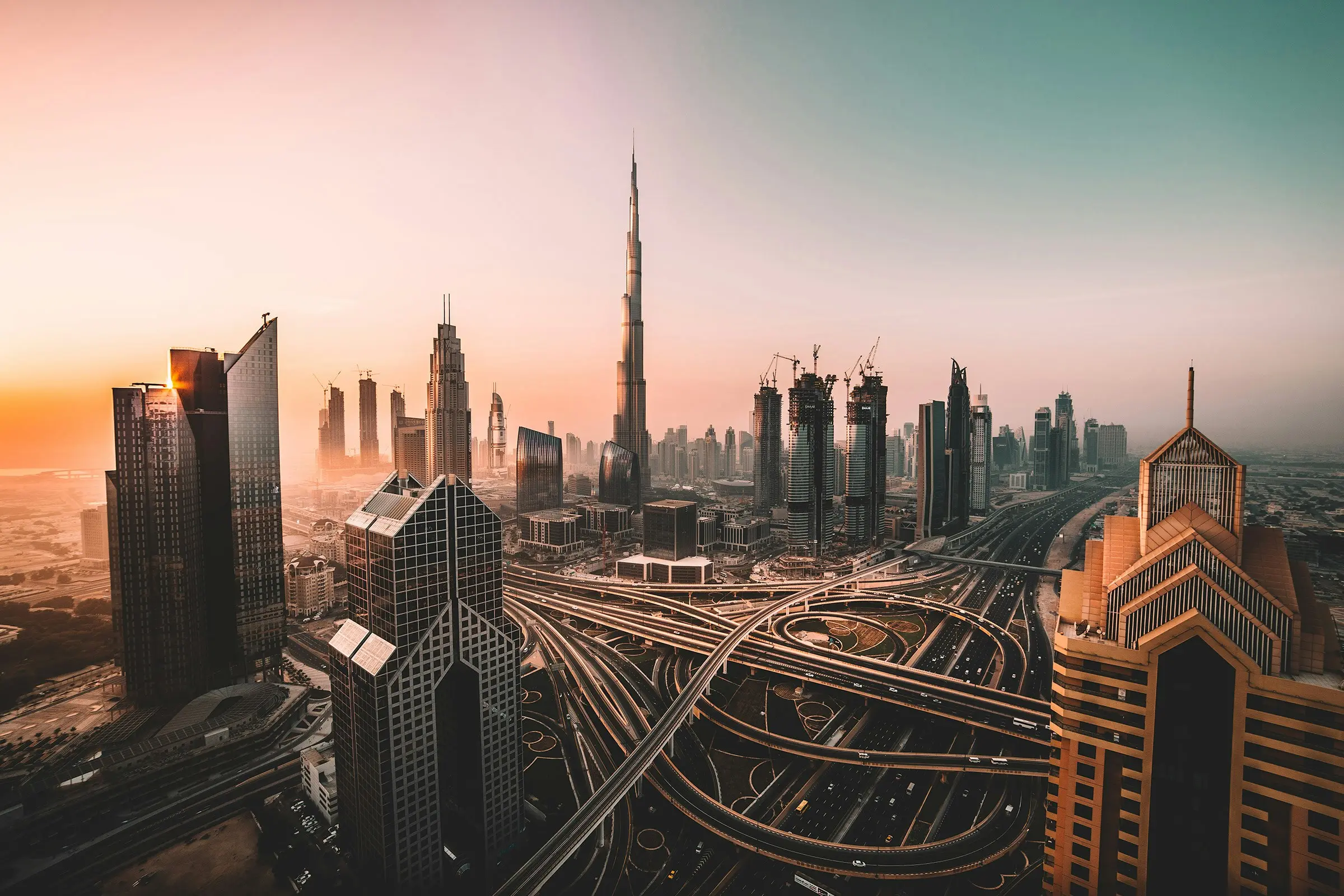
Navigating the 2026 Middle East Tensions: Why UAE Real Estate Remains Untouched
A deep dive into the structural, economic, and diplomatic reasons why the Dubai real estate market continues to thrive despite direct Iran-Israel conflicts in 2026.

Key Takeaways
- Regional geopolitical instability paradoxically acts as a catalyst for the UAE property market, driving HNWIs and capital flight into Dubai and Abu Dhabi.
- Dubai real estate recorded historic highs in January 2026, with total transaction values between AED 72.4B and AED 111B, representing a 63% to 88% YoY value increase.
- Residential sales value alone reached AED 55.18 billion in January 2026 (43.9% YoY increase) with off-plan volumes surging up to 90% in certain primary segments.
- The UAE's strategic diplomatic neutrality, lack of personal income tax, and fixed USD-Dirham currency peg provide a durable shield for global wealth preservation.
Navigating the 2026 Middle East Tensions: Why UAE Real Estate Remains Untouched
Introduction: The Geopolitical Paradox of Dubai Real Estate
When regional tensions escalate in the Middle East, standard investment textbooks suggest that capital should retreat from emerging markets. Geopolitical friction, military posturing, and threats to regional trade lanes typically trigger capital flight, currency devaluations, and a general slowdown in foreign direct investment (FDI).
Yet, looking at the performance of the United Arab Emirates (UAE) real estate sector in 2026, one observes the exact opposite trend. While international headlines report heightened security friction between regional states, Dubai’s transaction charts show record-breaking spikes in sales volume, price appreciation, and project launches.
This guide breaks down the structural mechanics behind this paradox. For global property investors, understanding why the UAE remains largely unaffected—and in many ways, structurally supported—by regional geopolitical tensions is key to identifying stable wealth-preservation opportunities in 2026.

1. The Safe Haven Mechanism: Capital Flight and Wealth Migration
To understand why the UAE market does not crash during regional crises, one must understand the flow of capital in the Middle East. When stability is threatened in neighboring jurisdictions, wealthy individuals, corporate entities, and family offices do not pack their capital and send it to distant Western markets like London or New York. Instead, they look for the closest, most modern, and legally secure environment that can protect their assets and families.
The UAE is the natural recipient of this capital. The country features:
- World-Class Infrastructure: Premium schools, advanced healthcare, and international flight connectivity via Emirates and Etihad.
- Tax Neutrality: Zero personal income tax, zero wealth tax, and zero capital gains tax on property transactions.
- Legal Safeguards: A robust RERA-supervised escrow framework and independent common-law courts in the Dubai International Financial Centre (DIFC) and Abu Dhabi Global Market (ADGM).
Consequently, periods of regional tension act as net catalysts for capital inflows. High-net-worth individuals (HNWIs) relocate their operational headquarters, bank deposits, and residential assets to Dubai and Abu Dhabi, driving demand for premium properties. This flight-to-safety trend cushions the local market from external shocks and underpins transaction stability.
2. Hard Data: Dubai’s Historical Performance in Q1 2026
The resilience of the UAE real estate market is not merely a theoretical claim; it is supported by hard transaction data. According to official reports from the Dubai Land Department (DLD), the market recorded historic highs at the start of 2026, completely defying regional geopolitical developments.
January 2026 Transaction Value
Total real estate transaction values in Dubai for January 2026 ranged between AED 72.4 billion and AED 111 billion (depending on the inclusion of secondary commercial services and mortgages), marking one of the strongest monthly performances in the history of the emirate. This represents a massive 63% to 88% year-on-year (YoY) increase in total transaction value compared to January 2025.
Residential Sales Volume
Specifically focusing on the residential sector, sales transactions reached AED 55.18 billion in January 2026, representing a 43.9% YoY increase in value and a 19.1% YoY increase in transaction volume.
- The Off-Plan Segment: Primary developer sales (off-plan) saw the highest surge, with some sub-segments recording up to a 90% volume increase compared to the same period in 2025.
- Diverse Buyer Base: Buyers represented over 150 nationalities, demonstrating that the market's demand is globally diversified and not dependent on any single regional conflict zone.
- End-User Dominance: Over 85% of transactions were driven by end-users or long-term investors purchasing residential homes, proving that actual residency demand, rather than speculative trading, is sustaining the price floor.
Location-Specific Performance Leaders
The transactions in January 2026 were heavily concentrated in key master communities. Jumeirah Village Circle (JVC) led the transaction volumes, registering over 1,200 individual apartment sales, driven by mid-market buyers looking for affordable investments. Meanwhile, Business Bay and Downtown Dubai remained the absolute leaders in high-value luxury apartment transactions. In the villa sector, Dubai Hills Estate and Meydan / Mohammed Bin Rashid City (MBR City) experienced robust demand, with premium waterfront villas and park-facing townhouses showing double-digit capital appreciation in secondary transactions.
3. Diplomatic Neutrality and Global Decoupling
Another major factor insulating the UAE real estate market is the country’s strategic foreign policy. The UAE maintains a strict stance of diplomatic neutrality and active engagement with global economic partners.
Global Connectivity
Rather than aligning with restrictive geopolitical blocs, the UAE has expanded its trade networks by joining the BRICS bloc and signing Comprehensive Economic Partnership Agreements (CEPAs) with key economies like India, Turkey, and Indonesia. This neutral position allows the country to remain open to global capital, welcoming investors from Europe, the UK, the CIS, South Asia, China, and North America simultaneously.
The Dirham-USD Peg
The currency risk that usually plagues emerging markets during crises is non-existent in the UAE. The UAE Dirham (AED) has been pegged to the US Dollar at a fixed rate of 1 USD = 3.6725 AED since 1997. Supported by substantial foreign exchange reserves, this peg ensures that property assets in the UAE function as stable dollar-denominated assets, protecting international buyers from currency devaluations.
Golden Visa and Long-Term Residency Security
The stability of the real estate sector is further reinforced by the Golden Visa program, which grants a renewable 10-year residency to investors who buy properties valued at AED 2 million or more. By decoupling residency from corporate employment and removing the historical requirement for a minimum AED 1 million upfront payment on mortgaged properties, the government has provided international buyers with direct residency security. This regulatory stability gives investors the confidence to purchase long-term homes, establishing deep roots in the country rather than viewing their real estate strictly as transient investments.

4. Supply Chain and Labor Force Insulation
Investors often worry that regional conflict might disrupt supply chains, raising the cost of building materials or delaying construction schedules. However, the UAE has built a highly diversified and resilient supply chain infrastructure that bypasses regional conflict zones.
- Material Sourcing: The UAE imports steel, cement, and finishing materials from global suppliers in India, China, Europe, and Southeast Asia.
- Maritime Routes: Major container ports like Jebel Ali operate outside the immediate areas of conflict, ensuring that shipping lanes remain open and construction schedules are met.
- Labor Diversity: The construction labor force is sourced from stable countries across South Asia and East Africa, insulating the developer pipelines from labor shortages.
5. Comparison: UAE vs. Traditional Safe Havens in 2026
To understand why international capital is increasingly choosing Dubai over traditional safe havens like Switzerland, Singapore, or London, consider the comparison table below:
| Indicator | Dubai (UAE) | Geneva (Switzerland) | London (UK) | Singapore |
|---|---|---|---|---|
| Average Gross Yield | 6.0% - 8.5% | 2.5% - 3.5% | 3.0% - 4.5% | 2.0% - 3.0% |
| Property Purchase Tax | 4.0% DLD Fee | High Stamp Duty | Up to 15% SDLT | Up to 60% ABSD for Foreigners |
| Personal Income Tax | 0% | Up to 40%+ | Up to 45% | Up to 24% |
| Residency Link | 10-Year Golden Visa (AED 2M) | Complex residency laws | Tier-1 visa restrictions | Extremely high entry barriers |
| Geopolitical Stance | Diplomatic Neutrality | Traditional Neutrality | West-aligned | West-aligned |
Sources: Local tax authorities, central bank reports, and Knight Frank Prime Global Forecast 2026.
6. Investor Guidelines: Capitalizing on Market Stability
While the UAE market is structurally protected, investors should follow a disciplined due-diligence framework to maximise returns during periods of geopolitical noise:
- Focus on High-Quality Master Communities: Stick to central areas like Downtown Dubai, Business Bay, Dubai Hills Estate, and Sobha Hartland. These locations have high resale liquidity and attract premium corporate tenants.
- Partner with Publicly Listed or Governed Developers: Work with developers like Emaar, Sobha, and Deyaar. Publicly listed and government-linked companies have higher audit transparency and lower delivery risks.
- Verify Escrow Registrations: Before making any off-plan payments, confirm that the project is registered with the DLD and that your payments are going directly into the designated project escrow account.
- Negotiate Favourable Payment Plans: Take advantage of competitive off-plan payment schedules (such as 60/40 or 70/30) to preserve liquidity and increase your cash-on-cash yield.
- Leverage AI Real Estate Platforms: Use advanced search platforms like AiGentsRealty's Sophia assistant to track live transaction values, monitor localized supply pipelines, and cross-reference RERA rental benchmarks, allowing you to bypass speculative noise and execute deals using verified data.
Conclusion: The Resilient Haven
Geopolitical tensions in the Middle East undoubtedly create headlines, but the underlying data proves that Dubai's real estate market remains insulated and highly resilient. The combination of diplomatic neutrality, hard-currency stability, institutional escrow protections, and a historic influx of flight-to-safety capital has turned the UAE into the ultimate wealth-preservation sanctuary. For global investors looking to hedge against inflation and regional instability, the UAE in 2026 represents a highly attractive, secure destination.
Sources and further reading
- Dubai Land Department - Open Data Portal
- Central Bank of the UAE - Quarterly Economic Review
- Zawya - Dubai Real Estate Records Historic Growth in January 2026
- UAE Government Portal - Federal Decree Laws on Foreign Investment
Area due diligence checklist
Before committing capital to any Dubai property, verify the latest transaction history for the specific building or zone using the Dubai REST application. Check RERA-approved service charges, commute patterns, school catchments, and public transport access. For investors, always calculate net yield by deducting service charges, management fees, property insurance, and typical maintenance reserves from your gross projections. Verify that your developer is fully compliant with RERA escrow account rules before signing the SPA.
Frequently Asked Questions
Why does regional Middle East instability drive capital into Dubai property?
When neighboring countries experience geopolitical or financial uncertainty, investors seek secure, modern, and legally protected environments nearby. The UAE's tax neutrality, RERA escrow protections, world-class infrastructure, and Golden Visa residency programs make it the primary recipient of this flight-to-safety capital.
What does the January 2026 DLD transaction data show?
The Dubai Land Department recorded total transaction values between AED 72.4 billion and AED 111 billion in January 2026, marking a 63% to 88% YoY increase. Residential sales alone reached AED 55.18 billion (a 43.9% increase), with the off-plan primary market experiencing up to 90% volume growth in key areas.
Are Dubai construction projects delayed by regional tensions?
No. The UAE's supply chains are highly diversified, sourcing materials from stable trade partners like India, China, and Europe. Major ports like Jebel Ali operate normally, and the labor force is sourced from non-conflict zones, keeping construction pipelines insulated.
Editorial Team
AiGentsRealtyThe AiGentsRealty editorial team consists of real estate experts, market analysts, and property consultants with over 20 years of combined experience in the Dubai real estate market.
Related Articles
Dubai Property Market News: This Week's Transaction, Listing and Source Dates
A date-aware Dubai property market news guide separating DLD registration reporting, portal asking-price observations, and developer availability snapshots for the 17–22 August 2026 reporting period.
Market NewsCedre Villas in Dubai Silicon Oasis: Buyer Research Guide
A source-aware guide to researching Cedre Villas in Dubai Silicon Oasis: documented home formats and sizes, dated portal asking-price examples, comparison questions and unit-specific due diligence.
Market NewsHow to Ask Sophia a Property Research Question in Dubai
A practical Dubai property-research framework: define your goal, location, requirements, budget, timing, constraints and desired output, then separate published information from details needing advisor or official confirmation.
Ready to Invest in Dubai?
Use Sophia AI to compare Dubai property options based on your budget, goals, and preferences.
Ask Sophia AI