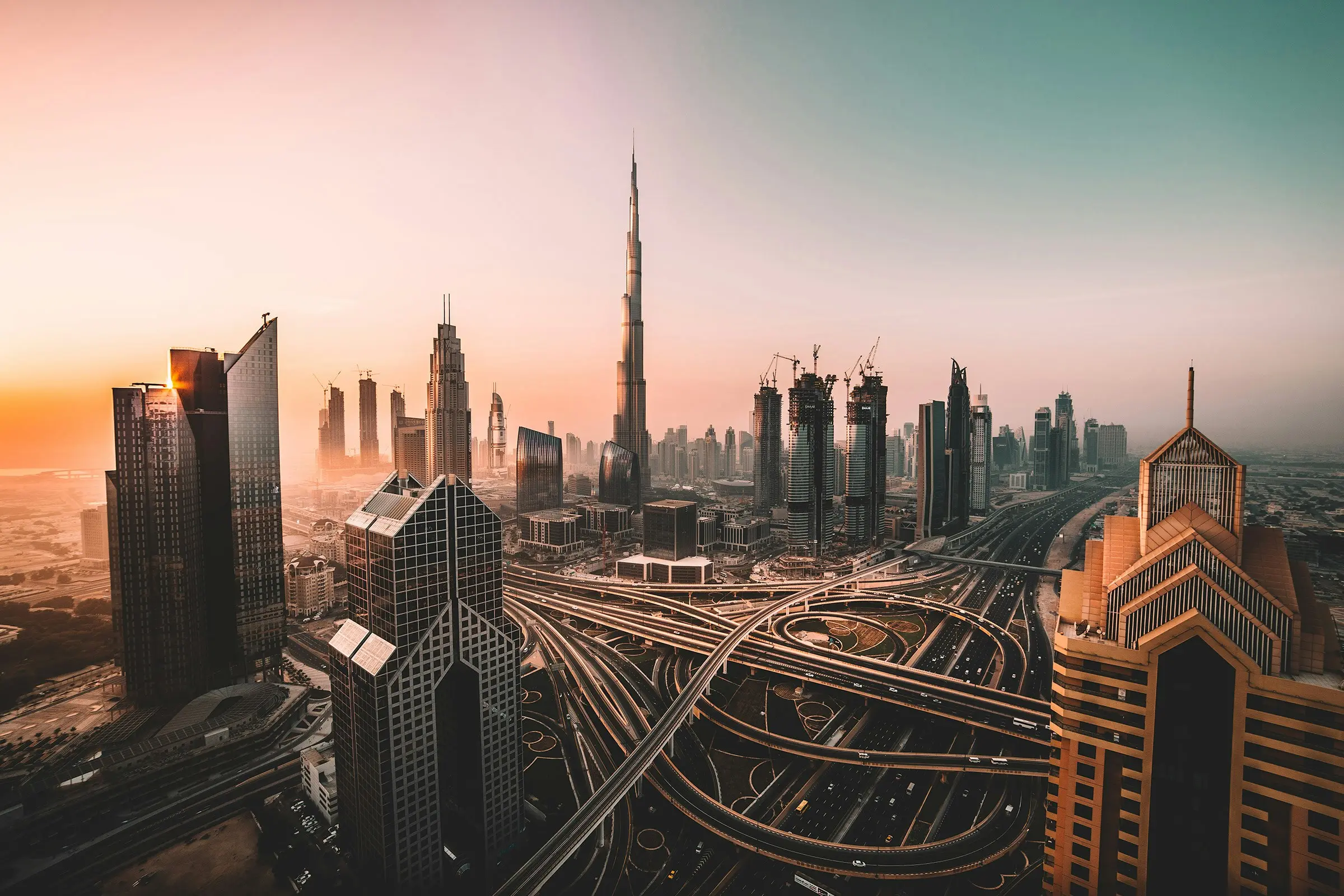
Investing in Dubai Off-Plan Properties: A Hedge Against Regional Volatility
How structured off-plan property investments in Dubai provide a perfect financial hedge against the economic unpredictability of 2026's regional tensions.

Key Takeaways
- Pegged Currency Security: The UAE Dirham's peg to the US Dollar provides a reliable currency floor, protecting global investors from emerging market devaluations.
- Escrow Account Protections: RERA-mandated escrow compliance under Law No. 8 of 2007 ensures developer access to capital is tied strictly to certified construction milestones.
- Cash-Dominant Market: Over 80% of Dubai property purchases are cash-based, significantly insulating the market from interest rate fluctuations and forced-liquidation cycles.
- Golden Visa Integration: A minimum AED 2 million investment qualifies buyers for the UAE's 10-year residency program, providing a secure personal and financial anchor.
Investing in Dubai Off-Plan Properties: A Hedge Against Regional Volatility
TL;DR / Key Takeaways
- Pegged Currency Security: The UAE Dirham's peg to the US Dollar provides a reliable currency floor, protecting global investors from emerging market devaluations.
- Escrow Account Protections: RERA-mandated escrow compliance under Law No. 8 of 2007 ensures developer access to capital is tied strictly to certified construction milestones.
- Cash-Dominant Market: Over 80% of Dubai property purchases are cash-based, significantly insulating the market from interest rate fluctuations and forced-liquidation cycles.
- Golden Visa Integration: A minimum AED 2 million investment qualifies buyers for the UAE's 10-year residency program, providing a secure personal and financial anchor.
Introduction
In an era marked by macroeconomic shifts, global inflationary pressures, and geopolitical volatility, capital preservation is the top priority for High-Net-Worth Individuals (HNWIs) and institutional investors. Traditional financial markets frequently suffer from sudden shocks, while volatile local currencies erode purchasing power overnight. In 2026, the strategy of parking wealth in real estate has gained renewed momentum, with Dubai's off-plan property sector standing out as a premier financial hedge.
By combining a currency pegged to the US Dollar, a tax-free regime, and some of the world's strictest investor protection laws, Dubai provides a stable harbor. This guide analyzes how off-plan property in Dubai serves as an active hedge against regional and global volatility, the regulations that safeguard your principal, and what investors must evaluate before committing capital.

The Anatomy of the Dubai Safe Haven
To understand why Dubai is resilient in times of volatility, it is necessary to examine the structural elements that underpin its real estate market.
The Pegged Currency Floor
The UAE Dirham (AED) has been pegged to the US Dollar (USD) at a stable rate of 3.6725 since 1997. For international investors, especially those from countries facing rapid currency depreciation (such as Turkey, Egypt, India, or parts of Europe), holding assets in a USD-pegged currency acts as an immediate shield. Buying real estate in Dubai is equivalent to holding a hard-currency asset, ensuring that your capital preserves its purchasing power in global terms.
The Zero-Tax Environment
Unlike major European or North American real estate markets, Dubai imposes no personal income taxes, no capital gains taxes, and no inheritance taxes on real estate ownership. When an off-plan property appreciates during construction, 100% of that gain remains with the investor. This tax-neutral framework maximizes net compound growth, allowing capital to grow unencumbered by municipal or national tax drag.
Insulation from Leverage Shocks (Cash-Dominant Market)
One of the primary causes of real estate crashes globally is high mortgage leverage. When interest rates rise, forced liquidations occur. Dubai's market is structurally different: over 80% of all real estate transactions are completed using cash reserves rather than bank debt. This high proportion of cash transactions means that developers and property owners are not highly leveraged. The market is protected from debt-default cascades, maintaining price stability even when global interest rates remain elevated.
Escrow Accounts: Physical Capital Protection
When investing in off-plan properties, the biggest risk is developer default or project abandonment. Dubai has mitigated this risk through Law No. (8) of 2007, which established the RERA Escrow Account system.
How the Escrow Law Works
- Dedicated Project Accounts: Every off-plan development must have a separate, project-specific escrow account opened with an authorized bank approved by the Dubai Land Department (DLD).
- Milestone-Based Capital Releases: The developer cannot access buyer payments for general operating costs. Funds are released from the escrow account to the developer only when independent construction auditors and DLD inspectors certify that specific physical progress milestones (e.g., shoring, pouring the foundation, completing the superstructure) have been met.
- Post-Handover Retention: RERA retains 5% of the total project funds in the escrow account for one full year after handover. This retention fund ensures that any structural defects or snags are repaired by the developer, protecting the buyer's asset value.
By law, the developer must also own the land title outright or have met strict DLD construction thresholds before selling units off-plan. This ensures that the developer has a major financial stake in the project's completion, reducing speculative developer default risk to near zero.

Analyzing Market Resiliency: 2025–2026 Data Insights
Dubai's real estate market has experienced substantial capital inflows. In 2025, total real estate sales transactions in the emirate exceeded AED 680 billion, driven by strong population growth and international HNWIs moving capital to a neutral jurisdiction. Off-plan properties represented approximately 65% of those transactions by volume, reflecting high confidence in the regulatory framework.
In early 2026, amid regional tensions, the market demonstrated its maturity. Instead of experiencing panic selling, the market saw a temporary transition to a 'wait-and-see' phase, followed by a stabilization of transaction volumes. Investors shifted from short-term speculation to highly selective, long-term asset positioning. Prime residential areas with strong infrastructure (such as Downtown Dubai, Dubai Marina, and Business Bay) and upcoming master-planned communities (such as Dubai South and Expo City) saw sustained demand. The underlying tenant demand remains supported by Dubai’s population, which officially crossed the 4 million mark in 2025.
Financial Dynamics: Off-Plan vs. Alternative Hedges
When comparing Dubai off-plan real estate to other traditional hedge assets, the advantages become clear:
| Hedge Asset | Yield Generation | Volatility Risk | Regulatory Protection | Tax Exposure |
|---|---|---|---|---|
| Dubai Off-Plan Real Estate | Delayed (Post-Handover 6%–8%) | Low (Physical Asset) | High (RERA Escrow Laws) | Zero Tax |
| Gold | Zero (Requires Storage Costs) | Moderate to High | Market-Driven | Varies by Jurisdiction |
| US Treasury Bonds | Fixed Yield (4%–5%) | Low | Government Guarantee | Subject to Income Tax |
| Emerging Market Equities | Variable Dividends | High | Varies | Subject to Capital Gains |
The Strategic Value of the 10-Year Golden Visa
A primary pillar of wealth preservation is personal mobility. The UAE’s 10-year Golden Visa program has transformed Dubai from a temporary expat destination into a permanent residential hub.
Investors who purchase off-plan properties worth AED 2 million or more are eligible to apply for this long-term residency. The visa is linked directly to the property investment, granting the buyer, their spouse, children, and domestic staff the right to live, work, study, and sponsor businesses in the UAE. This structural anchor ensures a steady stream of long-term residents and capital commitment, supporting rental demand and property values regardless of short-term regional developments.
Practical Due Diligence for Safe-Haven Buyers
While the regulatory environment is secure, investors must conduct individual due diligence to maximize their safety:
- Verify the M-Code: Every registered project has an official DLD M-Code. Use the DLD REST app to confirm the project’s registration status, escrow account details, and construction progress history.
- Examine Developer Liquidity: Partner with established developers who have a proven track record of timely deliveries and strong balance sheets. Mid-tier or new developers should be evaluated based on the active construction progress visible on the plot.
- Understand the Payment Plan Obligations: Staggered payment plans (e.g., 60/40 or 70/30) offer leverage. Ensure you have the liquid reserves to meet the construction-linked payment milestones to avoid penalties or contract termination.
Frequently Asked Questions
What makes Dubai a safe haven for real estate capital during regional volatility?
Dubai offers a unique combination of regulatory stability, a tax-free regime (no personal income, capital gains, or inheritance taxes), and a currency pegged to the US Dollar. Additionally, the market's high ratio of cash buyers (over 80%) prevents leverage-driven defaults, while strict escrow account laws protect off-plan buyers from developer insolvencies.
Can I resell my off-plan property before it is completed if regional conditions change?
Yes, Dubai Land Department regulations allow off-plan properties to be sold on the secondary market prior to completion. However, developers typically require that a minimum of 30% to 40% of the total purchase price be fully paid and registered before they will issue the required No Objection Certificate (NOC) for resale.
How do RERA escrow accounts protect my capital during construction?
Under Law No. 8 of 2007, developers must deposit all buyer payments directly into a project-specific escrow account held by an approved bank. The developer cannot access these funds at will; instead, capital is released in stages only after independent engineers and DLD inspectors verify that specific construction milestones have been met.
Does buying off-plan qualify me for the UAE Golden Visa?
Yes, investors purchasing off-plan properties can qualify for the 10-year Golden Visa, provided the total property value is AED 2 million or more. The buyer must have paid at least AED 2 million of the property's purchase price to the developer's registered escrow account to submit the visa application.
Related AiGentsRealty resources
What to verify before you act
Before making an investment decision, verify the latest pricing, transaction evidence, rental demand, service charges, payment-plan terms, and exit liquidity for the specific property. Market-wide guidance can help you shortlist opportunities, but final due diligence should happen at project, building, and unit level. Compare the total cost of ownership and avoid assuming that historic returns will repeat automatically.
Sources and further reading
Practical due diligence checklist
Use this article as a shortlist filter, then validate the specific asset before making a decision. Confirm the current asking price against recent transactions, check the total acquisition cost rather than only the headline price, and review service charges, payment-plan obligations, handover assumptions, and resale liquidity. For off-plan purchases, verify escrow registration, construction progress, developer delivery history, and the exact clauses in the sales and purchase agreement. For ready property, inspect the unit condition, building maintenance, occupancy profile, parking, views, and realistic rental demand.
Frequently Asked Questions
What makes Dubai a safe haven for real estate capital during regional volatility?
Dubai offers a unique combination of regulatory stability, a tax-free regime (no personal income, capital gains, or inheritance taxes), and a currency pegged to the US Dollar. Additionally, the market's high ratio of cash buyers (over 80%) prevents leverage-driven defaults, while strict escrow account laws protect off-plan buyers from developer insolvencies.
Can I resell my off-plan property before it is completed if regional conditions change?
Yes, Dubai Land Department regulations allow off-plan properties to be sold on the secondary market prior to completion. However, developers typically require that a minimum of 30% to 40% of the total purchase price be fully paid and registered before they will issue the required No Objection Certificate (NOC) for resale.
How do RERA escrow accounts protect my capital during construction?
Under Law No. 8 of 2007, developers must deposit all buyer payments directly into a project-specific escrow account held by an approved bank. The developer cannot access these funds at will; instead, capital is released in stages only after independent engineers and DLD inspectors verify that specific construction milestones have been met.
Does buying off-plan qualify me for the UAE Golden Visa?
Yes, investors purchasing off-plan properties can qualify for the 10-year Golden Visa, provided the total property value is AED 2 million or more. The buyer must have paid at least AED 2 million of the property's purchase price to the developer's registered escrow account to submit the visa application.
Editorial Team
AiGentsRealtyThe AiGentsRealty editorial team consists of real estate experts, market analysts, and property consultants with over 20 years of combined experience in the Dubai real estate market.
Related Articles
Dubai Building Age Data: What Construction Year Can and Cannot Tell a Buyer
A buyer-method guide to separating reported building dates from completion, condition, and transaction evidence in Dubai.
Investment GuidesDubai Real Estate Price Index: Read Market Movement Without Valuing a Unit
How to distinguish an official Dubai market-price series from the evidence needed for a unit-specific valuation.
Investment GuidesDubai School Commute Data: Compare Route Windows Before Choosing a Property
Use a documented, like-for-like route-window method to compare candidate Dubai homes with a selected school without turning estimates into guarantees.
Ready to Invest in Dubai?
Use Sophia AI to compare Dubai property options based on your budget, goals, and preferences.
Ask Sophia AI