Freehold vs Leasehold Dubai 2026: Complete Ownership Guide
Understanding property ownership types in Dubai. Freehold areas, leasehold rights, and what they mean for investors.

Key Takeaways
- Freehold ownership grants complete, perpetual title to both the property unit and the proportional land share, giving non-GCC nationals full rights to sell, lease, inherit, or modify the property in designated zones.
- Leasehold ownership provides contractual rights to use and occupy a property for a fixed period (typically 99 years) without land ownership, reverting to the freeholder upon expiration unless renewed.
- Under Law No. 7 of 2006, all property rights (freehold and long-term leasehold) must be registered with the Dubai Land Department (DLD) to receive a legally protected title deed.
- While freehold is standard for residential buyers (over 95% of expat transactions), leasehold can offer lower entry costs and attractive yield dynamics in specific commercial or government-owned sectors.
Freehold vs Leasehold Dubai 2026: Complete Ownership Guide
As Dubai's real estate market continues its record-breaking momentum in 2026, international investors, expatriates, and local buyers are navigating a highly sophisticated property landscape. One of the most fundamental decisions any buyer must make before committing capital is understanding the legal distinction between Freehold and Leasehold property ownership.
In Dubai, the legal frameworks governing real property are clear and robust, overseen by the Dubai Land Department (DLD). However, because these systems differ significantly from ownership structures in Europe, North America, or Asia, it is crucial to understand how they work under UAE law. Under Law No. 7 of 2006 concerning Real Estate Registration in the Emirate of Dubai, ownership types are strictly defined to protect all parties. Making the wrong assumption can impact your resale value, mortgage eligibility, and even your long-term residency status.
The Legal Foundation of Property Ownership in Dubai
Before the early 2000s, foreign nationals (non-GCC citizens) were not permitted to own real estate in Dubai. This changed dramatically with the issuance of regulatory decrees that opened the market to international capital. The landmark legislation is Law No. 7 of 2006, which remains the bedrock of Dubai's real estate registry.
Under this law:
- UAE and GCC Nationals (and companies wholly owned by them) have the right to own real estate (freehold or leasehold) anywhere in the Emirate of Dubai.
- Non-UAE/GCC Nationals (expatriates and foreign investors) can acquire freehold ownership, Usufruct rights (long-term leasehold), or Musataha rights (construction leases) only within designated areas approved by the Ruler of Dubai.
This distinction gave birth to the term "designated freehold areas." Today, the vast majority of Dubai's modern master-planned communities are designated freehold zones, making the purchasing process straightforward for international buyers. However, leasehold options still exist, particularly in older, established commercial districts or on government-owned plots.
Freehold Property Ownership: Perpetual Title and Absolute Rights
What is Freehold Ownership?
When you purchase a freehold property in Dubai, you acquire absolute and perpetual ownership of the structure (the villa or apartment unit) and a proportional share of the land upon which the building stands. In the case of standalone villas or townhouses, you own the specific plot of land outright.
The Dubai Land Department registers you as the "Freeholder." The title deed (called Mulkiya) is issued in your name (or your company's name) and remains valid indefinitely. There is no expiration date, no ground rent, and no renewal requirement.

Key Benefits of Freehold Ownership
- Permanent Asset Protection: Your ownership does not decay over time. The property can be passed down to heirs, sold, or leased without time-based depreciation.
- Absolute Transfer and Resale Rights: Freehold owners have the right to sell, lease, mortgage, or gift the property at any time, subject to standard DLD registration fees (typically 4% of the property value).
- Inheritance Security: Freehold assets can be easily incorporated into local wills (such as a DIFC Will) or registered under inheritance structures, ensuring that the asset transfers seamlessly to your designated beneficiaries according to your wishes.
- Residency Visa Eligibility: To encourage foreign investment, the UAE government links property ownership to residency. Under the 2026 guidelines, acquiring a freehold property valued at AED 2 million or more (either ready or off-plan through approved developers) makes the owner eligible for a 10-year UAE Golden Visa, which offers long-term stability and sponsorship rights for family members.
- No Ground Rent: Freehold owners are only responsible for community service charges (regulated by the Real Estate Regulatory Agency - RERA) and do not pay any ground rent to a primary landlord.
Major Freehold Zones in Dubai
Expats looking for freehold properties will find them in almost all of Dubai’s primary residential and commercial areas, including:
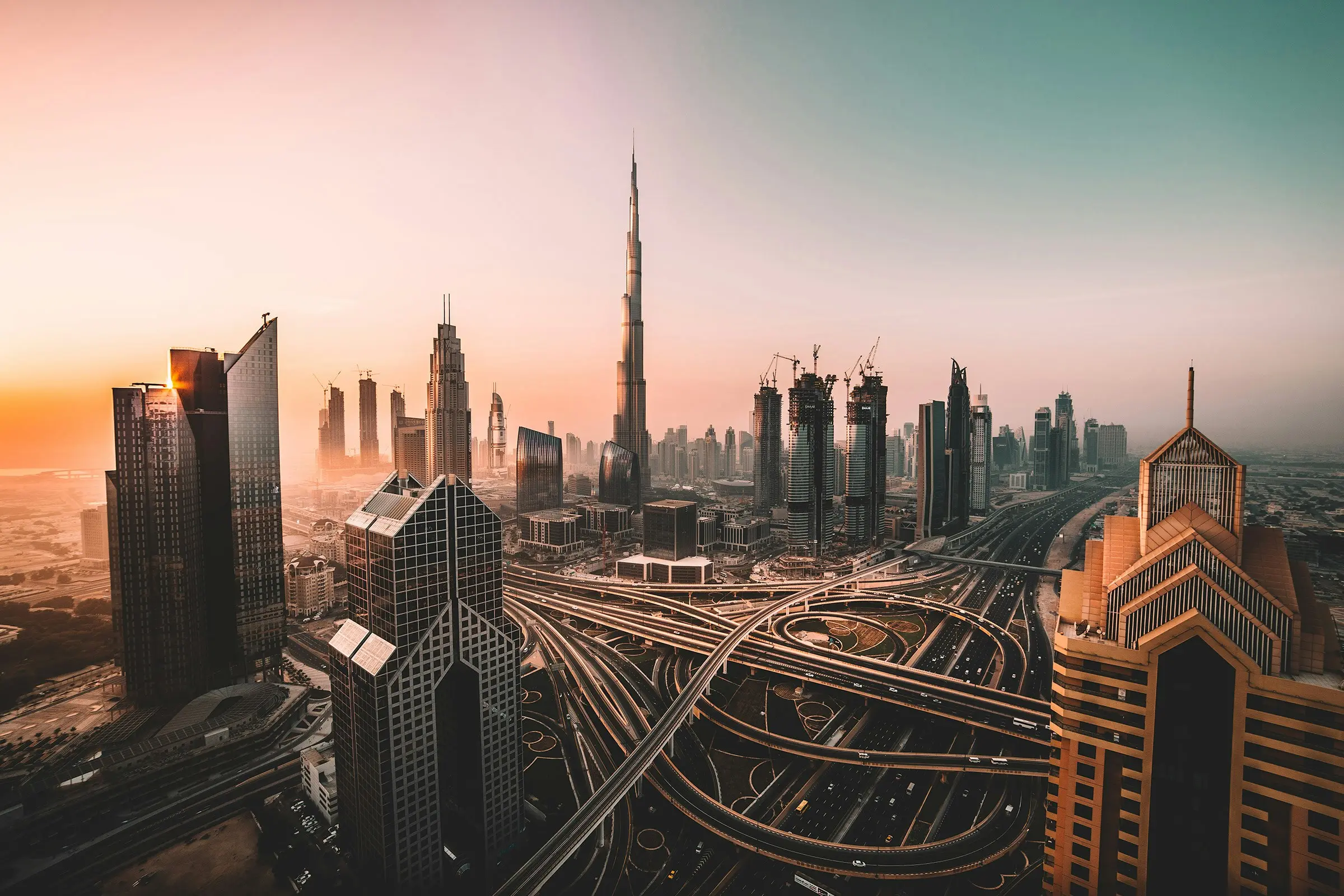
- Downtown Dubai: The luxury residential hub surrounding the Burj Khalifa and Dubai Mall.
- Dubai Marina & JBR: High-density waterfront living popular among Western expats.
- Palm Jumeirah: High-end villas and branded apartments on the iconic man-made island.
- Jumeirah Village Circle (JVC): One of the most active communities for mid-market apartments and townhouses, offering high yields.
- Business Bay: The primary commercial and residential extension of Downtown Dubai.
- Dubai Hills Estate: A massive family-centric master community developed by Emaar, featuring championship golf courses and parks.
Leasehold Property Ownership: Long-Term Usage and Structured Terms
What is Leasehold Ownership?
Leasehold ownership in Dubai grants the buyer the right to occupy, use, and generate income from a property for a fixed period, which is typically 99 years (but can be shorter, such as 30, 45, or 50 years).
Importantly, a leaseholder does not own the land on which the property is built. The land remains the property of the freeholder (which is often a government entity, a ruling family member, or a major master developer). When you buy a leasehold property, you are buying a long-term contractual leasehold interest (often registered as a Usufruct or Manfa'a right with the DLD).
Key Features and Considerations of Leasehold Property
- Fixed Duration: The value of a leasehold property is intrinsically linked to the remaining years on the lease. As the lease term approaches zero, the property value naturally depreciates, as the asset will eventually revert to the freeholder.
- Registration Requirements: Just like freehold properties, all long-term leasehold contracts must be registered with the Dubai Land Department. The DLD issues a leasehold title deed (Usufruct certificate) to protect the buyer's rights during the lease term.
- Lessor Approvals: Major renovations, modifications, or changes to the structure of a leasehold property often require written permission from the primary landowner (the lessor).
- Financing and Mortgages: Obtaining a mortgage on a leasehold property can be more complex. UAE banks have strict guidelines: the remaining term of the lease must typically exceed the mortgage amortization period by at least 10 to 15 years. If a lease has only 20 years remaining, securing a 15-year mortgage will be extremely difficult.
- Lower Entry Prices: Because leaseholders do not own the land, leasehold properties are often priced lower than equivalent freehold properties in the same geographical area, making them potentially attractive for short-to-medium-term commercial operations.
Why Do Leasehold Properties Exist in Dubai?
Leasehold structures are common in areas of the city that are historically restricted from foreign ownership. By offering 99-year leases, the government allows international businesses and residents to establish roots and operate in these prime locations without permanently transferring land ownership. Examples include specific plots in older districts like Deira or Bur Dubai, and commercial zones near major ports or industrial parks.
Freehold vs Leasehold: Head-to-Head Comparison
To help you make an informed decision, this table highlights the differences between the two ownership structures in Dubai for 2026:
| Evaluation Factor | Freehold Ownership | Leasehold Ownership |
|---|---|---|
| Duration of Title | Indefinite / Perpetual (lifetime ownership) | Fixed term (commonly 99 years; can be 30–50 years) |
| Land Ownership | Direct ownership of unit and proportional land share | No land ownership (usage rights only) |
| DLD Deed Type | Freehold Title Deed (Mulkiya) | Usufruct Deed / Long-term Lease (Manfa'a) |
| Resale and Transfer | Fully transferable; no landlord consent required | Transferable, but may require lessor's approval |
| Inheritance Rights | Seamless transfer to heirs via local/DIFC wills | Rights transfer for the remaining lease term only |
| Maintenance & Service Charges | Service charges paid to RERA-regulated OA/Mollak | Community service charges plus potential ground rent |
| Mortgage Options | Widely supported by all UAE financial institutions | Restrictive; terms depend on remaining lease years |
| Golden Visa Eligibility | Yes (if property value is AED 2 million or above) | Generally excluded (unless custom structures apply) |
| Primary Target Buyer | Expat families, long-term investors, HNWI | Specific commercial entities, short-term yield seekers |
Key Valuation and Risk Factors for Investors in 2026
When evaluating properties in Dubai, keep these critical risk management principles in mind:
1. The Decay Curve of Leasehold Assets
In real estate finance, a leasehold is a wasting asset. During the first 30 years of a 99-year lease, the property will behave similarly to a freehold asset in terms of price appreciation. However, once the remaining lease term drops below 50 years, the pool of potential buyers shrinks due to mortgage restrictions, causing capital depreciation. If you invest in leasehold, ensure your investment horizon aligns with the lease decay curve.
2. Community Service Charges (Mollak System)
Regardless of whether you choose freehold or leasehold, you must account for service charges. In Dubai, all service charges must be approved by RERA and are managed through the Mollak system. Before signing a purchase agreement, check the historical service charge rates for the building to ensure they do not erode your projected rental yields.

3. Title Verification using Dubai REST
Never rely on verbal assurances regarding ownership status. Developers or brokers may advertise a project as "freehold-equivalent," but only the official DLD registry matters. You can verify the exact status of any plot or property by scanning the QR code of the title deed in the Dubai REST mobile app or request a real-time validation via the DLD portal.
Ask Sophia: Let AI Simplify Your Property Due Diligence
Navigating the legalities of property acquisition in a foreign country can be daunting. This is where Sophia, the AiGentsRealty conversational AI assistant, provides unparalleled value.
Sophia has direct access to:
- DLD Open Data: Real-time transaction records, historical sale prices, and community pricing.
- RERA Mollak Registry: Current service charge rates per square foot for every registered building in Dubai.
- Geospatial Master Plans: Exact boundaries of designated freehold zones across all Dubai municipalities.
If you are looking at a property and want to verify its status, you can ask Sophia:
- "Is the project [Project Name] located in a designated freehold zone for expat buyers?"
- "Compare the service charges of freehold apartments in JVC vs. Business Bay using the Mollak index."
- "What are the bank financing limits for a leasehold property with 45 years remaining on its term?"
By leveraging Sophia's real-time analytical capabilities, you can bypass the marketing noise and base your investment decisions on verified, regulatory facts.
Related AiGentsRealty resources
What to verify before you act
Before acting on any legal, rental, visa, mortgage, or transaction process, confirm the latest rule with the relevant authority or a qualified adviser. Dubai procedures can change, and individual circumstances matter. Keep written records, compare total costs rather than headline prices, and avoid relying on verbal promises when a contract, permit, title deed, or payment obligation is involved.
Sources and further reading
Process and risk checklist
For legal, rental, mortgage, visa, and transaction topics, verify the current rule with the relevant authority or a qualified adviser before acting. Dubai procedures can change, and your nationality, financing method, property type, contract status, and ownership structure can affect the correct process. Keep written documentation, confirm all fees before transfer, and avoid relying on verbal promises when a permit, title deed, tenancy contract, or payment obligation is involved.
The safest approach is to compare the official requirement, the contract wording, and the practical timeline. If those three do not match, pause and clarify before paying a deposit or signing. Good process discipline protects buyers, sellers, landlords, and tenants from avoidable disputes.
How to apply this guide safely
Use this guide as orientation, then confirm the current requirement with the relevant authority, bank, developer, broker, landlord, or qualified adviser. Dubai rules and procedures can change, and the correct answer often depends on property type, ownership structure, nationality, financing method, contract status, or whether the asset is ready or off-plan.
Before signing or paying, collect written evidence. Confirm fees, timelines, refund rules, transfer conditions, permit requirements, and all documents needed for the next step. If a promise is important, it should appear in writing. Verbal assurances are not enough when a title deed, tenancy contract, mortgage, visa, or sale agreement is involved.
The practical approach is simple: verify the official rule, compare it with the contract, and check that the process timeline is realistic. If those three items do not match, pause before committing funds. This discipline helps buyers, sellers, landlords, and tenants avoid preventable disputes and unexpected costs.
Practical next-step checklist for Freehold vs Leasehold Dubai 2026
Use this guide as a process map, then confirm the details that apply to your specific transaction. Dubai property decisions can involve broker documentation, title checks, escrow rules, service charges, mortgage conditions, payment schedules, handover requirements, and government fees. The right next step is to turn each general point into a document or data check before money changes hands.
Keep written records of promises, compare the sales and purchase agreement with the marketing material, and verify any regulatory or visa-related requirement with the relevant authority or a qualified adviser. If the decision involves off-plan property, check escrow registration, construction progress, cancellation clauses, assignment rules, and the developer's delivery record. If it involves ready property, inspect the unit, building maintenance, occupancy profile, parking, defects, and realistic rental demand. Process discipline is what turns a useful guide into a safer transaction.
Frequently Asked Questions
What is the primary difference between freehold and leasehold in Dubai?
The primary difference is the ownership of the underlying land and the duration of ownership. Freehold grants perpetual, absolute ownership of both the property unit and the land it stands on. Leasehold grants the right to occupy and use the property for a fixed term (typically 99 years) while the land ownership remains with the freeholder. When a leasehold term expires, ownership reverts to the freeholder unless renewed.
Can expats buy freehold properties anywhere in Dubai?
No. Under Law No. 7 of 2006, non-UAE and non-GCC nationals can only buy freehold properties in designated areas, commonly referred to as 'freehold zones.' These zones include popular investment hubs like Dubai Marina, Downtown Dubai, Jumeirah Village Circle (JVC), Business Bay, and Palm Jumeirah. Outside of these designated zones, property ownership is restricted to UAE and GCC nationals.
Are leasehold properties eligible for the Dubai Golden Visa?
Generally, the Dubai Golden Visa requires freehold ownership of ready properties or off-plan properties (from approved developers) valued at AED 2 million or more, where the buyer holds a full title deed. While registered long-term leasehold interests (Usufruct rights for 99 years) might occasionally be considered under strict conditions, the vast majority of Golden Visa approvals are issued for freehold titles due to the direct land equity requirement.
How can I verify if a property is freehold or leasehold using the Dubai REST app?
You can verify the status of any property using the Dubai Land Department's official Dubai REST mobile app. By entering the title deed number or scanning the QR code on the title deed, you can access the DLD database. The registry status will explicitly show the type of ownership: 'Freehold' (Mutlaq) or 'Leasehold / Usufruct' (Manfa'a) along with the lease start and end dates.
How does Sophia AI help buyers distinguish between freehold and leasehold options in Dubai?
Sophia, the AiGentsRealty AI assistant, is integrated directly with live Dubai Land Department (DLD) open data and community master plans. When analyzing listings or recommending properties, Sophia cross-references coordinates and developer registrations to instantly verify if a project falls within a designated freehold zone. Sophia also assists investors by calculating the remaining lease years for leasehold properties and highlighting financing constraints that banks apply to leasehold purchases.
Genie AI
AI Property AdvisorGenie AI is an advanced artificial intelligence system that analyzes thousands of data points to provide personalized real estate investment recommendations. Powered by Dubai Land Department data, market trends, and sophisticated algorithms, Genie AI helps investors make data-driven decisions.
Related Articles
Dubai vs US Real Estate: Compare Ownership Friction, Income Evidence and Exit Assumptions
A source-backed method for U.S. investors to compare Dubai and U.S. property through matched ownership, income, currency, financing and exit assumptions.
Tips & TricksDubai Hotel Apartment Investment: Examine the Operating Model Before the Return Story
Dubai hotel apartment due diligence should begin with the operating model, not a return headline. Separate title and property status, establishment licensing, the operator agreement, owner-use rules, approved service charges, lender treatment and completed-sale evidence before modeling any outcome.
Tips & TricksDubai Villa vs Apartment: Compare Daily Use, Shared Services and Exit Questions
A no-winner framework for comparing Dubai villas and apartments through daily journeys, shared-service evidence, and property-specific exit checks.
Ready to Invest in Dubai?
Use Sophia AI to compare Dubai property options based on your budget, goals, and preferences.
Ask Sophia AI