Emaar vs Dubai Properties: Government-Backed Developer Comparison
Compare Dubai's two major government-linked developers. Analyze build quality, pricing, locations, rental yields, and investment potential to choose between Emaar and Dubai Properties.

Key Takeaways
- Ownership Shifts: Dubai Holding is now the largest shareholder in Emaar Properties with a 29.73% stake following a transfer from the Investment Corporation of Dubai (ICD) in May 2026.
- Government Security: Dubai Properties remains fully government-backed as a direct subsidiary of Dubai Holding, offering high project completion security.
- Yield Comparison: Dubai Properties tends to offer higher yields (6-7%+) in locations like Business Bay and JBR due to lower entry prices, compared to Emaar's 4-6% in premium districts.
- Investment Decision: Emaar commands a price premium for superior build quality and global brand recognition, whereas Dubai Properties provides stronger immediate cash flows and value for money.
Emaar vs Dubai Properties: Government-Backed Developer Comparison
In the global real estate landscape, developer reputation and financial stability are critical considerations for investors. Dubai’s property market stands out because its largest master developers are closely linked to the state, offering high project-completion safety.
Among these market leaders, Emaar Properties and Dubai Properties are two of the most prominent names. Both developers are responsible for shaping Dubai's modern skyline and key master communities. However, they operate under different ownership models, target distinct buyer profiles, and offer varying value propositions.
This comprehensive guide analyzes the structural profiles of Emaar and Dubai Properties in 2026, comparing their ownership, build quality, pricing strategies, rental yields, and overall investment potential.
1. Ownership & Government Backing: The 2026 Landscape
Understanding the relationship between these developers and the Dubai government is essential. Historically, both companies have enjoyed strong sovereign alignment, but recent corporate updates have transformed their ownership structures.
Emaar Properties: The Hybrid Giant
Emaar Properties has functioned as a public joint-stock company (PJSC) listed on the Dubai Financial Market (DFM). For years, the Investment Corporation of Dubai (ICD)—the sovereign wealth fund of the Government of Dubai—held a key stake in Emaar.
However, in May 2026, a major consolidation occurred:
- The Investment Corporation of Dubai (ICD) transferred its entire remaining 22.27% shareholding in Emaar Properties to Emirates Power Investment, a wholly-owned subsidiary of Dubai Holding.
- This transaction increased Dubai Holding’s total shareholding in Emaar Properties to 29.73%, making it Emaar's largest corporate shareholder.
- Following the transaction, ICD no longer holds direct shares in Emaar.
This shift brings Emaar under the broader umbrella of Dubai Holding's strategic investments, while Emaar continues to operate as an independent commercial entity with its own management team.
Dubai Properties: Wholly State-Backed
In contrast to Emaar’s publicly traded model, Dubai Properties is a wholly-owned subsidiary of Dubai Holding. Because Dubai Holding is 100% government-owned, Dubai Properties is backed by the state. This ownership structure provides investors with exceptional security, as the government acts as a ultimate guarantor for project completion and delivery.

2. Master Communities & Portfolios
The portfolios of both developers represent some of the most sought-after real estate in the world, though they reflect different master-planning philosophies.
Emaar's Signature Portfolios
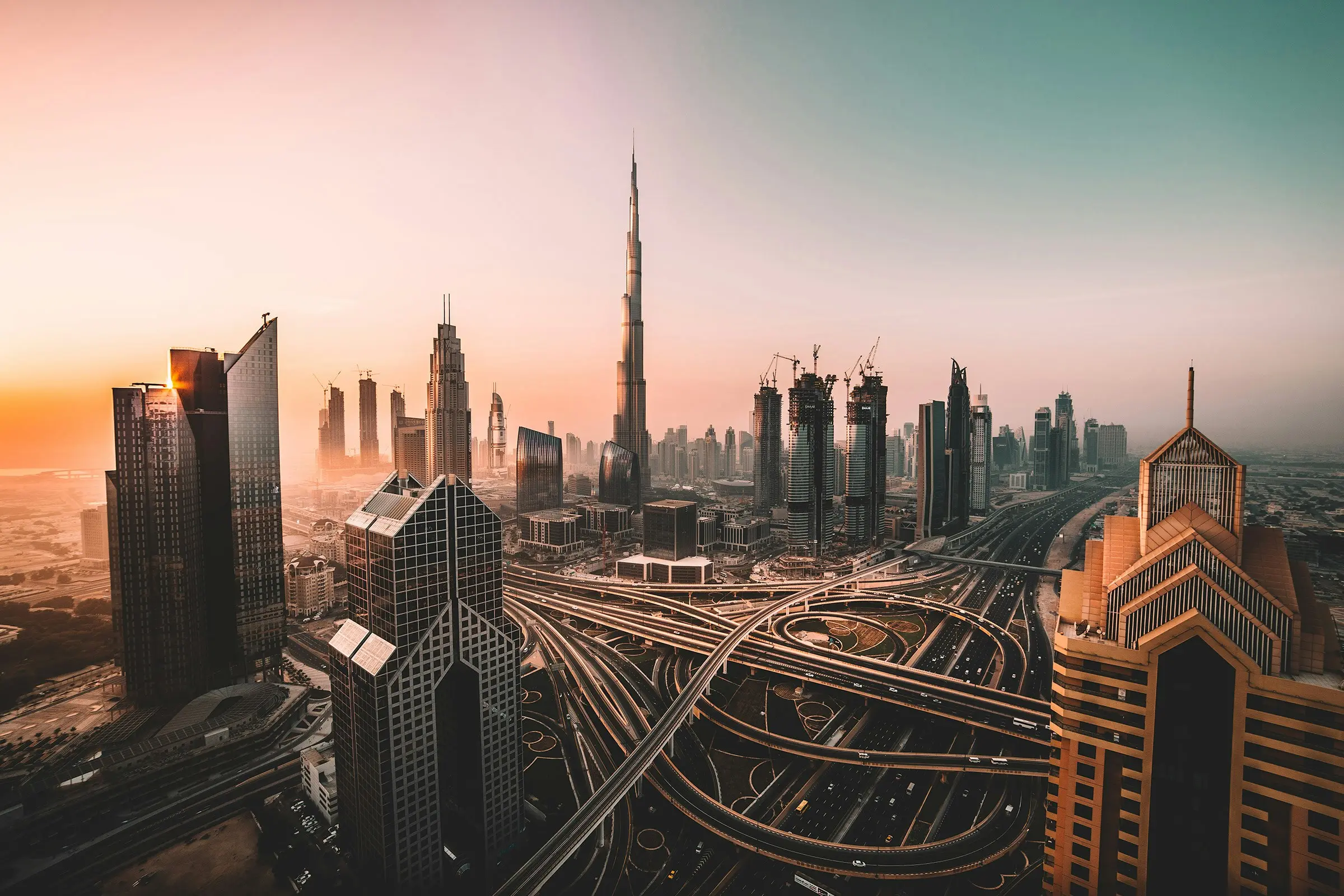
Emaar is renowned for building massive, integrated "lifestyle cities." Their developments are designed around central attractions—such as the Burj Khalifa, the Dubai Fountain, or central parks—creating a self-contained lifestyle.
- Downtown Dubai: Emaar’s flagship development, featuring Burj Khalifa, Dubai Mall, and luxury high-rise residences.
- Dubai Creek Harbour: An emerging master community situated on the historic creek, designed with a focus on smart and green infrastructure.
- Dubai Hills Estate: A highly successful joint venture with Meraas, offering a mix of premium villas, townhouses, and mid-rise apartments situated around an 18-hole championship golf course.
- Dubai Marina: One of the world’s largest man-made waterfront communities.
Dubai Properties' Signature Portfolios
Dubai Properties focuses on high-density residential developments, business districts, and culturally rich urban destinations.
- Business Bay: Dubai Properties formulated the master plan for Business Bay, establishing it as the city's commercial and corporate canal hub.
- Jumeirah Beach Residence (JBR): A prime beachfront development stretching along the Arabian Gulf, featuring the famous "The Walk."
- Madinat Jumeirah Living (MJL): A premium freehold community overlooking Burj Al Arab, featuring traditional Arabic architecture and direct pedestrian links to Madinat Jumeirah resort.
- Villanova & Mudon: Family-friendly suburban townhouse and villa communities catering to the mid-market segment.
3. Build Quality & Construction Standards
When evaluating Emaar and Dubai Properties, build quality is a major point of differentiation.
| Metric | Emaar Properties | Dubai Properties |
|---|---|---|
| Typical Quality Rating | 4.5 / 5.0 | 4.0 / 5.0 |
| Common Finishes | High-end porcelain, built-in kitchens, premium fixtures | High-quality ceramic, functional built-in wardrobes, standard fixtures |
| Post-Handover Maintenance | Managed by Emaar Community Management (ECM) | Managed by Taziz (Dubai Holding Community Management) |
| Developer Focus | Luxury lifestyle, brand premium, international standards | Practical urban design, value for money, spacious floorplans |
Emaar Properties is generally considered the gold standard for build quality in the Dubai real estate market. They maintain strict quality-control protocols and utilize premium materials. Their common areas, lobbies, and landscaping are meticulously designed and maintained, supporting long-term property values.
Dubai Properties delivers solid, durable, and reliable mid-to-high-end quality. Their focus is on practicality, spaciousness, and functional layouts rather than high-end luxury. This approach makes their properties attractive to end-users who prioritize space and functionality over brand premiums.
4. Pricing & Rental Yields: The Investment Numbers
Pricing and rental returns are where the comparison becomes particularly interesting for investors. As a general rule, Emaar commands a price premium, whereas Dubai Properties offers stronger immediate yields.
Pricing per Square Foot
In comparable locations, Dubai Properties is typically priced 10% to 25% lower than Emaar.
- In the Business Bay and Downtown corridor, Emaar's new projects (such as Downtown Views or Creek Waters) frequently launch at AED 2,200 to AED 3,000 per square foot.
- In contrast, Dubai Properties’ launches in Business Bay (such as Bellevue Towers or Executive Towers resale) generally trade at AED 1,500 to AED 2,100 per square foot.
Rental Yield Comparison
Because of the lower entry price per square foot, Dubai Properties projects often deliver superior gross rental yields.
- Business Bay Yields: Dubai Properties’ developments in Business Bay achieve gross yields between 6% and 7.5%, supported by high demand from corporate professionals working in the business hub.
- Jumeirah Beach Residence (JBR): Due to its beachfront appeal and short-term rental potential, apartments in JBR yield between 6.5% and 7.5% gross.
- Emaar Prime Projects: In premium locations like Downtown Dubai, Emaar's yields range between 4% and 5.8%. Although the rental income is high, the premium purchase price compresses the yield percentage. However, Emaar projects typically experience higher rates of long-term capital appreciation.

5. Delivery Track Record & Delays
On-time project delivery is another critical factor, especially for off-plan investors.
Emaar’s Delivery Record
Emaar maintains one of the best delivery records in the region. While minor delays of 6 to 12 months can occur due to global supply chain dynamics, Emaar rarely experiences significant project stoppages. Their construction updates are transparent, and escrow account management is strictly compliant with Dubai Land Department regulations.
Dubai Properties’ Delivery Record
Dubai Properties also has a strong track record of project completion, backed by the financial strength of Dubai Holding. However, some of their projects have historically faced longer construction timelines, with delays occasionally extending to 12 to 18 months. Because they are wholly government-backed, the risk of a project being canceled or abandoned is extremely low, but investors should build buffer time into their handover expectations.
6. Payment Plans & Investor Flexibility
Payment structures can significantly impact an investor's cash flow strategy.
- Emaar's Approach: Emaar’s payment plans are usually structured around milestones, such as 80/20 or 70/30 during construction, with the final payment due upon handover. Post-handover payment plans are occasionally offered on select ready stock, though they are less common in a seller-dominated market. Emaar's booking deposit is typically a standard 10%.
- Dubai Properties’ Approach: Dubai Properties offers competitive and flexible payment plans, particularly for their suburban townhouse projects (like Villanova). Plans such as 50/50 or 60/40 are common, allowing buyers to pay a larger portion upon handover or post-handover. This flexibility is highly appealing to end-user families and first-time buyers.
7. Strategic Recommendations for Buyers
Choosing between Emaar and Dubai Properties depends on your primary investment objectives.
Choose Emaar Properties If:
- Capital Appreciation is Key: Emaar properties command high resale value and appreciate faster due to the global prestige of the Emaar brand.
- Premium Aesthetics Matter: You want high-end finishing, superior landscaping, and premium community management.
- Strict Timelines are Required: You are planning your move or financing schedule around strict handover dates.
Choose Dubai Properties If:
- Yield Efficiency is Your Priority: You want to maximize your rental income per million dirhams invested.
- Space and Layout are Essential: You prefer larger room dimensions and traditional closed kitchens, which are common in Dubai Properties layouts.
- You Value Wholly Government-Backed Security: You want absolute capital protection via Dubai Holding's sovereign backing.
Related Guides
- Emaar Properties Review - Full Emaar analysis
- Dubai Properties Review - Full DP analysis
- Business Bay Investment Guide - Key DP location
- DAMAC vs Emaar Comparison - Alternative comparison
Sources and further reading
Developer due diligence checklist
A developer profile should be used as a starting point, not a substitute for project-level checks. Review completed handovers, construction quality, service-charge history, escrow registration, current site progress, warranty process, and resale performance in delivered buildings. A strong brand can support confidence, but the specific project, launch price, payment schedule, floor plan, and micro-location still determine whether the purchase is attractive.
Before reserving a unit, ask for written confirmation of payment milestones, expected handover, cancellation terms, assignment rules, service-charge assumptions, and any incentives. Compare the developer with alternatives at the same price point and avoid paying a premium unless the project quality, location, and exit liquidity justify it.
Frequently Asked Questions
Is Dubai Properties fully government-owned?
Yes, Dubai Properties is a direct subsidiary of Dubai Holding, which is wholly owned by the government of Dubai. This full government backing provides investors with exceptional security regarding project completions and capital safety.
What is the government stake in Emaar Properties in 2026?
In May 2026, the Investment Corporation of Dubai (ICD) transferred its entire 22.27% shareholding in Emaar Properties to Emirates Power Investment, a subsidiary of Dubai Holding. Dubai Holding now holds a total stake of 29.73% in Emaar, making it the largest shareholder.
Which developer has better rental yields: Emaar or Dubai Properties?
Generally, Dubai Properties projects offer higher gross rental yields (typically 6% to 7.5%) compared to Emaar's prime developments (typically 4% to 6%). This is because Dubai Properties offers lower entry prices per square foot, particularly in central locations like Business Bay and Jumeirah Beach Residence (JBR).
How do Emaar and Dubai Properties compare in terms of build quality?
Emaar Properties is widely recognized as the industry benchmark for high build quality, premium finishings, and integrated community amenities. Dubai Properties delivers robust, mid-to-high-end quality, but is generally built with value-for-money in mind, resulting in more competitive pricing.
Genie AI
AI Property AdvisorGenie AI is an advanced artificial intelligence system that analyzes thousands of data points to provide personalized real estate investment recommendations. Powered by Dubai Land Department data, market trends, and sophisticated algorithms, Genie AI helps investors make data-driven decisions.
Related Articles
Wasl Properties Dubai: Separate Corporate, Community and Asset Roles
An evidence-led framework for separating corporate, developer, community, management, asset and operator roles when researching Wasl-linked Dubai property.
Developer SpotlightNakheel 2026: Luxury Waterfront Repositioning & Palm 360 Revival
Nakheel’s 2026 waterfront push spans Palm Jumeirah densification, gateway and scarcity towers, and larger island expansion—while Palm 360 is best read as a historical luxury benchmark until a primary relaunch is verified.
Developer SpotlightDeveloper Spotlight 2026: Azizi Venice & Dubai South Water-Infrastructure Strategy
Azizi Venice is a bold water-led megaproject in Dubai South, riding the long-term Al Maktoum Airport growth story. This 2026 developer spotlight weighs the lagoon lifestyle appeal against early-stage risk, service-charge economics and off-plan due diligence.
Ready to Invest in Dubai?
Use Sophia AI to compare Dubai property options based on your budget, goals, and preferences.
Ask Sophia AI