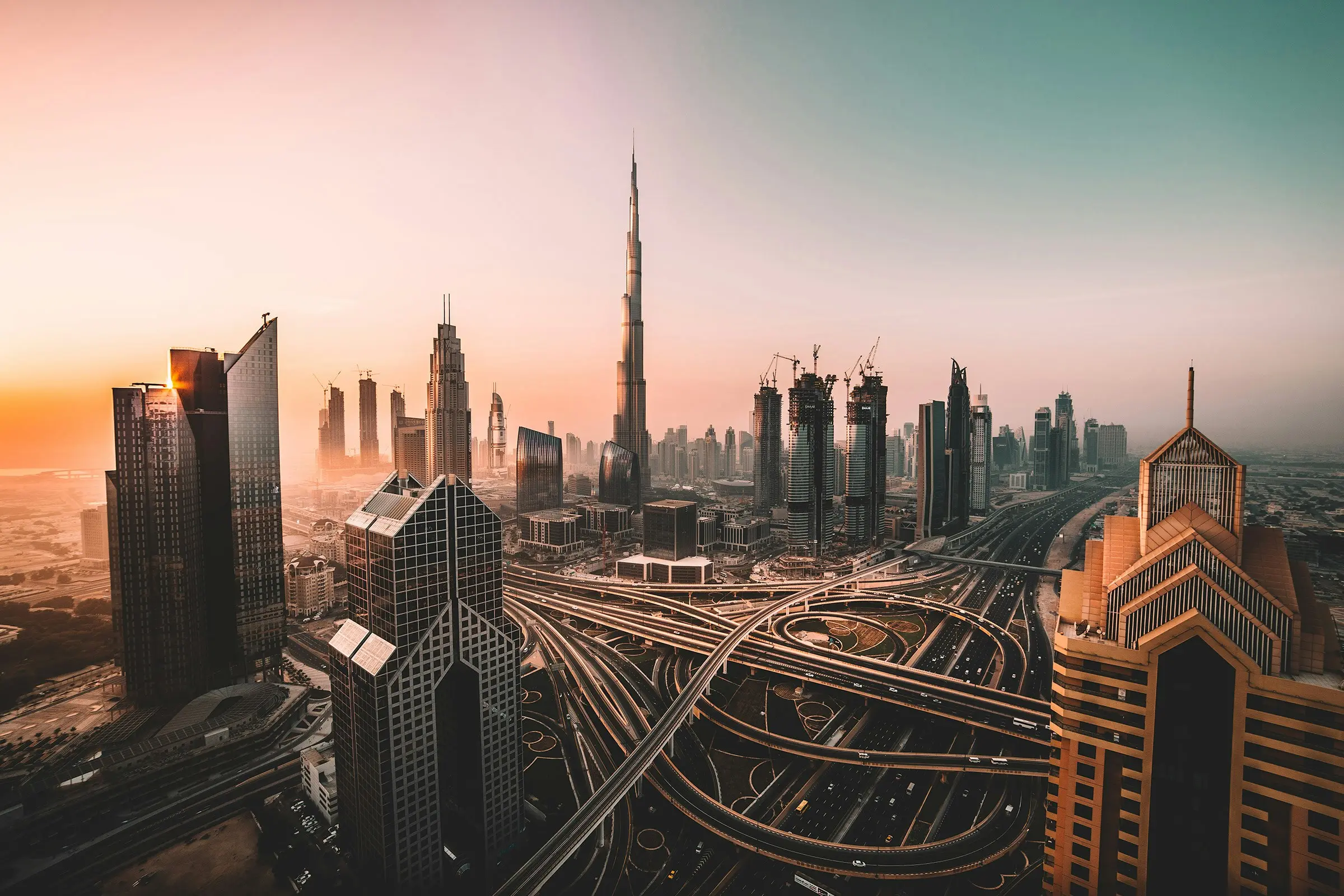
Emaar Properties 2025: Record AED 27.5B Revenue & What It Means for Investors
Emaar Properties achieved record-breaking AED 27.5B revenue and AED 15.5B profit in 2025. With 423 projects across Dubai, discover what this means for property investors and upcoming opportunities in 2026.

Key Takeaways
- Emaar Properties PJSC (Group) recorded a milestone revenue of AED 49.6 billion (US$ 13.5B) in 2025, representing a 40% year-on-year growth.
- Emaar Development PJSC (the UAE development arm) drove local sales with AED 71.1 billion in property sales and AED 27.5 billion in revenue.
- The Group's total revenue backlog reached AED 155 billion (US$ 42.1B) at the end of 2025, guaranteeing strong revenue visibility for the next 3 to 5 years.
- Emaar residential units command a 10% to 15% resale price premium over comparable properties due to global brand equity, superior build quality, and Emaar Community Management (ECM) standards.
Emaar Properties 2025: Record AED 49.6B Group Revenue & What It Means for Investors
TL;DR: Emaar Properties PJSC delivered a record-breaking financial performance in 2025, reporting AED 49.6 billion in Group revenue and AED 25.7 billion in pre-tax net profit. Supported by a combined Group revenue backlog of AED 155 billion and robust local sales driven by Emaar Development PJSC, the developer continues to dominate Dubai's real estate sector. For investors, Emaar's brand premium translates to solid capital appreciation and a 10% to 15% resale premium over competitors.
Introduction: Emaar's Unprecedented 2025
Emaar Properties PJSC, the UAE's leading real estate developer, delivered its strongest financial and operational performance in history in 2025. The developer's record-breaking results highlight the persistent global demand for Dubai real estate and solidify Emaar's position as the primary builder of the city's modern skyline.
During 2025, Emaar Properties Group capitalized on the UAE's strong macroeconomic environment, population growth, and high investor inflows. According to Emaar's official financial disclosures on the Dubai Financial Market (DFM), the developer achieved consolidated group revenues of AED 49.6 billion (US$ 13.5 billion), representing a 40% increase year-on-year compared to 2024. Group net profit before tax reached AED 25.7 billion (US$ 7 billion), marking a 36% growth compared to the prior year.
To understand Emaar's scale, its single-year consolidated profit exceeds the combined earnings of many of India's and Europe's largest residential developers, demonstrating the massive depth of the Dubai real estate market and Emaar's high efficiency.

Decoupling the Figures: Emaar Properties vs. Emaar Development
For investors analyzing the financials, it is critical to distinguish between the parent group, Emaar Properties PJSC (DFM: EMAAR), and its build-to-sell residential subsidiary, Emaar Development PJSC (DFM: EMAARDEV).
Emaar Properties PJSC (Consolidated Group)
Emaar Properties represents the parent conglomerate. Its revenue includes international real estate operations (primarily in Egypt, India, and Turkey), recurring revenue businesses (shopping malls, hospitality, leisure, and entertainment), and Emaar Development.
- Group Property Sales: AED 80.4 billion (US$ 21.9 billion), up 16% YoY.
- Group Revenue Backlog: AED 155 billion (US$ 42.1 billion) as of December 31, 2025, up 39% YoY. This backlog represents future revenue from sold off-plan projects that will be recognized over the next 3 to 5 years as construction handovers progress.
- Recurring Revenue Performance: Malls, hospitality, and retail divisions recorded AED 10.5 billion in revenue, growing 13% YoY. Malls and retail assets achieved average occupancies of 95%+, showcasing stable cash flows that shield the parent company from real estate cycle corrections.
Emaar Development PJSC (UAE Operations)
Emaar Development is the publicly traded subsidiary responsible for master-planned communities in the United Arab Emirates.
- UAE Property Sales: AED 71.1 billion (US$ 19.3 billion), growing 9% YoY.
- UAE Revenue: AED 27.5 billion, a 44% increase YoY.
- UAE Net Profit (Before Tax): AED 15.5 billion, up 52% YoY.
- UAE Revenue Backlog: AED 134.3 billion at the end of 2025.
Group Financial Performance Breakdown
| Metric | 2025 (Properties Group) | 2025 (Development Subsidiary) | Group Change (YoY) |
|---|---|---|---|
| Revenue | AED 49.6B | AED 27.5B | +40% |
| Net Profit (Pre-tax) | AED 25.7B | AED 15.5B | +36% |
| EBITDA | AED 25.6B | AED 14.3B | +33% |
| Revenue Backlog | AED 155.0B | AED 134.3B | +39% |
| Property Sales | AED 80.4B | AED 71.1B | +16% |
Emaar's Dubai Portfolio: A Community Review
Our database tracks 423 Emaar projects across Dubai, outlining the massive scale of their localized development:
1. Downtown Dubai (123 Projects)
As the crown jewel of Emaar's portfolio, Downtown Dubai contains the Burj Khalifa, Dubai Mall, and Dubai Opera. Average sales prices stand at AED 2,860 per square foot, with yields holding between 5% and 6%. Capital growth in Downtown continues to lead established communities at 8% to 12% annually due to the lack of new buildable plots.
2. Dubai Hills Estate (57 Projects)
Focusing on family-centric villa communities and mid-rise golf apartments, Dubai Hills Estate has shown massive capital growth of 10% to 15% annually. Average sales prices hover around AED 1,800 per square foot, and rental yields sit at a healthy 5% to 7% due to the community's high popularity with expatriate families.
3. Dubai Creek Harbour (44 Projects)
Positioned as the 'Future of Dubai,' Dubai Creek Harbour is primarily an off-plan community with huge long-term upside. Average prices sit at AED 1,600 per square foot, and investors have enjoyed 12% to 18% capital appreciation during construction cycles, with rental yields expected to reach 6% to 7% upon handover.
4. Emaar South (22 Projects)
Located near Al Maktoum International Airport (DWC), Emaar South is Emaar's main entry-level and affordable housing community. Averaging AED 950 per square foot, this community yields 7% to 8%, the highest rental yield in Emaar's portfolio, and capital growth is projected at 15% to 20% as the airport expansion progresses.

Strategic Land Acquisitions and Launches
During 2025, Emaar acquired 36 million square feet of prime development land banks within the UAE. This land bank addition has a projected development value of AED 120 billion (US$ 32.7 billion), securing Emaar's project pipeline for the next decade.
Furthermore, Emaar launched over 48 new residential projects in 2025, including:
- The Valley: Expanded phases of family villa communities.
- Emaar Beachfront: Premium beachfront towers.
- Grand Polo: A luxury residential estate capitalizing on premium equestrian lifestyles.
What Emaar's Record Year Means for Investors
Investing in Emaar developments offers distinct advantages that differentiate their properties from secondary developers:
1. Delivery Certainty
Emaar's AED 155 billion Group backlog and massive liquidity pool mean that the developer faces virtually zero risk of bankruptcy or project abandonment. In a market where secondary developers sometimes struggle with construction delays, Emaar represents a safe haven for off-plan capital.
2. Emaar Resale Premium
Emaar properties consistently command a 10% to 15% price premium on the secondary market compared to neighboring developments. This is driven by Emaar's global brand equity, strict building codes, and Emaar Community Management (ECM) services. ECM ensures that common areas, landscaping, swimming pools, and community security are kept at pristine levels, preserving the long-term asset value.
3. Favorable Financing and Payment Plans
Because of Emaar's financial strength, they offer competitive off-plan payment structures (ranging from 50/50 to 70/30 milestones) and are pre-approved by all major UAE retail banks, simplifying mortgage approvals for international buyers.
2026 Outlook and Investor Strategy
Emaar enters 2026 with a solid foundation. The main growth drivers for the year include the expansion of Al Maktoum International Airport, the extension of the Dubai Metro Blue Line, and the continued influx of golden visa applicants.
For investors seeking the highest return on investment, the recommended strategy is:
- Yield-Focused: Acquire townhouses or apartments in EWC/Emaar South to lock in 7% to 8% net yields before prices rise due to airport construction.
- Appreciation-Focused: Focus on off-plan premium waterfront towers in Dubai Creek Harbour to capture capital appreciation before the community reaches mature stages.
- Wealth Preservation: Acquire ready units in Downtown Dubai or Dubai Hills Estate to preserve capital and capture steady, inflation-hedged rental returns.
Key Takeaways for Investors
- Leverage the backlog as evidence of delivery security; Emaar's cash flow guarantees off-plan construction progress.
- Look beyond the purchase price to factor in Emaar's 10% to 15% resale premium when calculating long-term ROI.
- Diversify across communities based on your investment profile: Downtown for preservation, Creek Harbour for appreciation, and Emaar South for high yields.
- Confirm community rules and service charges with Emaar Community Management before finalizing a purchase.
Related AiGentsRealty resources
Sources and further reading
- Emaar Properties PJSC Investor Relations Portal
- Dubai Financial Market Listing and Disclosures
- Dubai Land Department Transactions Registry
- Dubai REST Real Estate Data Portal
- Property Finder Real Estate Marketplace
Developer due diligence checklist
A developer profile should be used as a starting point, not a substitute for project-level checks. Review completed handovers, construction quality, service-charge history, escrow registration, current site progress, warranty process, and resale performance in delivered buildings. A strong brand can support confidence, but the specific project, launch price, payment schedule, floor plan, and micro-location still determine whether the purchase is attractive.
Before reserving a unit, ask for written confirmation of payment milestones, expected handover, cancellation terms, assignment rules, service-charge assumptions, and any incentives. Compare the developer with alternatives at the same price point and avoid paying a premium unless the project quality, location, and exit liquidity justify it.
How to turn this guide into a decision
Use this article to form a shortlist, then test each option against current evidence. Check recent transactions, live asking prices, payment terms, service charges, handover assumptions, rental demand, and resale liquidity. A good Dubai property decision depends on the exact asset, not only the area, developer, or broad market narrative.
For investors, compare total acquisition cost and holding cost before looking at headline returns. Include DLD fees, agency fees, service charges, maintenance, vacancy, furnishing, management, and potential exit costs. For end users, compare livability factors such as commute, noise, parking, amenities, building quality, and future construction nearby.
The safest decision process has four steps: verify the data, compare alternatives, pressure-test the downside, and confirm all terms in writing. If a property still looks attractive after those checks, it is a stronger candidate. If the numbers only work under optimistic assumptions, keep searching or negotiate better terms.
Frequently Asked Questions
What is the difference between Emaar Properties and Emaar Development?
Emaar Properties PJSC (DFM: EMAAR) is the parent conglomerate that encompasses the entire real estate portfolio, including international developments, shopping malls, retail, hospitality, and leisure businesses. Emaar Development PJSC (DFM: EMAARDEV) is the specialized, publicly listed UAE build-to-sell real estate development subsidiary. For the full year 2025, Emaar Properties Group reported a consolidated revenue of AED 49.6 billion, while Emaar Development alone recorded AED 27.5 billion in revenue from local property handovers.
Why do Emaar properties command a resale premium in Dubai?
Emaar properties typically sell and rent at a 10% to 15% premium compared to similar projects in the same areas by other developers. This premium is driven by three main factors: first, Emaar's global brand recognition which attracts international buyers; second, the high standards of infrastructure and maintenance managed by Emaar Community Management (ECM); and third, the master-planned nature of their communities (like Downtown Dubai and Dubai Hills Estate), which combine residential units with schools, retail, and parks.
What is Emaar's revenue backlog and why does it matter to investors?
As of December 31, 2025, Emaar Properties Group had a total revenue backlog of AED 155 billion (US$ 42.1 billion), with Emaar Development accounting for AED 134.3 billion. The revenue backlog represents contracted property sales from off-plan launches that have not yet been recognized as revenue in the financial statements. As construction progresses and handovers occur over the next 3 to 5 years, this backlog will be recognized as revenue. For investors, a growing backlog provides highly predictable future earnings and cash flows, ensuring development continuity and dividend stability.
Genie AI
AI Property AdvisorGenie AI is an advanced artificial intelligence system that analyzes thousands of data points to provide personalized real estate investment recommendations. Powered by Dubai Land Department data, market trends, and sophisticated algorithms, Genie AI helps investors make data-driven decisions.
Related Articles
Wasl Properties Dubai: Separate Corporate, Community and Asset Roles
An evidence-led framework for separating corporate, developer, community, management, asset and operator roles when researching Wasl-linked Dubai property.
Developer SpotlightNakheel 2026: Luxury Waterfront Repositioning & Palm 360 Revival
Nakheel’s 2026 waterfront push spans Palm Jumeirah densification, gateway and scarcity towers, and larger island expansion—while Palm 360 is best read as a historical luxury benchmark until a primary relaunch is verified.
Developer SpotlightDeveloper Spotlight 2026: Azizi Venice & Dubai South Water-Infrastructure Strategy
Azizi Venice is a bold water-led megaproject in Dubai South, riding the long-term Al Maktoum Airport growth story. This 2026 developer spotlight weighs the lagoon lifestyle appeal against early-stage risk, service-charge economics and off-plan due diligence.
Ready to Invest in Dubai?
Use Sophia AI to compare Dubai property options based on your budget, goals, and preferences.
Ask Sophia AI