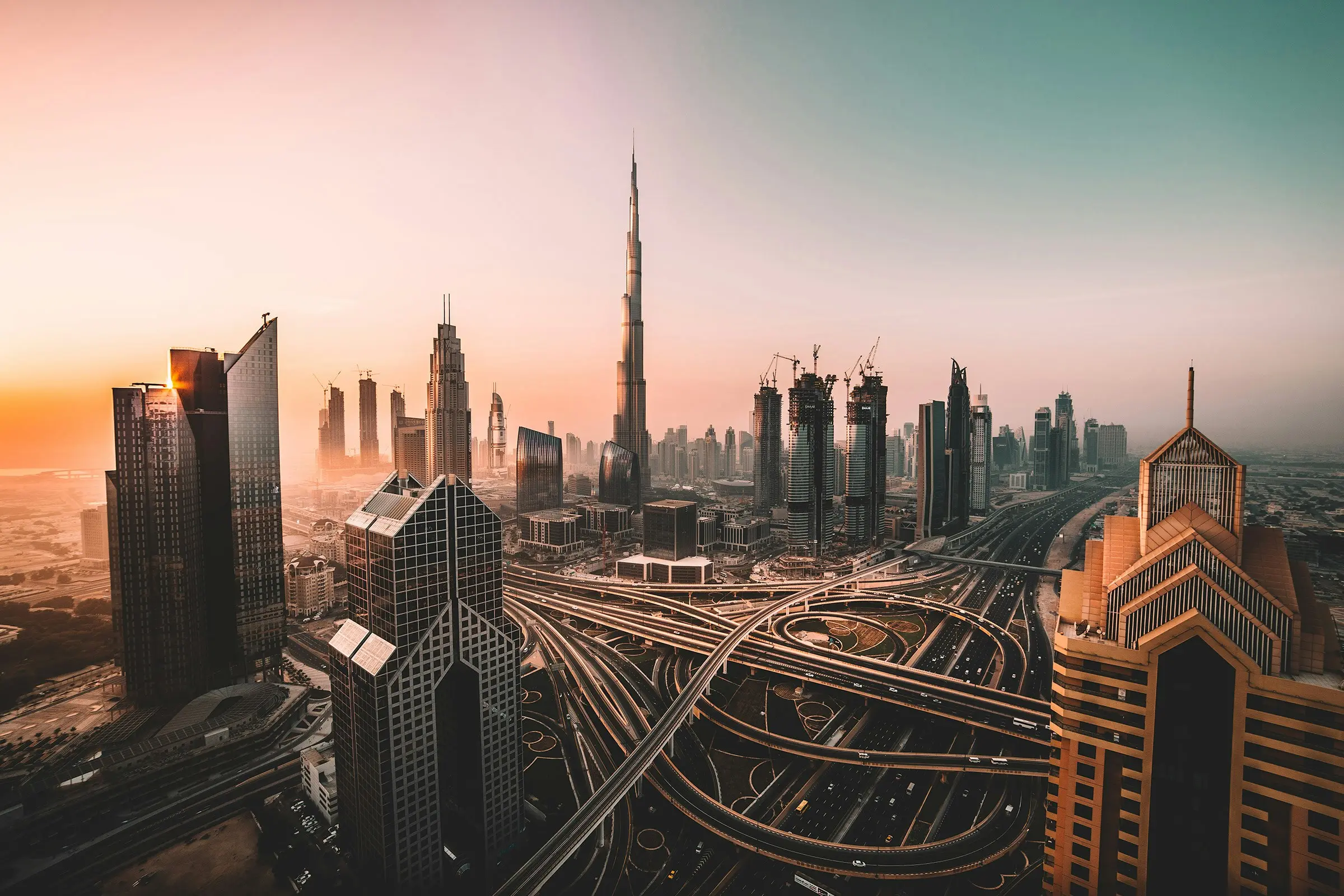
Inside Dubai's $10M+ Fortress: Why the Ultra-Rich Are Ignoring Global Geopolitics in 2026
Explore how Dubai's $10M+ ultra-luxury real estate sector has completely decoupled from broader market trends and geopolitical noise in 2026.

Key Takeaways
- Geopolitical Decoupling: Dubai's $10 million+ ultra-luxury property market has detached from global economic headwinds and regional geopolitical noise, operating as a standalone wealth-preservation asset class.
- Record-Breaking Transaction Volumes: In 2025, Dubai registered 500 sales of homes valued at $10 million or more, totaling approximately $9.05 billion in sales value.
- Decoupling from Financing: Over 80% of transactions in the ultra-luxury segment are executed entirely in cash, bypassing interest rate fluctuations and global banking sector volatility.
- Waterfront Land Scarcity: Severe supply constraints in ultra-prime locations like Palm Jumeirah, Jumeirah Bay Island, and Palm Jebel Ali guarantee long-term price rigidity.
- Branded Residences Domination: Brand partnerships with luxury names like Bugatti, Baccarat, Armani, and Mercedes-Benz command premiums up to 30% over standard luxury units.
Inside Dubai's $10M+ Fortress: Why the Ultra-Rich Are Ignoring Global Geopolitics in 2026
When analyzing the global real estate landscape, the word "decoupling" is often thrown around by economists to describe markets that resist global trends. However, in 2026, no market embodies this concept more vividly than Dubai's ultra-luxury real estate sector. While global prime markets in London, New York, and Hong Kong wrestle with economic stagnation, fiscal adjustments, and geopolitical anxieties, Dubai's $10 million+ (AED 36.7M) residential market operates in an entirely different orbit.
This segment has effectively detached from regional geopolitical noise and global interest rate cycles. High-Net-Worth Individuals (HNWIs) and ultra-wealthy families are no longer viewing Dubai as a speculative playground for short-term rental yields; instead, they treat it as a sovereign fortress—a tax-free safe haven for long-term wealth preservation.

The Prime Decoupling: 2025-2026 Metrics
To understand the magnitude of this market's growth, one must look at the hard data. According to research published by Knight Frank, the expansion of Dubai's ultra-luxury segment has broken all historic precedents.
In 2025, the market recorded 500 sales of homes valued at $10 million or more. To put this in perspective, Dubai registered just 30 similar transactions in the entire year of 2020. This exponential increase represents a fundamental shift in how global capital perceives the emirate.
Furthermore, the total sales value for these ultra-luxury properties reached $9.05 billion in 2025, representing a 27.7% year-on-year increase compared to 2024. Even more striking is the performance of the ultra-prime segment (homes priced at $25 million and above), which saw 68 transactions in 2025, a 45% surge compared to the previous year. This performance has officially cemented Dubai as the most active ultra-luxury residential market in the world, outpacing traditional heavyweights.
| Year | Transactions ($10M+) | Total Sales Value ($10M+) | Ultra-Prime ($25M+) Transactions |
|---|---|---|---|
| 2020 | 30 | Approx. $450 Million | 3 |
| 2023 | 431 | Approx. $7.60 Billion | 56 |
| 2024 | 453 | Approx. $7.08 Billion | 47 |
| 2025 | 500 | Approx. $9.05 Billion | 68 |
| 2026 (Proj.) | 520–550 | Approx. $9.50 Billion | 75–80 |
Source: Knight Frank Research & DLD transactional records.
The "Fortress Dubai" Concept: Geopolitical Safe Haven
Why are billionaires ignoring global geopolitical tensions and regional conflicts to buy property in Dubai? The answer lies in the structural shift of Dubai's global identity.
Historically, real estate cycles in the Middle East were highly sensitive to regional conflicts and oil price fluctuations. However, Dubai has successfully transitioned its value proposition. For the global elite, Dubai is no longer categorized simply as a Middle Eastern city; it is viewed as an independent, neutral global hub on par with Singapore and Switzerland.
Several factors support this "Fortress Dubai" status:
- Neutral Diplomatic Stance: The UAE has maintained a strictly neutral, open-door diplomatic strategy during global crises. This has made it a comfortable destination for capital coming from diverse geopolitical blocks, including Western Europe, Russia, China, and India.
- Wealth Preservation Policy: The lack of personal income tax, capital gains tax, and property tax, combined with secure, long-term residency options like the 10-year Golden Visa, provides a reliable legal framework for wealth preservation.
- Safety and Lifestyle: Dubai is consistently rated as one of the safest cities in the world. For ultra-wealthy buyers, the ability to walk freely in public without personal security is a luxury that has become increasingly rare in major European and American cities.
These qualitative factors have transformed real estate from a yields-based investment into a capital-preservation play. The wealthy are moving their families, their businesses, and their capital to Dubai, buying properties to live in permanently.
Branded Residences: The New Safe-Deposit Boxes
One of the most distinct trends in Dubai's ultra-luxury market is the rise of branded residences. These developments, built in partnership with ultra-luxury hotel chains or high-end automotive and fashion brands, have become the preferred asset class for HNWIs.
Branded residences command massive premiums—often 25% to 45% higher than non-branded luxury properties in the same neighborhood. This premium is driven by three factors:
- Irreplicable Prestige: A property carrying a name like Bugatti, Armani, Baccarat, or Pagani represents a unique status symbol that cannot be replicated.
- Turnkey Service: Elite brand partnerships guarantee hotel-style concierge services, private dining, in-house spa facilities, and high-security protocols.
- Asset Integrity: Brands enforce strict maintenance and design guidelines, ensuring that the property's physical quality and aesthetic appeal are preserved over decades.
A landmark event illustrating this trend occurred in Q4 2025, when a penthouse at the Bugatti Residences by Binghatti in Business Bay sold for $149.7 million (AED 550 million). This transaction set a new record for a penthouse in the UAE and demonstrated that high-net-worth buyers are willing to pay unprecedented sums for branded, design-led vertical mansions.
Supply Scarcity in Prime Locations
While Dubai's mid-market is expecting a large influx of new apartment supply over the next few years, the ultra-luxury segment faces the opposite issue: a severe shortage of ready, high-quality inventory.
The demand for ultra-luxury is highly concentrated in a few key waterfront and exclusive communities:
- Palm Jumeirah: The undisputed center of gravity for mega-mansions. The island is fully developed, meaning any new prime villa must come from the redevelopment and demolition of older villas, creating a natural supply cap.
- Jumeirah Bay Island: Home to the Bulgari Resort and Residences, this exclusive island represents the absolute peak of land value in Dubai, with a limited number of plots and villas.
- Palm Jebel Ali: The next major beachfront development. Though under construction, prime plots and signature villas have sold out rapidly to long-term investors aiming to capture the next wave of capital growth.
- Dubai Maritime City & Jumeirah: Emerging prime pockets close to Downtown and the Arabian Gulf that are being developed to capture overflow demand from the Palm.
Because you cannot easily create new prime beachfront land in Dubai, the scarcity of these properties guarantees price rigidity. Even if the broader real estate market enters a stabilization phase, the pricing for waterfront estates is expected to remain highly resilient.

The Cash-Only Buyer Profile
Another reason Dubai's ultra-luxury segment is immune to macroeconomic fluctuations is the financing profile of the buyers.
In the mid-market segment, mortgage rates play a major role in buyer behavior. When rates rise, affordability drops, and sales volumes slow down. In contrast, the $10M+ ultra-luxury market is dominated by cash buyers.
According to market estimates, over 80% of ultra-luxury transactions are completed entirely in cash. These buyers are not utilizing bank debt to finance their purchases; they are shifting existing wealth out of equities, government bonds, or volatile foreign currencies into tangible, high-value real estate. Consequently, fluctuations in interest rates set by central banks have virtually no impact on transaction volume or pricing in this category.
The Outlook for 2026: Maturity and Sustainable Growth
Following the explosive post-pandemic expansion, the ultra-luxury market in 2026 is entering a phase of stabilization and maturation rather than a downturn.
Knight Frank projects a moderate and sustainable prime value growth of 3% to 5% for Dubai in 2026. This shift from double-digit annual appreciation to single-digit growth is welcomed by analysts, as it reduces speculative risk and encourages long-term capital commitments. The market is transitioning from a trader-dominated space into a mature wealth-management ecosystem.
Strategic Takeaways for Ultra-Luxury Investors in 2026
- Prioritize Waterfront and Scarcity: Waterfront villas and penthouses on Palm Jumeirah and Jumeirah Bay Island will continue to command the highest appreciation potential due to absolute supply constraints.
- Look to Branded Residences for Capital Preservation: Elite branded residences offer high liquidity and strong price protection during market corrections due to brand value and exceptional management.
- Assess Developer Track Record: For off-plan purchases in the $10M+ range, working with tier-1 developers with proven execution capabilities is critical. The complexity of constructing branded residences requires exceptional technical standards.
Ultimately, Dubai's $10M+ fortress is built on a foundation of structural, long-term trends: global HNWI migration, wealth preservation needs, and the physical scarcity of prime land. As long as global geopolitics remain complex, the world's ultra-rich will continue to view Dubai's premium real estate as one of the safest vaults for their wealth.
Explore Dubai's most exclusive prime listings and off-plan branded residences with Aigents Realty's bespoke property finder.
Sources and further reading
- Knight Frank UAE Research
- Dubai Land Department Transactions
- Dubai REST real estate data
- UAE Government Services
Process and risk checklist
For legal, rental, mortgage, visa, and transaction topics, verify the current rule with the relevant authority or a qualified adviser before acting. Dubai procedures can change, and your nationality, financing method, property type, contract status, and ownership structure can affect the correct process. Keep written documentation, confirm all fees before transfer, and avoid relying on verbal promises when a permit, title deed, tenancy contract, or payment obligation is involved.
The safest approach is to compare the official requirement, the contract wording, and the practical timeline. If those three do not match, pause and clarify before paying a deposit or signing. Good process discipline protects buyers, sellers, landlords, and tenants from avoidable disputes.
Frequently Asked Questions
Is Dubai's ultra-luxury property market affected by regional geopolitical tensions?
No. The $10M+ ultra-luxury segment has effectively decoupled from regional geopolitical noise and global interest rate hikes. International high-net-worth individuals (HNWIs) view Dubai as a tax-free safe haven and sovereign fortress for wealth preservation, rather than a speculative asset.
What drove the record-breaking transaction volumes in Dubai's prime market in 2025?
In 2025, Dubai registered 500 transactions of homes priced at $10 million or more, representing a total sales value of $9.05 billion. This growth was driven by an influx of European and Asian billionaires, the expansion of the Golden Visa program, and absolute supply constraints in waterfront areas.
What is the record-breaking transaction for a Dubai penthouse?
In Q4 2025, a penthouse at the Bugatti Residences by Binghatti in Business Bay sold for a record-breaking $149.7 million (AED 550 million), establishing a new pricing ceiling for high-density luxury apartments in the UAE.
What is the projected price growth for Dubai's prime real estate in 2026?
Knight Frank projects a moderate and sustainable prime value growth of 3% to 5% for 2026. This indicates a transition from explosive post-pandemic growth to a mature, stable market cycle dominated by end-user buyers.
Genie AI
AI Property AdvisorGenie AI is an advanced artificial intelligence system that analyzes thousands of data points to provide personalized real estate investment recommendations. Powered by Dubai Land Department data, market trends, and sophisticated algorithms, Genie AI helps investors make data-driven decisions.
Related Articles
Dubai Property Market News: This Week's Transaction, Listing and Source Dates
A date-aware Dubai property market news guide separating DLD registration reporting, portal asking-price observations, and developer availability snapshots for the 17–22 August 2026 reporting period.
Market NewsCedre Villas in Dubai Silicon Oasis: Buyer Research Guide
A source-aware guide to researching Cedre Villas in Dubai Silicon Oasis: documented home formats and sizes, dated portal asking-price examples, comparison questions and unit-specific due diligence.
Market NewsHow to Ask Sophia a Property Research Question in Dubai
A practical Dubai property-research framework: define your goal, location, requirements, budget, timing, constraints and desired output, then separate published information from details needing advisor or official confirmation.
Ready to Invest in Dubai?
Use Sophia AI to compare Dubai property options based on your budget, goals, and preferences.
Ask Sophia AI