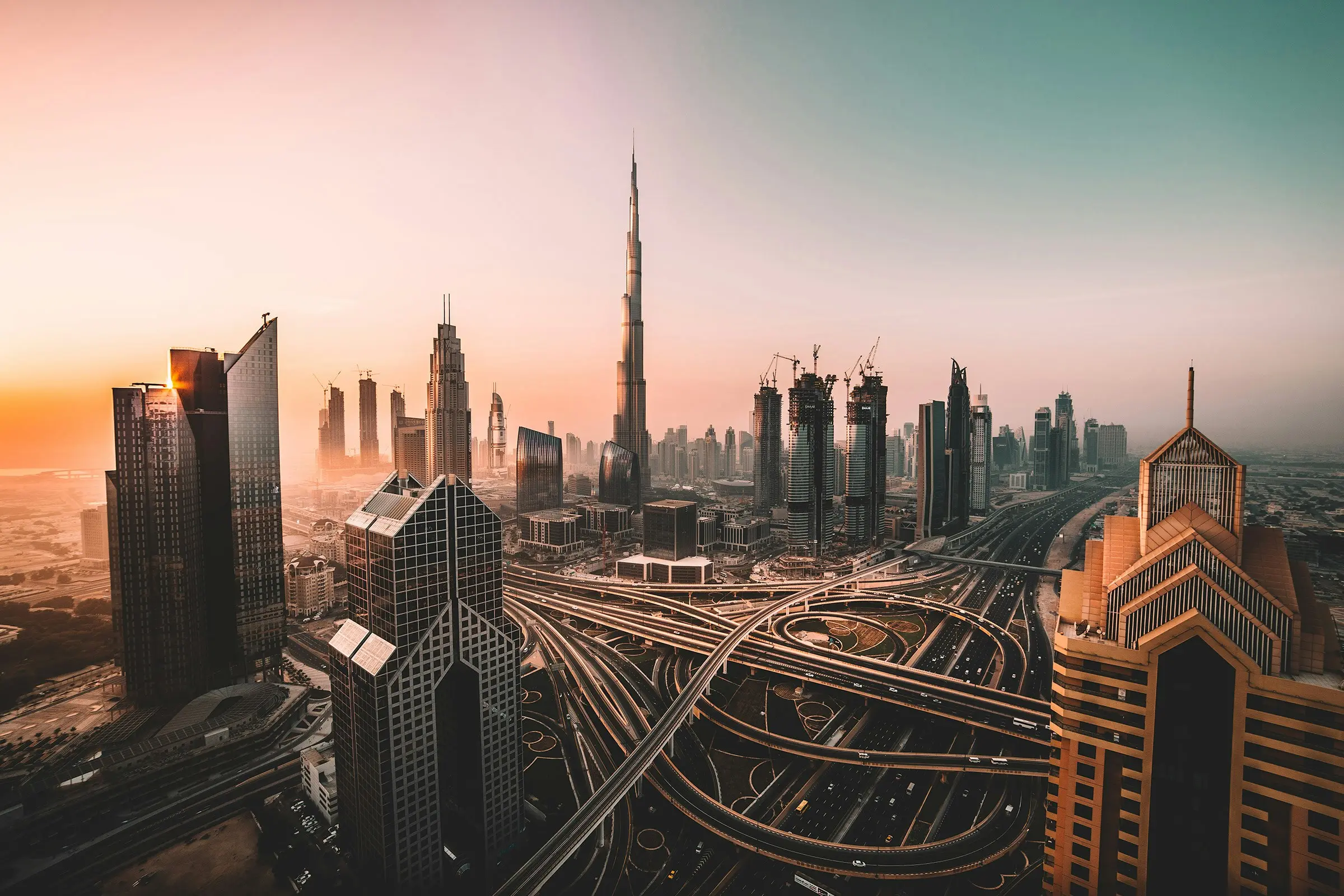
Dubai Sports City Apartments for Sale: Use a Viewing Record for Context, Access and Building Proof
A source-bounded viewing-record method for comparing Dubai Sports City apartments without confusing area context with proof about a building or unit.

Key Takeaways
- A community description, an observed route, a named building and an individual apartment require separate evidence.
- A dated, privacy-safe viewing record preserves what you actually observed and exposes what still requires verification.
- Building and unit claims should be matched to primary documentation, not inferred from area guides or a single visit.
- DLD Verify Title Deed addresses the validity of a DLD-issued Certificate of Title or title deed, not the full physical or transaction due-diligence picture.
When comparing Dubai Sports City apartments for sale, a viewing should leave you with more than a memory of a lobby or a photograph from a window. It should produce a careful record of what was actually seen, where it was seen, and what still needs documentary confirmation. That distinction matters because a community guide can help you orient yourself, but it cannot prove the condition, management, access, outlook, parking or value of a particular building or apartment.
Dubai Sports City is described in published area guides as a community with residential options that include apartments in mid-rise buildings, alongside villas and townhouses. Property Finder also describes the area as a multi-purpose sports community in Al Hebiah 4 with residential, retail, leisure and athletic components divided into residential districts. Those descriptions provide useful context for a buyer beginning an area comparison. They are not a finding about the exact home you are considering.
A viewing record is the practical bridge between broad context and unit-specific due diligence. It gives every observation a date, a place and a limit. It helps you compare two visits fairly, ask a better follow-up question, and avoid turning an attractive first impression into an unsupported conclusion. This guide explains how to make that record while keeping personal information and building-security details private.
TL;DR
- Treat community context, the observed arrival route, the named building and the individual apartment as four separate evidence layers.
- Record only what you actually observe at a viewing: the date, time, transport mode, building entrance, route, conditions and the exact unit visit.
- Use photographs and notes to preserve observable details, but keep unit numbers, access credentials, vehicle plates and other personal or security-sensitive information out of the record.
- Ask the seller, owner, developer or building management for primary documentation when a fact concerns the building or apartment; do not infer it from an area guide.
- Dubai Land Department's Verify Title Deed service concerns the validity of a Certificate of Title or title deed issued by DLD. It is not a substitute for physical, access, management or transaction due diligence.
Start with the right evidence boundary
The phrase “Dubai Sports City apartments for sale” can cover a wide search, but a purchase decision is always about a defined property. Before a viewing, write the building name and the apartment identifier in your private working file. Then use a separate, shareable record that refers to the property generically if needed. This small separation keeps the evidence useful without broadcasting personal or security-sensitive details.
Think in four layers. The first is community context: published descriptions of the wider area and official community information. The second is the observed access route: the route you personally followed on a specific occasion. The third is the named building: its entrance and common areas as observed, plus any building facts supported by primary documentation. The fourth is the individual apartment: the layout, finishes, window context and other observable conditions during that visit.
These layers answer different questions. Community context can help frame an area shortlist. An observed route can explain what happened on the day you visited. Building evidence can identify what you saw in a particular common area. Unit evidence can preserve what was visible from within the apartment. None automatically proves the next layer. A road mentioned in an area guide, for example, is orientation context, not evidence of your journey time, route quality or access conditions on a later date.
Bayut identifies Al Khail Road (E44), Hessa Street (D61) and Sheikh Mohammed Bin Zayed Road (E311) in its Dubai Sports City area guide. Use that as a map-reading starting point rather than a promise about a particular entrance or trip. If your choice depends on arrival experience, your own dated observation is more relevant than a general road reference. For a broader starting point, you can compare Dubai area guides, then return to the exact building and apartment you intend to inspect.
Prepare a viewing record before you travel
A reliable record begins before the viewing, not after it. Create a simple note with fixed fields so that each visit is described in the same order. Consistency makes comparisons easier and reduces the chance that you later fill gaps with assumptions. Do not make the template elaborate; it should be quick enough to complete while details are fresh.
The minimum identification fields
Start with the date, local time, viewing purpose and the name of the person or organisation arranging access. Keep contact details in a private file rather than the shareable record. Add the building name exactly as supplied for the appointment. Privately, retain the unit reference if you need it to keep documents aligned; do not include a readable unit number in photographs or materials that may be circulated.
Next, state how you arrived: for example, by walking, private vehicle, taxi or another transport mode. Name the point where you began the final approach and the entrance you actually used, without describing security procedures or access credentials. A neutral entry such as “arrived at the building’s observed main entrance from the street-side approach” is more useful and safer than a detailed account of controlled entry.
Finally, write the weather and any exceptional condition that could have shaped the visit, without claiming it represents a normal pattern. A weekday viewing in quiet weather documents a weekday viewing in quiet weather. It does not establish everyday noise, traffic, crowding, parking availability or the usual condition of the building. The value of the field is its honesty about the context of the observation.
A practical route note
Keep the route note factual and chronological. Record the starting reference point, the transport mode, the entrance reached and whether the appointment required a change to your planned route. Avoid adjectives that imply a general conclusion. “The route taken passed a construction-adjacent pavement section at the time of the visit” is an observation. “The building has difficult access” is a conclusion that a single visit may not support.
If you make a second viewing, create a second record rather than replacing the first. Different times or days can reveal a different set of observations; neither record should be presented as a universal truth. Comparing them side by side can show which conditions were observed more than once, but it still does not turn a personal observation into a guarantee.
If you need help sorting visit notes, documents and questions across several properties, you can ask Sophia to organise a property-evidence comparison. Keep the source material labelled by building and visit date so that a comment from one apartment is never carried into another.
Separate community context from building proof
Area guides are useful for understanding the shape of a place, but their scope should remain visible in your notes. Bayut’s guide describes residential choices that include mid-rise apartments, while Property Finder describes a wider mix of residential, retail, leisure and athletic components. These are community-level descriptions. They do not document a building’s maintenance history, resident access, parking arrangement, layout, outlook, noise, management or the condition of a particular apartment.
The official Dubai Sports City site identifies the retail promenade at Canal Residence West as a community retail destination with a supermarket, pharmacy, cleaners and other local amenities. That is legitimate context to record as an official community statement. It does not establish the availability or condition of a specific business when you visit, access from every building, or the usefulness of that destination for a particular resident. If the presence of a nearby service affects your decision, note what you personally observe and, where relevant, confirm the underlying property question with the appropriate primary party.
This discipline prevents a common comparison error: borrowing the authority of a community source to answer a building-specific question. Instead, make the question explicit. If you want to know about a common-area feature, request evidence from the owner, developer or building management. If you want to understand a unit alteration, ask for documentation tied to that apartment. If you are comparing new developments or established schemes, browse Dubai property projects as a separate research activity rather than treating a project page as proof of a visited resale unit.
What to photograph and what to write
Photographs are strongest when they preserve observable conditions without trying to manufacture a conclusion. Take wide, non-sensitive frames of the approach, entrance threshold, lobby transition, common-area finishes and window context where permission and building rules allow. Pair each image with a short note: date, general location, direction of view and what is visibly present. “Mailbox zone and lift-call surround observed during the viewing” is a useful caption. “Well-managed building” is not, unless separately supported by appropriate evidence.
Inside the apartment, record the rooms visited, the visible condition of readily observable surfaces and the window context. Describe the scene rather than assigning a financial or legal meaning to it. For example, “adjacent built mass visible across the window” preserves a relevant fact. It does not establish privacy, noise, future construction, sunlight, value or a guaranteed view. Keep a clear distinction between what is visible now, what the representative says, and what a document demonstrates.
Exclude readable personal data, access credentials, unit numbers, vehicle plates and security procedures from both images and notes. If an image is important but includes such details, keep it in a controlled private file and create a redacted description for any wider comparison. Privacy-safe evidence is not weaker evidence; it is evidence that can be handled responsibly.
Build a building-specific question list
A viewing is a chance to observe, not a reason to guess. Turn each important observation into a bounded question for the party best placed to answer it. The correct source depends on the subject: an owner may address unit-held documents, a developer may hold project-related material, and building management may hold information relevant to managed common areas. Ask for primary documentation rather than relying on a verbal generalisation or a portal description.
Useful questions are precise. You might ask which document supports a stated building fact, whether it relates to the named building, and when it was issued. For a unit-specific statement, ask which document identifies the individual apartment. Record the answer, the document name if provided, the date received and any remaining uncertainty. Do not treat a document request as proof until you have reviewed the relevant identified material.
You can also research Dubai developers to structure background research. That background should remain background. It does not replace identified documentation for the building being viewed, and it does not establish the current condition or management of a particular completed property.
Use a claim log, not a memory test
Alongside the visit record, maintain a claim log with four columns: the statement, who made it, the evidence requested and the evidence received. Include a status such as “observed”, “stated at viewing”, “document received” or “not yet verified”. This modest discipline avoids silently upgrading a sales statement into a fact after several properties have been viewed.
For example, an observed lobby finish belongs in the “observed” category and should carry the date and location. A statement about a recurring building arrangement belongs in “stated at viewing” until an appropriate source supports it. An item in a public area guide should be logged as community context, not as building proof. The log makes the evidence gap visible before it becomes a costly assumption.
If your wider research includes market commentary, read Dubai market reports separately from the viewing record. General research can inform the questions you ask, but it should not overwrite what the record actually establishes about a named apartment.
Treat title-deed verification as one defined check
Document checks and physical observation solve different problems. Dubai Land Department describes its Verify Title Deed service as a way to verify the validity of a Certificate of Title or title deed issued by the Land Department. That makes the service a relevant official route for the defined verification it describes. Save the specific result and identify the document it relates to in your private due-diligence file.
The boundary is as important as the service itself. A title-deed verification result does not, by itself, establish physical condition, arrival experience, building management, seller authority, liens, unit possession, price or whether you should buy. Those matters require the relevant identified information and appropriate transaction due diligence. Do not let a successful result in one category flatten all the other questions in your record.
A practical sequence is to preserve the viewing observations first, list the documentary questions second, and then match each question to the proper source. That sequence maintains a clean audit trail: what was seen, what was said, what was requested and what was verified. It is more defensible than a single folder of mixed screenshots, messages and impressions.
Compare apartments without turning notes into promises
When you compare Dubai Sports City apartments for sale, use the same headings for every candidate: appointment identity, arrival observation, entrance and common areas, apartment observation, window context, documents requested and open questions. This creates comparability without pretending the properties are identical. A single record may be incomplete; its purpose is to show exactly what remains incomplete.
Avoid ranking a property from a single attractive feature. A quiet room at one moment does not establish a noise profile. A clear window scene does not establish a permanent outlook. A convenient arrival on one occasion does not establish recurring access conditions. A clean common area does not establish management quality. These are not negative findings; they are limits on what a viewing can prove.
For investment-oriented background reading, review Dubai property investment research, but keep financial assumptions, prices, yields and availability out of a source-bounded viewing record unless you hold matched, dated evidence appropriate to those claims. This guide does not make financial, legal, availability or purchase recommendations. Its job is narrower: to make the next question more exact.
A final review before you rely on the record
Before comparing properties or sharing notes with an adviser, read the record once for scope. Every line should be identifiable as one of four things: community context, your observation, a statement made at the viewing or an identified document. If a line does not fit, revise it or remove it. Ambiguity may feel convenient in the moment, but it makes later comparison less reliable.
Check that photographs do not reveal personal data or building-security details. Check that the date and time appear in the note, not necessarily in a public-facing image. Check that an area-guide statement has not been written as if it were proof about a building. Check that a building-specific claim has a proper documentary follow-up rather than an inferred answer.
The result is a viewing record with a useful standard of proof: it is detailed enough to support comparison, modest enough to remain truthful, and organised enough to guide the next verification step. That is a stronger foundation for reviewing an apartment than a collection of unlabelled impressions.
FAQs
What should I write down when viewing a Dubai Sports City apartment?
Record the date and time, the exact building, the entrance and route you actually used, your transport mode, the areas you observed, the apartment areas visited, the window context and any documents you requested. Keep comments tied to what you saw on that occasion. Separate observed facts from statements made by a representative and from documents you later receive.
Can a Dubai Sports City area guide prove the condition of an apartment building?
No. Area guides can provide community-level context, such as general residential and community descriptions. They do not prove the maintenance, management, parking, layout, outlook, noise, access conditions, condition or value of a named building or individual apartment. Seek building-specific information from an appropriate primary source and retain it with the property record.
How should I document the route to a viewing?
Write the date, time, transport mode, starting reference point, entrance reached and the route you actually followed. Describe temporary or unusual conditions as observations on that visit, not as permanent qualities of the location. Road references in an area guide can support orientation, but they do not prove a journey duration, route quality or access condition.
Is it safe to include unit details and entry information in viewing photos?
No. Keep readable unit numbers, personal data, access credentials, vehicle plates and security procedures out of notes and shareable images. Use a private, controlled file for details needed to align appointment records and documentation. If a useful image contains sensitive information, create a privacy-safe description before sharing it more broadly.
What does DLD Verify Title Deed confirm?
Dubai Land Department describes the service as a way to verify the validity of a Certificate of Title or title deed issued by DLD. It does not by itself establish physical condition, building management, seller authority, liens, possession, price, access or a purchase recommendation. Keep its result alongside, rather than instead of, the other due-diligence evidence.
How can I compare two apartments after separate viewings?
Use the same record structure for both: community context, observed route, building observations, unit observations, documents requested and unresolved questions. Compare only like-for-like dated observations. If one record lacks information, mark it as unverified rather than filling the gap with a general area statement or an assumption from the other property.


Frequently Asked Questions
What should I write down when viewing a Dubai Sports City apartment?
Record the date and time, the exact building, the entrance and route actually used, transport mode, areas observed, unit observations, window context, documents requested and open questions. Label each item as observed, stated at viewing or document received.
Can a Dubai Sports City area guide prove the condition of an apartment building?
No. Area guides provide community-level context; they do not prove the condition, maintenance, management, parking, layout, outlook, noise, access or value of a specific building or apartment. Seek primary building-specific evidence.
How should I document the route to a viewing?
Record the date, time, transport mode, starting reference point, entrance reached and route actually followed. Treat the note as an observation from that visit, not a promise about travel time or recurring access conditions.
Is it safe to include unit details and entry information in viewing photos?
Keep readable unit numbers, personal data, access credentials, vehicle plates and security procedures out of notes and shareable images. Store essential matching details only in a controlled private record.
What does DLD Verify Title Deed confirm?
DLD describes the service as verifying the validity of a Certificate of Title or title deed issued by DLD. It does not by itself establish physical condition, building management, seller authority, liens, possession, price, access or a purchase recommendation.
How can I compare two apartments after separate viewings?
Use the same headings for each record: community context, observed route, building observations, unit observations, documents requested and unresolved questions. Compare only like-for-like dated observations and mark missing facts as unverified.
Genie AI
AI Property AdvisorGenie AI is an advanced artificial intelligence system that analyzes thousands of data points to provide personalized real estate investment recommendations. Powered by Dubai Land Department data, market trends, and sophisticated algorithms, Genie AI helps investors make data-driven decisions.
Related Articles
Dubai Hills Villas for Sale: Asking-Price Changes by Subcommunity This Week
A dated 22 August 2026 asking-price ledger for Maple, Sidra Villas and Park Gate, with a clear evidence gap for weekly same-listing changes.
Area GuidesDubai Marina Apartments for Sale: New Listings and Asking-Price Changes This Week
A dated 16–22 August 2026 ledger of Dubai Marina apartment asking-price observations, with clear limits on new-listing and price-change claims.
Area GuidesBusiness Bay Apartments for Sale: What Different Asking-Price Budgets Show This Week
Compare Business Bay apartments for sale across dated asking-price budget bands, with portal examples, practical filters, and clear limits on what the data shows.
Ready to Invest in Dubai?
Use Sophia AI to compare Dubai property options based on your budget, goals, and preferences.
Ask Sophia AI