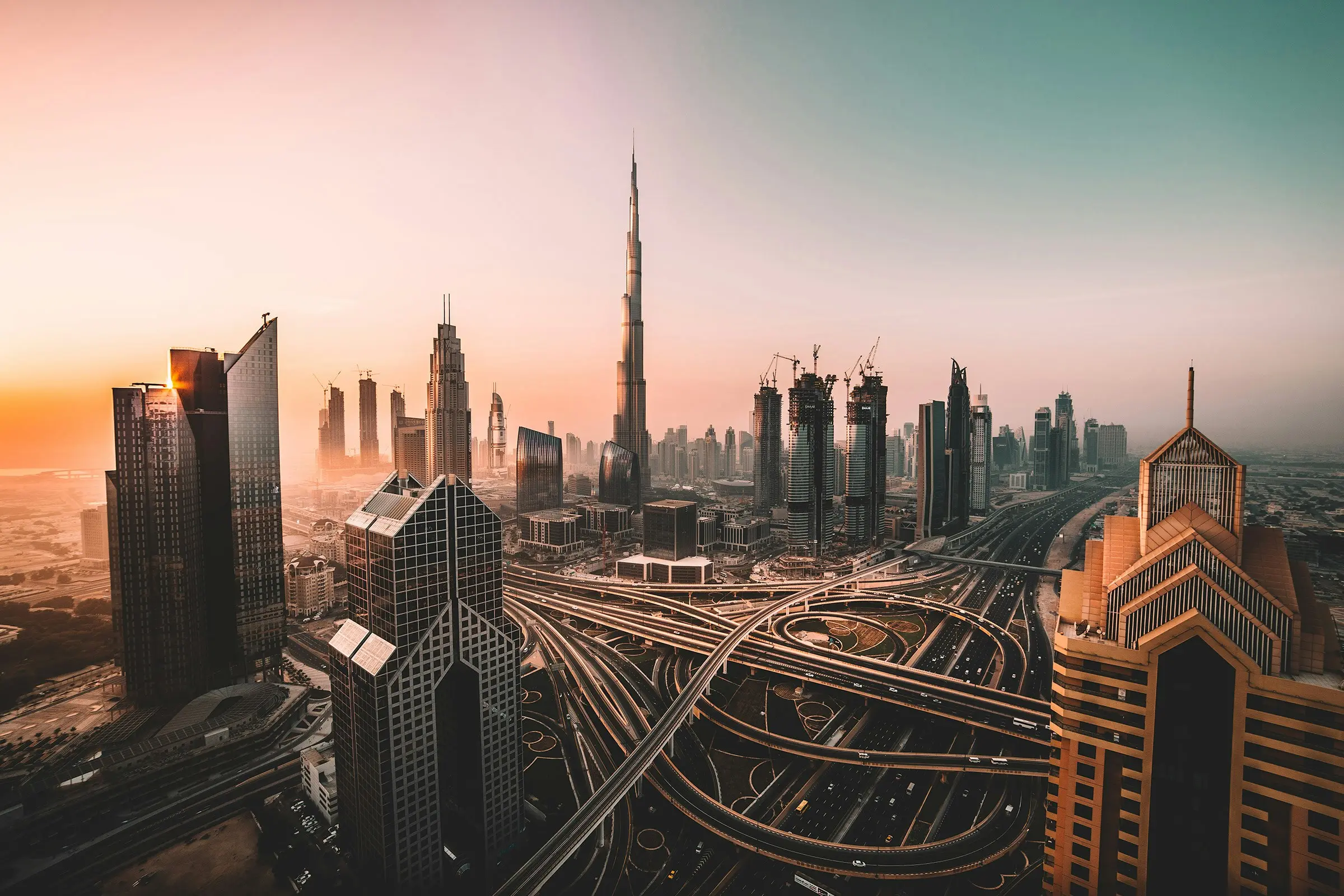
Dubai Real Estate: The Ultimate Safe Haven Amidst 2026 Middle East Tensions
Discover why global investors are choosing Dubai real estate as their primary safe haven strategy to protect capital during the 2026 regional tensions.

Key Takeaways
- Geopolitical turbulence in 2026 has triggered a historic wave of capital relocation to Dubai from both regional and international markets.
- January 2026 recorded a historic high in property sales transaction value, reaching AED 72.4 billion, according to Property Finder reports.
- The UAE’s active diplomatic neutrality and strict focus on economic stability insulate the local property market from external shocks.
- The AED-USD peg protects purchasing power, while the Golden Visa program provides long-term security, anchoring investor demand.
Dubai Real Estate: The Ultimate Safe Haven Amidst 2026 Middle East Tensions
As geopolitical tensions dominate global headlines in 2026, international investors are actively searching for stable jurisdictions to safeguard their capital. In this climate of global uncertainty, the Dubai property market has firmly established itself as the world's premier safe haven for real estate. Rather than experiencing a slowdown, Dubai is seeing an acceleration in transaction activity and property values, fueled by a massive "flight to safety" from global investors.
Key Takeaways
- Record Inflows: Geopolitical turbulence in 2026 has triggered a historic wave of capital relocation to Dubai from both regional and international markets.
- Transaction Milestone: January 2026 recorded a historic high in property sales transaction value, reaching AED 72.4 billion, according to Property Finder reports.
- Geopolitical Neutrality: The UAE’s active diplomatic neutrality and strict focus on economic stability insulate the local property market from external shocks.
- USD Peg & Golden Visa: The AED-USD peg protects purchasing power, while the Golden Visa program provides long-term security, anchoring investor demand.
Geopolitical Neutrality and Capital Preservation
The primary factor behind Dubai's safe haven status is the United Arab Emirates’ steadfast commitment to geopolitical neutrality. The nation has successfully cultivated a diplomatic environment that prioritizes international trade, tourism, and real estate development over regional conflicts. This stance ensures that major trade corridors, ports, and financial institutions continue to operate seamlessly.
For international property buyers, this operational continuity translates to physical safety for their assets. Unlike other global investment hubs that may be subject to political alignments or retaliatory sanctions, Dubai remains open to capital from all corners of the globe. This neutral framework makes it an ideal sanctuary for high-net-worth individuals (HNWIs) seeking a secure harbor for their families and portfolios alike.

Macroeconomic Anchors: The Currency Peg and Tax Advantages
Beyond physical safety, Dubai offers a highly resilient financial infrastructure. A core anchor of this stability is the UAE Dirham’s (AED) peg to the United States Dollar (USD). This peg has been maintained at a fixed rate of 3.6725 since 1997, providing investors with a built-in hedge against currency volatility. European, Asian, and regional buyers whose local currencies may fluctuate dramatically can store wealth in USD-backed real estate assets, preserving their purchasing power over the long term.
Additionally, Dubai’s tax-neutral environment remains a powerful draw in 2026:
- Zero Income Tax: No personal income tax on rental yields or salary.
- Zero Capital Gains Tax: Investors retain 100% of their profits upon property resale.
- Low Transaction Fees: Property registration involves a one-time 4% DLD fee, which is highly competitive compared to transaction taxes in cities like London, New York, or Singapore.
The Flight to Safety: January 2026 Market Analysis
Rather than deterring buyers, regional geopolitical concerns have accelerated investment. In January 2026, the total value of sales transactions in Dubai reached a record-breaking AED 72.4 billion, representing a significant 63% year-over-year increase compared to January 2025.
Off-Plan Market Dominance
The primary market (off-plan properties) was the largest beneficiary of this surge. Off-plan transaction values grew by nearly 90% year-on-year, driven by master developers launching premium communities in areas like Dubai South, Emaar South, and Dubai Hills Estate. This indicates that investors are not merely buying ready properties for immediate relocation; they are committing substantial long-term capital to Dubai's future urban expansion.
Residential Segment Breakdown
The residential segment alone accounted for approximately AED 55.18 billion of the total transactions in January 2026. This activity was heavily concentrated in established luxury areas such as Palm Jumeirah, Downtown Dubai, and Business Bay, as well as emerging high-yield suburban communities. HNWIs are prioritizing villa and townhouse developments, which offer greater privacy and spatial security.

Legal & Regulatory Safeguards: Escrow Laws and Buyer Protection
One of the most critical aspects of Dubai's real estate resilience is its robust and mature legal framework. Over the past two decades, the Dubai Land Department (DLD) and the Real Estate Regulatory Agency (RERA) have implemented strict buyer-protection regulations that virtually eliminate the risks historically associated with emerging markets.
- Mandatory Escrow Accounts: For all off-plan developments, developers are legally required to deposit all buyer payments into an independent, DLD-approved escrow account. Funds from this account can only be released in stages as construction milestones are verified by official inspectors. This ensures that developer insolvency or project mismanagement does not lead to a loss of investor capital.
- Strict Developer Licensing: RERA regulates all developer activities, requiring developers to own 100% of the project land and submit a substantial construction guarantee before they can begin marketing or selling off-plan units.
- Efficient Dispute Resolution: The Rental Dispute Settlement Centre (RDSC) and specialized real estate courts provide swift, transparent mechanisms for resolving conflicts between buyers, tenants, and developers, enhancing institutional trust.
This legal structure gives foreign institutional and retail investors the confidence that their financial interests are fully protected under UAE law, further solidifying the flight-to-safety investment thesis.
Spotlight on Safe Haven Neighborhoods
While the entire emirate benefits from Dubai’s safe haven status, specific neighborhoods command the majority of capital inflows due to their established infrastructure, high liquidity, and premium lifestyle appeal.
1. Palm Jumeirah: The Pinnacle of Luxury and Wealth Preservation
Palm Jumeirah remains the ultimate destination for global HNWIs. Offering exclusive beachfront villas, ultra-luxury penthouses, and world-class resorts, properties here function similarly to gold or prime Swiss franc assets. During times of global instability, the demand for physical luxury waterfront homes on the Palm escalates, leading to substantial capital preservation and premium rental income from high-net-worth vacationers.
2. Downtown Dubai: The Corporate and Lifestyle Anchor
Downtown Dubai, home to the Burj Khalifa and the Dubai Mall, appeals to corporate leaders and international professionals. The area is characterized by high occupancy rates and consistent rental demand, offering stable gross rental yields of 6% to 8% for premium apartments. The concentration of commercial headquarters and luxury residential towers makes it a highly liquid secondary market.
3. Dubai Hills Estate: The Preferred Family Sanctuary
For families relocating to Dubai, Dubai Hills Estate represents the ideal community. Developed by Emaar, it features a central park, an 18-hole championship golf course, the Dubai Hills Mall, and multiple top-tier international schools. Property values here have shown remarkable capital appreciation, driven by organic end-user demand from relocated families seeking a safe, self-contained lifestyle hub.
4. Dubai South & EWC: The High-Growth Infrastructure Play
Positioned near the Al Maktoum International Airport (DWC), Dubai South is attracting investors looking to maximize future capital appreciation. The expansion of the airport and the surrounding logistics free zone provides a sustainable economic foundation. Entry-level prices here remain highly attractive, offering long-term growth potential and strong rental yields from professionals working in the logistics and aviation sectors.
Long-Term Residency: The Golden Visa Anchor
The UAE Golden Visa program continues to act as a crucial anchor for the real estate market. By investing a minimum of AED 2 million ($544,500) in property, buyers qualify for a 10-year renewable residency visa. Crucially, the government allows this threshold to be met through off-plan purchases, mortgaged properties, and combined property portfolios.
In 2026, the Golden Visa has transitioned from a lifestyle luxury into a vital security asset. For investors from volatile regions, it offers a guaranteed fallback plan, allowing them to establish a secondary base for their businesses and families in a safe, world-class city. This structural tie ensures that buyers are not treating Dubai properties as purely speculative holdings, but rather as long-term residential and business anchors, which stabilizes the rental market and prevents sudden capital flight.
Conclusion: Strategic Recommendations for Safe Haven Investors
In a turbulent global landscape, the Dubai real estate market is uniquely positioned to offer capital preservation, high rental yields, and physical security. For investors seeking to navigate 2026 successfully, we suggest the following approaches:
- Target Liquid Segments: Prioritize properties in master-planned communities by top-tier developers like Emaar, Nakheel, and Dubai South. These developments maintain high secondary-market demand and liquidity.
- Secure USD-Linked Yields: Focus on projects offering gross rental yields between 6% and 9%. High-yield residential units provide steady cash flow that is directly linked to the USD, offsetting inflation.
- Utilize the Golden Visa: Structure property purchases to meet the AED 2 million Golden Visa threshold to secure long-term residency and banking stability in the UAE.
Related AiGentsRealty resources
What to verify before you act
Before making an investment decision, verify the latest pricing, transaction evidence, rental demand, service charges, payment-plan terms, and exit liquidity for the specific property. Market-wide guidance can help you shortlist opportunities, but final due diligence should happen at project, building, and unit level. Compare the total cost of ownership and avoid assuming that historic returns will repeat automatically.
Practical due diligence checklist
Use this article as a shortlist filter, then validate the specific asset before making a decision. Confirm the current asking price against recent transactions, check the total acquisition cost rather than only the headline price, and review service charges, payment-plan obligations, handover assumptions, and resale liquidity. For off-plan purchases, verify escrow registration, construction progress, developer delivery history, and the exact clauses in the sales and purchase agreement. For ready property, inspect the unit condition, building maintenance, occupancy profile, parking, views, and realistic rental demand.
Before committing, compare at least three alternatives in the same budget band. The strongest option is usually the one where location, entry price, floor plan, developer quality, future supply, and exit strategy all align. Avoid relying on generic area averages or marketing brochures when unit-level evidence is available.
How to turn this guide into a decision
Use this article to form a shortlist, then test each option against current evidence. Check recent transactions, live asking prices, payment terms, service charges, handover assumptions, rental demand, and resale liquidity. A good Dubai property decision depends on the exact asset, not only the area, developer, or broad market narrative.
For investors, compare total acquisition cost and holding cost before looking at headline returns. Include DLD fees, agency fees, service charges, maintenance, vacancy, furnishing, management, and potential exit costs. For end users, compare livability factors such as commute, noise, parking, amenities, building quality, and future construction nearby.
The safest decision process has four steps: verify the data, compare alternatives, pressure-test the downside, and confirm all terms in writing. If a property still looks attractive after those checks, it is a stronger candidate. If the numbers only work under optimistic assumptions, keep searching or negotiate better terms.
Frequently Asked Questions
Is it safe to buy property in Dubai right now?
Yes, Dubai is physically and financially secure. The UAE's active neutrality, strong security infrastructure, and robust legal protections for property owners make it one of the safest cities globally for capital preservation.
How does the AED-USD peg protect real estate investments?
Since the UAE Dirham is pegged to the US Dollar, Dubai real estate functions as a USD-backed asset. This provides a buffer against currency devaluations in investors' home countries, ensuring their capital retains international purchasing power.
Can I obtain a Golden Visa through off-plan property?
Yes, you can qualify for the 10-year Golden Visa by purchasing off-plan property with a minimum value of AED 2 million. This threshold can also be achieved by combining multiple properties or using a mortgage from a local UAE bank.
Editorial Team
AiGentsRealtyThe AiGentsRealty editorial team consists of real estate experts, market analysts, and property consultants with over 20 years of combined experience in the Dubai real estate market.
Related Articles
Dubai Property Market News: This Week's Transaction, Listing and Source Dates
A date-aware Dubai property market news guide separating DLD registration reporting, portal asking-price observations, and developer availability snapshots for the 17–22 August 2026 reporting period.
Market NewsCedre Villas in Dubai Silicon Oasis: Buyer Research Guide
A source-aware guide to researching Cedre Villas in Dubai Silicon Oasis: documented home formats and sizes, dated portal asking-price examples, comparison questions and unit-specific due diligence.
Market NewsHow to Ask Sophia a Property Research Question in Dubai
A practical Dubai property-research framework: define your goal, location, requirements, budget, timing, constraints and desired output, then separate published information from details needing advisor or official confirmation.
Ready to Invest in Dubai?
Use Sophia AI to compare Dubai property options based on your budget, goals, and preferences.
Ask Sophia AI