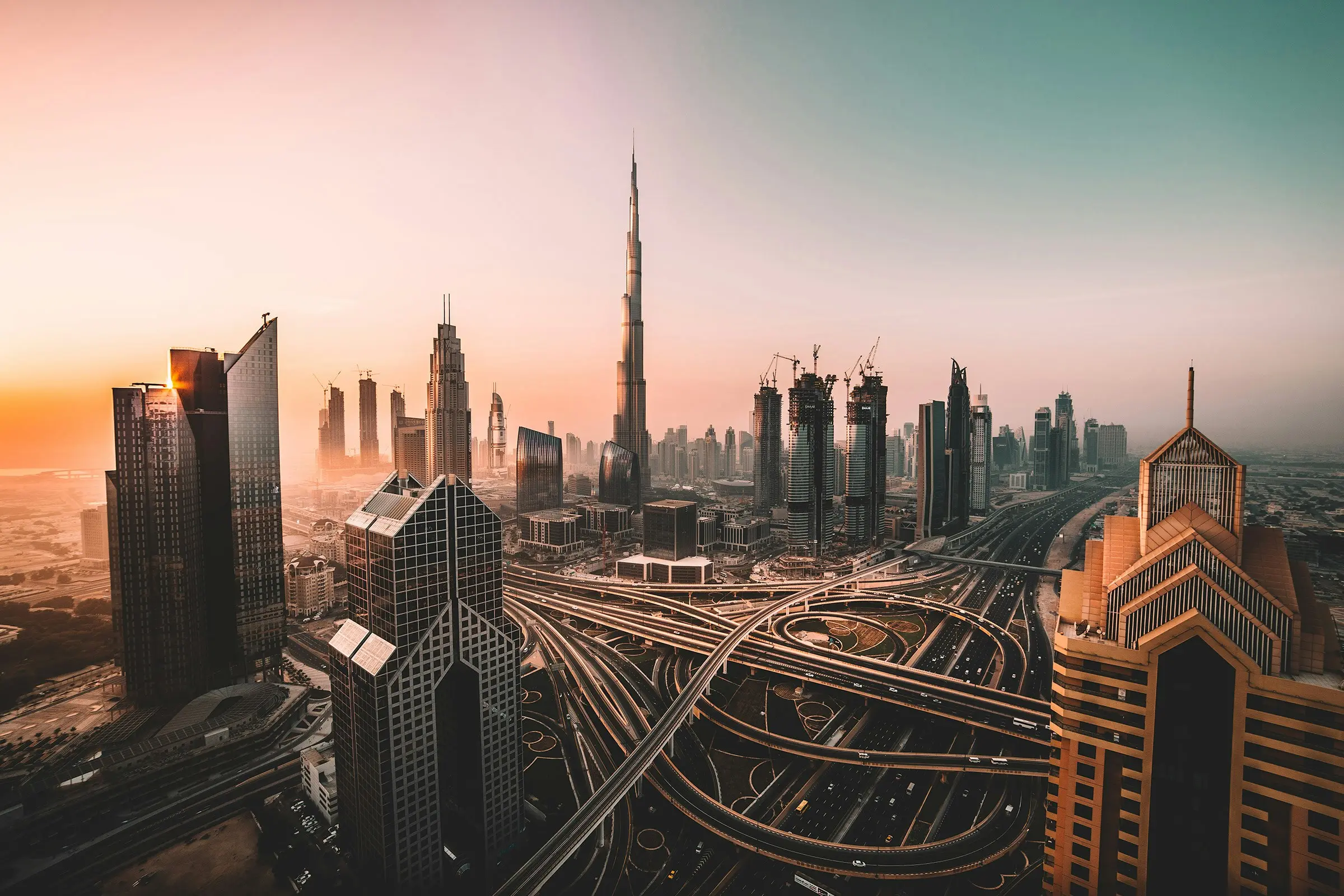
Dubai Real Estate Supply Pipeline 2026: What 42,000 New Units Mean for Investors
Dubai's real estate market is entering its most significant supply cycle since the post-Expo boom. Approximately 42,000 residential units are scheduled for delivery in 2026, a figure that immediately

Key Takeaways
- Approximately 42,000 residential units are scheduled for delivery in Dubai in 2026, marking the highest supply pipeline since 2017.
- Supply concentration is highly localized: Business Bay and Jumeirah Village Circle (JVC) combined account for 35% of all 2026 deliveries.
- The villa and townhouse segment remains structurally undersupplied, representing only 19% of the pipeline, which supports villa capital appreciation.
- Top-tier master developers Emaar, Nakheel, and Damac account for 44% of total planned supply, ensuring low delivery risk through regulated escrows.
Dubai's real estate market is entering its most significant supply cycle since the post-Expo boom. Approximately 42,000 residential units are scheduled for delivery in 2026, a figure that immediately raises a question every investor should be asking: is this too much, too fast?
The short answer is no — but the nuance matters enormously. Supply is not evenly distributed. Some neighborhoods face genuine absorption challenges while others remain chronically undersupplied. Understanding where the units are going, who they're targeting, and how demand is tracking against delivery is the difference between a smart investment and a yield trap.

This analysis breaks down the 2026 supply pipeline by area, price tier, and property type — and translates the data into actionable investment guidance.
The Big Picture: 42,000 Units in Context
Historical Supply Comparison
| Year | Units Delivered | Market Context |
|---|---|---|
| 2017 | 47,000 | Post-2014 cycle peak, oversupply concerns |
| 2018 | 31,000 | Market correction, price declines |
| 2019 | 26,000 | Stabilization phase |
| 2020 | 18,000 | Pandemic slowdown |
| 2021 | 22,000 | Recovery begins |
| 2022 | 28,000 | Expo 2020 demand surge |
| 2023 | 34,000 | Market acceleration |
| 2024 | 36,000 | Record transaction volumes |
| 2025 | 38,000 | Sustained demand, yield compression |
| 2026E | 42,000 | Highest since 2017 |
The 2026 pipeline is substantial, but the market context is fundamentally different from 2017. Dubai's population has grown from 2.9 million to an estimated 4.1 million. The buyer base has diversified from a GCC-dominated market to a truly global one. And the regulatory framework — particularly the Escrow Law and RERA oversight — ensures that supply is backed by genuine buyer commitments rather than speculative flipping.
Absorption Rate
The critical metric is not the absolute number of units but the absorption rate — the percentage of new supply that finds tenants or buyers within the first year. In 2025, Dubai's absorption rate was approximately 88%, meaning 33,400 of the 38,000 delivered units were occupied within 12 months.
For 2026, analysts project absorption rates of 82-87%, reflecting the higher supply volume but still healthy demand fundamentals. Any absorption rate above 80% is considered a balanced market.
Supply Breakdown by Area
Top 10 Areas by Unit Count
| Area | Units (2026E) | % of Total | Avg. Price/sq ft | Primary Type |
|---|---|---|---|---|
| Business Bay | 6,200 | 14.8% | AED 1,800-2,500 | Apartments |
| Jumeirah Village Circle | 5,800 | 13.8% | AED 900-1,400 | Apartments/Townhouses |
| Dubai Creek Harbour | 4,100 | 9.8% | AED 2,200-3,500 | Apartments |
| Dubai Marina | 3,400 | 8.1% | AED 2,000-3,200 | Apartments |
| Dubai Hills Estate | 3,100 | 7.4% | AED 1,600-2,800 | Apartments/Villas |
| Jumeirah Lake Towers | 2,600 | 6.2% | AED 1,200-1,800 | Apartments |
| Dubai South | 2,200 | 5.2% | AED 800-1,200 | Apartments |
| Arabian Ranches III | 1,900 | 4.5% | AED 1,400-2,200 | Villas/Townhouses |
| Palm Jumeirah | 1,400 | 3.3% | AED 3,500-6,000+ | Apartments/Villas |
| Dubai Silicon Oasis | 1,200 | 2.9% | AED 700-1,100 | Apartments |
The remaining 10,100 units (24% of total) are distributed across 40+ smaller communities.
The Concentration Risk
Business Bay and JVC together account for 35% of all 2026 supply. This concentration creates a localized risk that investors must weigh carefully:
Business Bay has matured significantly and benefits from its proximity to Downtown, the Dubai Canal, and the growing Business Bay metro station area. However, 6,200 new units in a single year will test the area's absorption capacity. Expect short-term rental yield compression of 0.5-1.0 percentage points as new inventory competes for tenants.
JVC offers the most affordable entry point in the Dubai market, but its 5,800-unit pipeline represents a 15% increase to its existing housing stock. The area's infrastructure — particularly road access and retail — has improved but remains a constraint. Investors should be selective about developer quality and building positioning within JVC.
Supply by Price Tier
Where the Units Are Going
| Price Tier | Price Range | Units | % of Total | Risk Assessment |
|---|---|---|---|---|
| Affordable | Under AED 1M | 10,500 | 25% | Moderate — strong demand but quality varies |
| Mid-Market | AED 1M-3M | 18,900 | 45% | Highest risk — most competitive segment |
| Upper Mid | AED 3M-5M | 6,700 | 16% | Low — growing professional tenant base |
| Luxury | AED 5M-10M | 4,200 | 10% | Very low — constrained supply, strong demand |
| Ultra-Luxury | Above AED 10M | 1,700 | 4% | Minimal — trophy asset market, limited pipeline |
The mid-market segment (AED 1M-3M) carries the most supply risk. Nearly half of all 2026 deliveries fall in this range, and it's also the segment with the most competition from existing inventory. Investors in this tier should prioritize:
- Developments with differentiated amenities (pools, gyms, co-working spaces)
- Proximity to metro stations (within 500m)
- Reputable developers with strong track records
- Units with outdoor space — balconies and terraces command a premium in this segment
The luxury and ultra-luxury segments remain structurally undersupplied. Only 14% of the pipeline targets buyers above AED 5M, while demand from high-net-worth individuals continues to grow. This is why Palm Jumeirah, Emirates Hills, and premium Downtown towers continue to appreciate even as the broader market absorbs new supply.
For more on Dubai's market dynamics, see our Dubai Buyers Market 2026 Guide.
Supply by Property Type
Apartments Dominate
Apartments account for approximately 78% of the 2026 pipeline (32,800 units), with the remainder split between villas (12%), townhouses (7%), and hotel apartments (3%).
This apartment-heavy pipeline reflects developer economics — apartments deliver higher density and faster returns on land cost. But it also means that villa and townhouse supply remains constrained, supporting pricing in communities like Arabian Ranches, Dubai Hills Estate, and Tilal Al Ghaf.
The Villa Shortage
Dubai's villa market has been in structural deficit since 2020. The 2026 pipeline adds only 5,000 villa units against an estimated demand of 7,000-8,000 units annually. This deficit is most acute in the mid-market villa segment (AED 2M-5M), where demand from growing expat families far exceeds supply.
Investors considering villa purchases should view the supply constraint as a structural advantage. Villa communities with limited future development potential — such as established parts of Arabian Ranches and The Springs — offer the best combination of yield stability and capital appreciation.
Developer Landscape
Who Is Building
The 2026 pipeline is dominated by a handful of major developers:
| Developer | Est. 2026 Units | Key Projects |
|---|---|---|
| Emaar Properties | 8,500 | Dubai Creek Harbour, Dubai Hills Estate, Downtown |
| Nakheel | 5,200 | Palm Jebel Ali, Deira Islands, JVC |
| Damac Properties | 4,800 | Damac Hills, Business Bay, Dubai Marina |
| Azizi Developments | 3,400 | Riviera, Montreal, Victoria |
| Sobha Realty | 2,100 | Sobha Hartland, Sobha One |
| Danube Properties | 1,900 | Sport City, JVC |
| Meraas | 1,600 | City Walk, Bluewaters |
The top 7 developers account for approximately 66% of total supply. This concentration is a positive signal — these developers have established track records, RERA registration, and escrow-compliant structures. The risk of non-delivery is low.

However, the remaining 34% comes from a long tail of smaller developers. Investors considering smaller developers should verify:
- RERA project registration
- Escrow account details
- Previous project delivery history
- Financial backing and land ownership
Impact on Rental Yields
Yield Forecast by Area
| Area | Current Yield (2025) | Projected Yield (2026) | Change |
|---|---|---|---|
| Business Bay | 7.2% | 6.5-6.8% | -0.4 to -0.7% |
| JVC | 8.1% | 7.3-7.6% | -0.5 to -0.8% |
| Dubai Marina | 6.8% | 6.5-6.7% | -0.1 to -0.3% |
| Dubai Hills | 6.2% | 6.0-6.2% | Flat to -0.2% |
| Downtown Dubai | 5.8% | 5.6-5.8% | Flat |
| Palm Jumeirah | 4.8% | 4.8-5.0% | Flat to +0.2% |
| Dubai Creek Harbour | N/A (new) | 5.5-6.0% | New supply |
The yield compression is most pronounced in high-supply areas (Business Bay, JVC) and minimal in established, low-supply communities (Downtown, Palm Jumeirah). This pattern is consistent with normal market dynamics — new supply competes for tenants in the same price bracket, while premium locations maintain pricing power.
Net Yield Consideration
Always calculate yield on a net basis, accounting for:
- Service charges (AED 10-30/sq ft annually)
- Property management fees (5-8% of rental income)
- Vacancy allowance (2-4 weeks per year)
- Maintenance reserve (1-2% of rental income)
A 7% gross yield in Business Bay might translate to 5.2% net after these deductions. A 5% gross yield in Palm Jumeirah might deliver 4.2% net — but with significantly lower vacancy risk and stronger capital appreciation.
Investment Strategy for 2026
Play the Supply Asymmetry
The smartest strategy in a high-supply environment is to invest where supply is constrained:
- Established villa communities with no new land for development
- Prime waterfront locations where land is finite (Palm Jumeirah, Dubai Marina beachfront)
- Ultra-luxury segments where the pipeline is minimal and demand is global
If Buying in High-Supply Areas
For investors targeting Business Bay, JVC, or other high-delivery areas:
- Buy completed, not off-plan — you can negotiate better prices on existing inventory competing with new supply
- Focus on differentiation — unique layouts, superior finishes, or exceptional views that new supply can't replicate
- Target the bottom of the market — affordable units in JVC have the deepest tenant pool and lowest vacancy risk
- Plan for 12-18 months of yield compression — don't underwrite based on today's yields
The Off-Play: Pre-Launch Opportunities
While off-plan sales have slowed 18% from 2025 peaks, this slowdown is actually a positive signal. It means developers are being more disciplined about launching new projects, which reduces future supply risk. Pre-launch pricing from top-tier developers still offers 15-25% discounts compared to completed inventory — but only for projects with clear delivery timelines and reputable builders.
Learn more about Dubai's proptech ecosystem driving these market efficiencies in our Dubai Proptech Hub analysis.
Conclusion
Dubai's 42,000-unit supply pipeline in 2026 is significant but manageable. The market has matured substantially since the 2017 oversupply cycle, with stronger demand fundamentals, better regulation, and a more diversified buyer base.
The key takeaway for investors is that supply impact is highly localized. Areas like Business Bay and JVC will see temporary yield compression, while luxury and villa markets remain structurally undersupplied. The winning strategy is to invest where supply is constrained — or to buy high-supply areas at prices that already reflect the incoming inventory.
Aigents Realty provides real-time supply data, yield projections, and neighborhood-level analytics to help you make informed investment decisions. Start your search today and invest with confidence.
Sources and further reading
Practical due diligence checklist
Use this article as a shortlist filter, then validate the specific asset before making a decision. Confirm the current asking price against recent transactions, check the total acquisition cost rather than only the headline price, and review service charges, payment-plan obligations, handover assumptions, and resale liquidity. For off-plan purchases, verify escrow registration, construction progress, developer delivery history, and the exact clauses in the sales and purchase agreement. For ready property, inspect the unit condition, building maintenance, occupancy profile, parking, views, and realistic rental demand.
Before committing, compare at least three alternatives in the same budget band. The strongest option is usually the one where location, entry price, floor plan, developer quality, future supply, and exit strategy all align. Avoid relying on generic area averages or marketing brochures when unit-level evidence is available.
Frequently Asked Questions
Will the 42,000 new units scheduled for 2026 cause a property crash in Dubai?
No. While 42,000 units represents a significant supply cycle, Dubai's rapid population growth (targeting 5.8 million by 2040) and high absorption rate of 88% in 2025 support the inventory. However, localized yield compression of 0.5% to 1% is expected in high-supply areas like JVC and Business Bay.
Which Dubai communities are most exposed to oversupply risk in 2026?
Business Bay (6,200 units) and JVC (5,800 units) carry the highest concentration risk, representing 35% of the total pipeline. Investors in these areas should prioritize premium developer quality and proximity to major infrastructure like metro lines.
Is the villa segment also facing oversupply in 2026?
No, the villa and townhouse market remains structurally undersupplied. Villas account for only 12% of the 2026 pipeline (approx. 5,000 units) against a demand of 7,000–8,000 units annually. This protects yields and supports capital gains in established communities like Arabian Ranches.
Genie AI
AI Property AdvisorGenie AI is an advanced artificial intelligence system that analyzes thousands of data points to provide personalized real estate investment recommendations. Powered by Dubai Land Department data, market trends, and sophisticated algorithms, Genie AI helps investors make data-driven decisions.
Related Articles
Dubai Property Market News: This Week's Transaction, Listing and Source Dates
A date-aware Dubai property market news guide separating DLD registration reporting, portal asking-price observations, and developer availability snapshots for the 17–22 August 2026 reporting period.
Market NewsCedre Villas in Dubai Silicon Oasis: Buyer Research Guide
A source-aware guide to researching Cedre Villas in Dubai Silicon Oasis: documented home formats and sizes, dated portal asking-price examples, comparison questions and unit-specific due diligence.
Market NewsHow to Ask Sophia a Property Research Question in Dubai
A practical Dubai property-research framework: define your goal, location, requirements, budget, timing, constraints and desired output, then separate published information from details needing advisor or official confirmation.
Ready to Invest in Dubai?
Use Sophia AI to compare Dubai property options based on your budget, goals, and preferences.
Ask Sophia AI