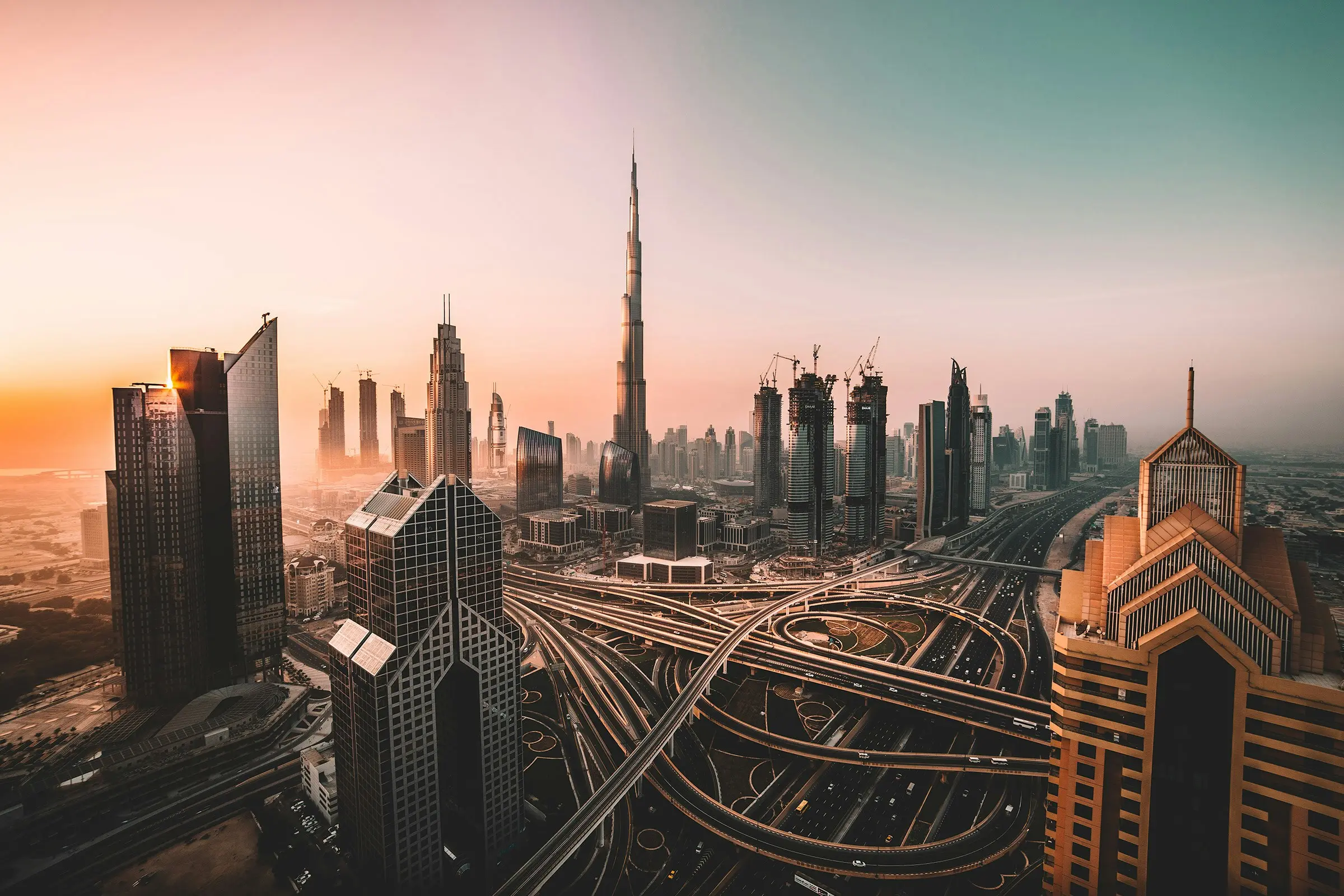
Dubai Real Estate: The Safest Strategy for High-Net-Worth Individuals in 2026
Explore the comprehensive strategies HNWIs are using to secure their capital in Dubai's real estate market amidst the complexities of 2026.

Key Takeaways
- Prime Growth Normalization: After rapid acceleration, the prime segment is stabilizing in 2026, with Knight Frank projecting a healthy 3% to 5% price growth, signaling a mature, sustainable market.
- Record Cash Dominance: More than 54% of residential real estate deals in late 2025 were all-cash, shielding the market from interest rate hikes and debt-driven speculative risk.
- Waterfront Scarcity Premium: Wealth preservation focuses on land-constrained communities like Palm Jumeirah, Jumeirah Bay, and Emirates Hills where new land supply is virtually zero.
- Ultra-Luxury Record: Dubai saw a historic 500 transactions for super-prime properties valued at over $10 million in 2025, cementing its status as a global billionaire playground.
- DLD and Escrow Safeguards: Stringent regulatory frameworks, project-linked escrow accounts, and the Oqood registration system protect international wealth.
Dubai Real Estate: The Safest Strategy for High-Net-Worth Individuals in 2026
TL;DR / Key Takeaways
- Prime Growth Normalization: After rapid acceleration, the prime segment is stabilizing in 2026, with Knight Frank projecting a healthy 3% to 5% price growth, signaling a mature, sustainable market.
- Record Cash Dominance: More than 54% of residential real estate deals in late 2025 were all-cash, shielding the market from interest rate hikes and debt-driven speculative risk.
- Waterfront Scarcity Premium: Wealth preservation focuses on land-constrained communities like Palm Jumeirah, Jumeirah Bay, and Emirates Hills where new land supply is virtually zero.
- Ultra-Luxury Record: Dubai saw a historic 500 transactions for super-prime properties valued at over $10 million in 2025, cementing its status as a global billionaire playground.
- DLD and Escrow Safeguards: Stringent regulatory frameworks, project-linked escrow accounts, and the Oqood registration system protect international wealth.
Introduction: Why HNWIs are Doubling Down on Dubai
For High-Net-Worth Individuals (HNWIs) and family offices globally, the wealth preservation landscape in 2026 is increasingly complex. Traditional capital havens like London, New York, and Paris are facing persistent economic headwinds, tax policy shifts (such as the UK non-dom status abolition and higher capital gains taxes), and regulatory instability. In contrast, Dubai has matured from a speculative real estate market into one of the world's most stable, liquid, and secure wealth preservation hubs.
In 2025, Dubai’s residential market recorded an unprecedented 205,400 transactions—a substantial 18% increase from 2024. The total value of these transactions reached a record AED 544.2 billion, representing a 25% year-on-year growth. For global HNWIs, this level of liquidity is a critical safety signal: capital can be deployed and retrieved with relative ease, backed by the regulatory oversight of the Dubai Land Department (DLD).

The Safe Haven Playbook: Scarcity and Branded Residences
The Scarcity Principle (Emirates Hills, Palm Jumeirah, Jumeirah Bay)
The safest strategy for HNWIs is built entirely around asset scarcity. Unlike the mid-market and affordable sectors where new developments can expand outward into the desert, Dubai's prime waterfront communities are physically land-constrained.
- Palm Jumeirah: Waterfront villas here are in absolute limited supply. Property values have risen steadily because no new coastline can be created on this island.
- Jumeirah Bay Island: Featuring ultra-exclusive plots, Bulgari Residences, and private berths. The island has become the most expensive micro-location in the city on a per-square-foot basis.
- Emirates Hills: The established "Beverly Hills of Dubai" with mature, custom-built mansions surrounding a championship golf course.
Because there is zero additional land to develop in these areas, properties located within them are highly insulated from the oversupply risks that typically trigger price corrections in lower-tier markets.
The Rise of Branded Residences
Branded residences—developed in partnership with luxury hospitality and fashion brands (e.g., Four Seasons, Dorchester Collection, Bulgari, Armani, Bugatti)—have become a core component of the HNWI playbook. These projects command a 30% to 50% price premium over unbranded developments in similar areas.
Why Branded Residences are Safer:
- Standard of Service: They guarantee a 5-star level of maintenance, security, and elite concierge services managed by the hotel brand.
- High Liquidity: A branded penthouse in Downtown Dubai or Jumeirah holds its appeal to global buyers far better than unbranded properties, making them easier to resell in the secondary market.
- Premium Rental Yields: These properties command premium rental rates from international corporate executives and wealthy tourists looking for short-term residency.
Examples like the Bulgari Lighthouse on Jumeirah Bay or the Lana Residences managed by the Dorchester Collection in Business Bay have set record-breaking prices because they represent the peak of craftsmanship and service integration.
Mitigating Supply Risks: Analyzing the Pipeline (2026-2030)
A common concern among foreign investors is the massive volume of new project launches. Analysts project that while over 160,000 units are currently in the developer pipeline for the coming years, historical completion rates show that actual handovers consistently fall short of these targets due to construction schedules and capacity bottlenecks.

For HNWIs, the strategy to mitigate this risk is simple: focus exclusively on prime, established communities. While the outer suburbs may see supply pressures, the central and coastal corridors remain undersupplied, preserving both capital values and rental demand.
Cash Dominance: The Ultimate Market Buffer
Unlike Western real estate hubs that are heavily reliant on mortgage financing, the Dubai luxury property market is overwhelmingly cash-driven. By late 2025, cash transactions accounted for over 54% of all residential transactions.
This high concentration of cash buyers provides a vital protective buffer:
- No Debt Speculation: The market is not built on highly leveraged bank debt, minimizing the risk of systemic defaults or forced liquidations.
- Interest Rate Insulation: Even as global central banks raise interest rates, Dubai's luxury buyers remain largely unaffected because they are deploying personal capital.
- Speed of Closing: Cash transactions can be finalized in a matter of days at a Trustee Office or via the DLD's REST digital application.
Cash buyers are also able to negotiate better terms with developers, securing priority allocations for newly launched luxury towers.
Structuring the Investment: Corporate and Legal Protections
Sophisticated investors use a combination of corporate structures and regulatory safeguards to protect their acquisitions.
1. DIFC and ADGM Foundation and SPV Structures
Rather than purchasing property in their individual names, many HNWIs utilize Special Purpose Vehicles (SPVs) or Foundations registered in the Dubai International Financial Centre (DIFC) or Abu Dhabi Global Market (ADGM).
- Asset Protection: SPVs protect properties from personal liability and isolate real estate holdings from other business operations.
- Succession Planning: Foundations allow for smooth inheritance transitions, avoiding local probate laws and ensuring that family real estate assets pass seamlessly to the next generation.
- Anonymity and Confidentiality: Corporate structures offer a layer of privacy for high-profile investors.
Why Mortgage Leverage is (Rarely) Used by HNWIs
While cash is king in the luxury market, some HNWIs use equity release mortgages on their ready properties. Local private banks offer equity release of up to 50% on luxury villas, allowing investors to pull cash out of their real estate holding at competitive regional rates and reinvest it in higher-yield global equities or trade finance, maintaining an optimal balance sheet.
2. Dubai Land Department (DLD) Regulatory Safeguards
Every off-plan transaction in Dubai is heavily regulated to protect the buyer's funds:
- Project Escrow Accounts: Developers cannot access buyers' funds directly. All milestone payments are deposited into a project-linked escrow account managed by a licensed bank. The developer can only withdraw funds based on verified construction milestones signed off by independent project consultants.
- Oqood interim registration: Buyers receive an interim title deed (Oqood) directly from the DLD, legally registering their ownership stake during the construction phase.
- Dubai REST App: Real-time project tracking, escrow balances, and construction milestones are visible transparently through the official DLD application.
3. Anti-Money Laundering (AML) and Capital Compliance
Wealthy buyers relocating capital must adhere to the UAE's strict AML guidelines. All funds must be transferred through authorized banking channels, and buyers must provide source-of-wealth documentation. This structured compliance ensures that the real estate market remains clean, transparent, and stable over the long term.
Frequently Asked Questions
Why do HNWIs prefer Dubai over London or New York in 2026?
Dubai offers 0% personal income tax, zero capital gains tax, and zero inheritance tax. This is coupled with world-class safety, a USD-pegged currency, and proactive geopolitical neutrality, which traditional hubs like London or New York currently struggle to match.
Is the luxury market at risk of a bubble?
Unlike the speculative bubble of 2008, today's prime luxury market is overwhelmingly driven by end-users and cash buyers deploying personal capital rather than highly leveraged bank debt. High cash transaction rates (exceeding 54% in 2025) greatly reduce systemic crash risks.
What is the minimum investment for the UAE Golden Visa?
A property investment of AED 2 million or more qualifies the buyer for a 10-year residency Golden Visa. The property can be ready or off-plan, mortgaged, or split across multiple properties.
Conclusion & HNWI Due Diligence Checklist
For global high-net-worth individuals, Dubai real estate in 2026 serves as a critical wealth preservation asset. By focusing on scarcity-driven prime communities, cash-based acquisitions, and robust DIFC/ADGM structures, investors can achieve safe haven capital protection alongside attractive yield profiles.
HNWI Due Diligence Checklist:
- Verify Escrow Registration: Verify that the developer has a registered escrow account and check the escrow balance on the DLD REST app.
- Review Developer Track Record: Analyze the historical handover rates and build quality of the developer's completed projects.
- Assess Community Service Charges: Check the RERA service charge index to understand long-term maintenance costs.
- Structure via DIFC/ADGM: Work with a licensed corporate service provider to structure the acquisition through an SPV or Foundation for optimal asset protection.
Data sourced from Knight Frank Research, Dubai Land Department records, and UAE Government portals. Last updated: May 2026.
Related AiGentsRealty resources
- Browse luxury properties for sale
- Review our prime community guides
- Consult with our DIFC structuring specialists
Sources and further reading
Frequently Asked Questions
Why do HNWIs prefer Dubai over London or New York in 2026?
Dubai offers 0% personal income tax, zero capital gains tax, and zero inheritance tax. This is coupled with world-class safety, a USD-pegged currency, and proactive geopolitical neutrality, which traditional hubs like London or New York currently struggle to match.
Is the luxury market at risk of a bubble?
Unlike the speculative bubble of 2008, today's prime luxury market is overwhelmingly driven by end-users and cash buyers deploying personal capital rather than highly leveraged bank debt. High cash transaction rates (exceeding 54% in 2025) greatly reduce systemic crash risks.
What is the minimum investment for the UAE Golden Visa?
A property investment of AED 2 million or more qualifies the buyer for a 10-year residency Golden Visa. The property can be ready or off-plan, mortgaged, or split across multiple properties.
Editorial Team
AiGentsRealtyThe AiGentsRealty editorial team consists of real estate experts, market analysts, and property consultants with over 20 years of combined experience in the Dubai real estate market.
Related Articles
Dubai Building Age Data: What Construction Year Can and Cannot Tell a Buyer
A buyer-method guide to separating reported building dates from completion, condition, and transaction evidence in Dubai.
Investment GuidesDubai Real Estate Price Index: Read Market Movement Without Valuing a Unit
How to distinguish an official Dubai market-price series from the evidence needed for a unit-specific valuation.
Investment GuidesDubai School Commute Data: Compare Route Windows Before Choosing a Property
Use a documented, like-for-like route-window method to compare candidate Dubai homes with a selected school without turning estimates into guarantees.
Ready to Invest in Dubai?
Use Sophia AI to compare Dubai property options based on your budget, goals, and preferences.
Ask Sophia AI