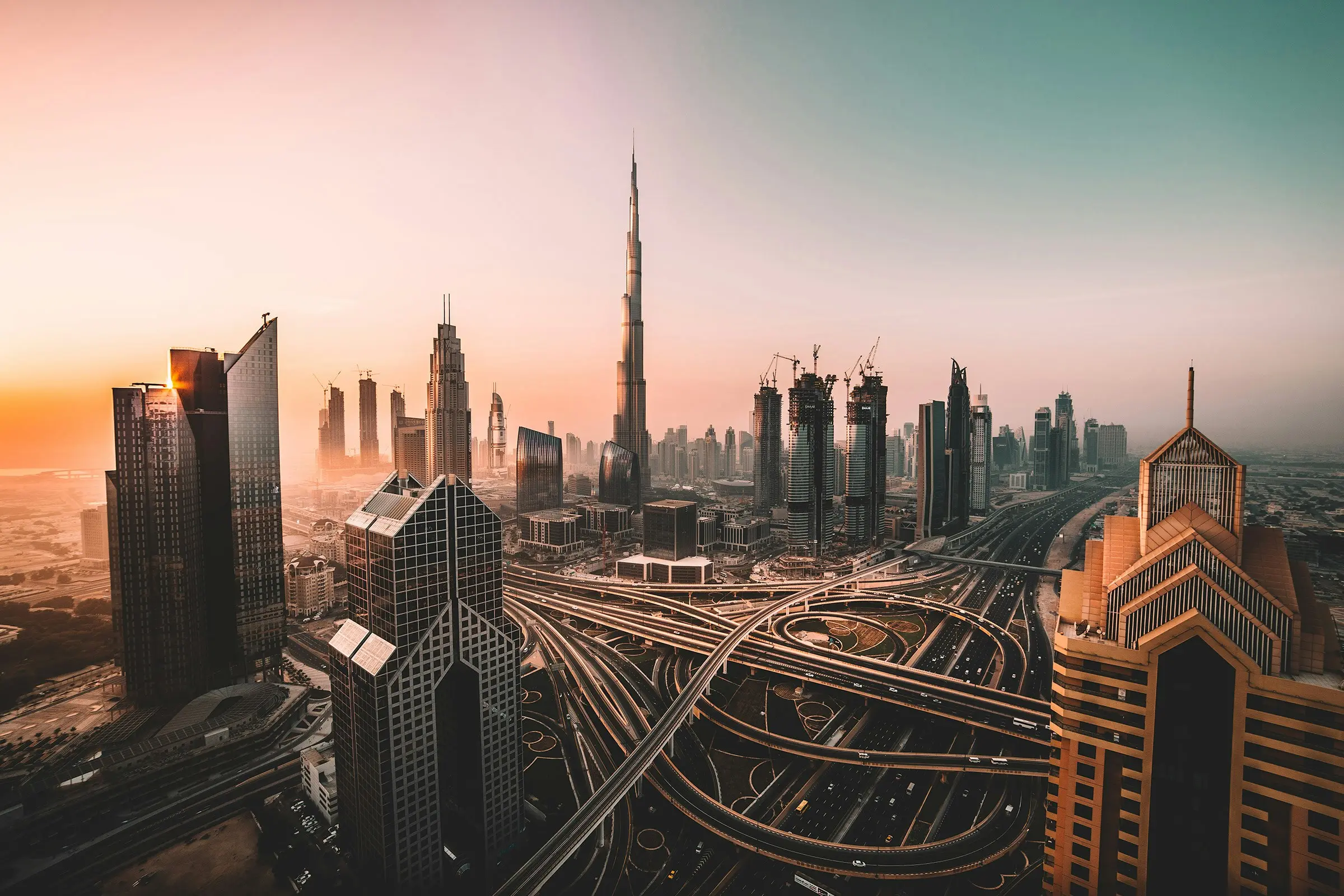
Dubai Real Estate Market Trends 2026: Comprehensive Analysis
Latest Dubai real estate trends 2026. Prices, transactions, emerging areas. Data-driven market analysis for investors.

Key Takeaways
- Historic Market Value Growth: Dubai's real estate market reached a record-breaking total transaction value of AED 72.4 billion in January 2026, marking a 63% year-on-year increase.
- Off-Plan Primacy: The primary (off-plan) market was the core growth driver, experiencing a massive 90% surge in total transaction value compared to January 2025.
- End-User Shift: Over 85% of transactions were driven by genuine end-user buyers, indicating a transition from short-term speculation to sustainable, long-term housing demands.
- Emerging Geographic Hotspots: Affordable and family-oriented communities like Jumeirah Village Circle (JVC), Dubai South, and DAMAC Islands recorded the highest transaction volumes.
Dubai Real Estate Market Trends 2026: Comprehensive Analysis
Dubai’s real estate market has kicked off 2026 with a historic surge, solidifying its reputation as a premier global hub for real estate investments. Far from showing signs of cooling off after consecutive record years, the market has established a brand-new baseline for transaction volumes and values, fueled by long-term demographic shifts, infrastructure improvements, and positive developer sentiment.
According to data compiled by the Dubai Land Department (DLD) and analyzed by Property Finder, the emirate’s real estate market achieved a record-breaking total transaction value of AED 72.4 billion in January 2026. This represents an astonishing 63% year-on-year increase compared to January 2025. Total transaction volumes also rose by 23% year-on-year, marking the strongest January performance in the history of Dubai real estate. Price appreciation has also remained steady, with average price per square foot across the emirate rising to approximately AED 1,850, an increase of 14% year-on-year.
This guide provides a comprehensive analysis of the key trends, data points, and community-level shifts shaping the 2026 real estate landscape.

Primary vs. Secondary Market Breakdown
The 2026 market growth is heavily characterized by the divergence between the off-plan (primary) developer market and the ready (secondary) market. While both segments experienced upward movement, developer launches and off-plan investment strategies were the primary drivers of growth.
The 90% Off-Plan Surge
The primary market, consisting of off-plan property sales direct from developers, experienced a 90% surge in transaction value in January 2026 compared to the same period in 2025. This massive growth was supported by several factors:
- Aggressive Launch Pipelines: Developers launched major master communities in late 2025 and early 2026, satisfying pent-up demand for suburban townhouses and resort-style villa communities.
- Flexible Payment Terms: The popularity of structured payment plans (such as 1% monthly payment options or 60/40 structures) allowed entry-level buyers and investors to distribute their capital efficiently.
- Golden Visa Alignment: New developer launches designed their pricing structures specifically around the AED 2,000,000 threshold to attract buyers seeking long-term residency.
The Resilient Secondary Market
The secondary market, consisting of ready apartments, townhouses, and villas sold by individual owners, also demonstrated robust performance, recording a 38% year-on-year increase in value. Ready properties are increasingly attractive to expatriate families who have decided to transition from renting to owning due to high rental rates.
The Shift to End-User Dominance
Perhaps the most significant structural shift in the 2026 Dubai market is the maturity of the buyer profile. In previous real estate cycles (such as 2008 and 2014), the market was heavily dominated by short-term speculators ("flippers") who used high leverage to buy multiple properties and resell them before completion. This led to artificial demand and subsequent corrections.
In contrast, over 85% of transactions in January 2026 were driven by end-users. These are buyers purchasing properties to reside in permanently, or long-term investors aiming for multi-year rental yields rather than rapid capital gains.
This shift is supported by several factors:
- Expatriate Settling: Expatriates are choosing to make Dubai their primary, long-term home, bringing their families and enrolling their children in local schools.
- Corporate Relocations: Global businesses are opening regional headquarters in Dubai, bringing high-earning professionals who prefer homeownership to renting.
- Residency Safety Nets: The Golden Visa program provides long-term security, giving buyers the confidence to commit capital to real estate.
This high percentage of end-users makes the 2026 market structure significantly more stable and less vulnerable to sudden market corrections than in past cycles.
Buyer Demographics and Financial Profiles
Who is buying real estate in Dubai in 2026? The demographic data reveals a highly professional, high-earning buyer profile.
According to buyer inquiry records, new buyer inquiries in January 2026 rose by more than 25% compared to December 2025. Analysis of these inquiries reveals the following metrics:
- Income Levels: More than two-thirds of active buyers report monthly household incomes exceeding AED 40,000.
- Financing Choices: Cash transactions remain dominant, particularly in the ultra-luxury segment. However, mortgage utilization in the mid-market segment has stabilized, aided by institutional lenders offering competitive rates to attract end-users.
- International Inflows: European, Indian, and British buyers continue to lead transaction volumes, with emerging interest from East Asian and North American buyers seeking tax-efficient wealth shelters.
Geographic Hotspots: JVC, Dubai South, and DAMAC Islands
Transaction density in 2026 is concentrated in master-planned communities that offer a balance of affordability, lifestyle amenities, and transport links. Below is a breakdown of the key performing areas:
1. Jumeirah Village Circle (JVC)
JVC remains the most active community for apartment sales. Its central location, relative affordability, and diverse inventory of ready and off-plan projects make it a favorite for young professionals and small families. Investors in JVC are capturing gross rental yields between 7.5% and 8.5%, the highest in central Dubai.
2. Dubai South
Dubai South has emerged as a major investment destination, driven by the expansion plans of the Al Maktoum International Airport (DWC). Property values in Dubai South have appreciated by 18% year-on-year, with investors buying townhouses and apartments to capitalize on future employment demand around the airport and logistics hub.
3. DAMAC Islands
DAMAC's themed master communities (such as DAMAC Islands and DAMAC Lagoons) have captured a significant share of the off-plan villa market. These communities offer resort-style living, water features, and family-focused amenities at entry-level pricing compared to established areas like Palm Jumeirah or Dubai Hills.
4. Business Bay
Business Bay continues to be a premier urban hub, showing strong growth in both residential and commercial sectors. With several high-profile off-plan launches along the Dubai Canal, it has attracted substantial foreign direct investment. Investors are drawn by the high density of corporate offices and the steady rental demand from working professionals.

| Community | Main Focus | Property Type | Avg. Price (1BR / 3BR Townhouse) | Avg. Gross Yield |
|---|---|---|---|---|
| JVC | Central Location | Apartments | AED 900,000 | 7.5% – 8.5% |
| Dubai South | DWC Infrastructure | Townhouses / Apts | AED 850,000 / AED 2.1M | 7.0% – 7.8% |
| Business Bay | Corporate Hub | Apartments | AED 1,600,000 | 6.0% – 6.8% |
| Dubai Hills | Premium Family | Villas / Apts | AED 1,800,000 / AED 4.5M | 5.8% – 6.5% |
| DAMAC Islands | Resort-Style | Villas / Townhouses | AED 2.6M (Townhouse) | 6.2% – 7.0% |
Figures are estimates based on early 2026 transactional averages.
Infrastructure and Urban Expansion: The Drivers of 2026 Growth
To understand why Dubai's market has sustained its growth, one must look at the government's long-term urban planning initiatives under the Dubai 2040 Urban Master Plan. The expansion of the public transportation network, specifically the upcoming Metro Blue Line, has already begun influencing property values in eastern communities. Buyers are placing a premium on transit-oriented developments (TODs), which historically show higher capital appreciation and rental resilience during economic downturns.
Furthermore, the massive relocation and expansion plans for Al Maktoum International Airport (DWC) have changed the real estate landscape in Dubai South and surrounding communities. The airport, projected to become the world's largest upon completion, is drawing massive logistics, aviation, and hospitality businesses to the area. Real estate developers have responded by purchasing large land banks to build self-sustaining residential districts, ensuring a steady stream of inventory to house the projected influx of workers and executives.
The Supply Outlook: 2026-2030 Pipeline
One of the main questions for investors is whether the upcoming supply pipeline will lead to oversupply. As Dubai's population continues to grow, developer activity is accelerating to meet this demand. According to building pipeline schedules, a substantial volume of residential properties is scheduled for delivery between 2026 and 2030.

However, analysts highlight that this supply is geographically dispersed. While certain areas (like JVC and Dubai South) will see high volumes of apartment handovers, prime waterfront locations (such as Palm Jumeirah, Jumeirah Bay, and Dubai Marina) face severe land scarcity. Consequently, prime areas are expected to maintain price rigidity, while outer suburban areas may experience yield stabilization as supply meets demand.
Regulatory Environment and Market Discipline
The Dubai Land Department (DLD) and the Real Estate Regulatory Agency (RERA) have continued to implement policies aimed at protecting buyers and increasing transparency. Strict regulations governing advertising permits, off-plan marketing, and escrow account operations have largely eliminated the unregulated sales practices of previous decades. Additionally, the introduction of standardized rental indices and online property registration systems has reduced disputes between landlords and tenants, making the rental market highly predictable for foreign institutional investors.
For investors aiming to navigate the 2026 market, the following strategies are recommended:
- Focus on Infrastructure Projects: Align off-plan purchases with upcoming public works, such as the Dubai Metro Blue Line expansion and the Al Maktoum Airport master plan.
- Look Beyond Headline Yields: Calculate net yields by factoring in service charges, maintenance reserve funds, and property management fees. A 6.5% net yield in JVC is often more profitable than an 8% gross yield in a high-maintenance building.
- Assess Developer Execution Capacity: With many new developers entering the market, stick to developers with strong balance sheets, completed project track records, and active escrow accounts registered with the DLD.
Ultimately, the Dubai real estate market in 2026 is showing signs of a mature, self-sustaining economic ecosystem. Driven by structural population growth, robust foreign inflows, and a solid base of end-user buyers, the market's record-breaking start in January 2026 is a clear indicator of long-term economic resilience.
Analyze real-time transaction data and find high-performing investment options with Aigents Realty's AI search platform.
Sources and further reading
- Property Finder UAE Market Report
- Dubai Land Department Transactions
- Dubai REST real estate data
- UAE Government Services
Process and risk checklist
For legal, rental, mortgage, visa, and transaction topics, verify the current rule with the relevant authority or a qualified adviser before acting. Dubai procedures can change, and your nationality, financing method, property type, contract status, and ownership structure can affect the correct process. Keep written documentation, confirm all fees before transfer, and avoid relying on verbal promises when a permit, title deed, tenancy contract, or payment obligation is involved.
The safest approach is to compare the official requirement, the contract wording, and the practical timeline. If those three do not match, pause and clarify before paying a deposit or signing. Good process discipline protects buyers, sellers, landlords, and tenants from avoidable disputes.
Frequently Asked Questions
What is the total transaction value in the Dubai real estate market for January 2026?
In January 2026, the Dubai real estate market recorded a historic transaction value of AED 72.4 billion, representing a significant 63% year-on-year growth compared to January 2025.
Which areas are the fastest-growing in Dubai in 2026?
The fastest-growing areas in terms of transactions and price appreciation are Jumeirah Village Circle (JVC), Dubai South, and newly launched master communities such as DAMAC Islands.
What percentage of Dubai transactions are off-plan in 2026?
Off-plan properties continue to dominate the market, representing a significant portion of transactions. In January 2026, the off-plan market's value surged by 90% year-on-year, highlighting strong investor trust in developers' future pipelines.
Are property purchases in Dubai driven by speculators or end-users?
According to Property Finder and DLD statistics, over 85% of real estate transactions in early 2026 were driven by end-users, reflecting a mature market where buyers seek primary residences or long-term holdings.
Genie AI
AI Property AdvisorGenie AI is an advanced artificial intelligence system that analyzes thousands of data points to provide personalized real estate investment recommendations. Powered by Dubai Land Department data, market trends, and sophisticated algorithms, Genie AI helps investors make data-driven decisions.
Related Articles
Dubai Building Age Data: What Construction Year Can and Cannot Tell a Buyer
A buyer-method guide to separating reported building dates from completion, condition, and transaction evidence in Dubai.
Investment GuidesDubai Real Estate Price Index: Read Market Movement Without Valuing a Unit
How to distinguish an official Dubai market-price series from the evidence needed for a unit-specific valuation.
Investment GuidesDubai School Commute Data: Compare Route Windows Before Choosing a Property
Use a documented, like-for-like route-window method to compare candidate Dubai homes with a selected school without turning estimates into guarantees.
Ready to Invest in Dubai?
Use Sophia AI to compare Dubai property options based on your budget, goals, and preferences.
Ask Sophia AI