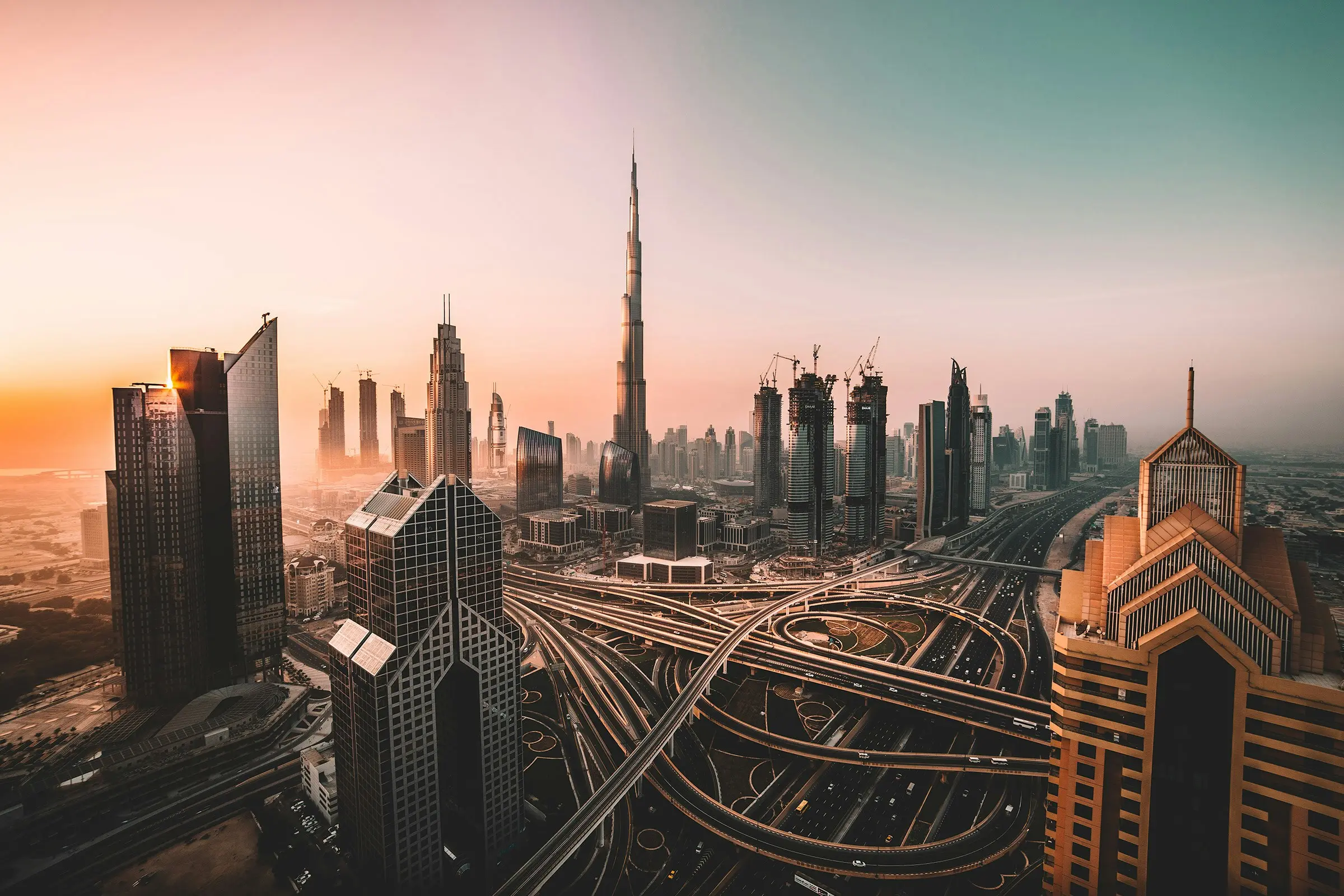
The 2026 Handover Wave: Why 120,000 New Units Won't Break the Market
Addressing investor fears about oversupply. Why the projected 120,000 unit handovers in 2026 are necessary for Dubai's booming population.

Key Takeaways
- The projected '120,000 unit handover' for 2026 is a headline projection; realistic completions are expected to be 34,000 to 85,000 units due to historical construction delays of 10% to 40%.
- Dubai's rapid population expansion acts as a massive demand driver, with the population rising from 3.84 million in January 2025 to 4.04 million in October 2025, and reaching 4.47 million in early 2026.
- Over 70% of the forward pipeline is already sold, indicating high buyer conviction and minimizing the risk of speculative distressed dumping at handover.
- While high-supply areas like JVC and Dubai South will see rent stabilization, prime low-density communities like Palm Jumeirah remain highly undersupplied and resilient.
The 2026 Handover Wave: Why 120,000 New Units Won't Break the Market
TL;DR: Absorbing the Supply
- The Big Number: Approximately 120,000 new residential units are scheduled for handover in Dubai throughout 2026.
- The Oversupply Myth: While this number seems daunting, it is strategically aligned with Dubai's rapid population growth.
- The 5 Million Target: Dubai's population is actively surging toward the 5 million mark by 2030, driven by aggressive economic policies and expats fleeing regional instability.
- Rental Relief: This influx of supply is desperately needed to normalize rental prices, which have seen double-digit growth for the past three years.
The "Oversupply" Anxiety
Whenever the Dubai real estate market experiences a period of rapid development, the old ghost of "oversupply" rears its head. It is a familiar cycle: media headlines focus on the massive number of off-plan launches, analysts warn of a looming correction, and some investors adopt a cautious "wait-and-see" approach. With approximately 120,000 off-plan residential units scheduled for completion and handover in 2026, these fears have returned to the forefront of market discussions.
Investors ask a critical question: Will this wave of new inventory collide with shifting global market sentiments and trigger a crash in property values? To answer this, we must look past the headline numbers and analyze the underlying economic, demographic, and construction realities shaping Dubai today.

The Data Gap: Planned vs. Realistic Completions
The first step in debunking the oversupply myth is understanding the difference between planned handovers and realistic completions. The figure of 120,000 units represents the total number of properties that developers have contracted to deliver in 2026. However, in real estate development worldwide—and Dubai is no exception—project timelines are subject to change.
Historical analysis of Dubai's property market reveals a consistent pattern of construction delays. Factors such as infrastructure dependencies (water, electricity, road connections), material supply chain bottlenecks, labor availability, and developer-specific funding paces mean that a significant portion of scheduled handovers are pushed into the following calendar year.
Industry experts note that actual handovers historically range between 48% and 65% of forecasted volumes in any given year. This represents a natural construction delay rate of 10% to 40%. Consequently, a more realistic estimate for actual completions in 2026 lies between 34,000 and 85,000 units. This natural smoothing effect distributes the supply over a longer period, preventing the market from experiencing a sudden, overwhelming influx of inventory.
| Year | Projected Forecasts (Headline) | Estimated Realistic Completions |
|---|---|---|
| 2026 | ~82,000 – 120,000 units | ~34,000 – 85,000 units |
| 2027 | ~70,000 – 140,000 units | ~70,000 – 92,000 units |
| 2028 | ~93,000 – 105,000 units | ~74,000 – 90,000 units |
Demographic Shock: The Race to 5 Million
Supply cannot be evaluated in a vacuum; it must be measured against active demand. In Dubai, the primary driver of demand is rapid, sustained population growth. The Dubai 2040 Urban Master Plan outlines a strategic roadmap to expand the city's infrastructure and housing capacity to accommodate a projected population of 5 million residents by 2040.
Recent data from the Dubai Statistics Center indicates that this demographic expansion is occurring ahead of schedule. During 2025, Dubai's population officially surpassed the 4 million milestone. The population stood at approximately 3.84 million in January 2025 and surged to 4.04 million by October 2025—an increase of 200,000 residents in just ten months. As of early 2026, population estimates have reached approximately 4.47 million.
This rapid population expansion is fueled by several structural drivers:
- Visa Reforms (Golden Visas): The introduction and expansion of long-term residency options (such as the Golden Visa and Green Visa) have transformed Dubai from a transient expat hub into a permanent home for families, retirees, and entrepreneurs.
- Corporate Migration: Multi-national companies, financial institutions, and technology startups are actively relocating their regional or global headquarters to Dubai, attracted by tax efficiencies, business-friendly regulations, and world-class connectivity.
- Safe Haven Status: Amid geopolitical uncertainties in Europe, the Far East, and the broader Middle East, high-net-worth individuals (HNWIs) and skilled professionals view Dubai as a secure, politically neutral, and stable environment for their families and capital.
Every new household requires housing. If we calculate the average household size of approximately 3.2 individuals, an annual population increase of 200,000 residents creates a net demand for roughly 62,500 new residential units per year. Under these conditions, the realistic delivery of 34,000 to 85,000 units in 2026 represents a balanced addition to meet current demand, rather than an oversupply threat.
High Pre-Sale Absorption and Owner-Occupier Conviction
Another critical difference between the current market cycle and past speculative periods is the level of pre-sale absorption. During the real estate cycles of 2008 and 2014, a substantial portion of purchases were made by speculative buyers ("flippers") utilizing high leverage (mortgages) with the intention of reselling before handover.
In 2026, the market is characterized by high buyer conviction and cash-driven purchases. According to recent transaction reports, over 70% of the units currently under construction in the forward pipeline are already sold.
Furthermore, the buyer profile has shifted toward owner-occupiers and long-term institutional investors. Many buyers are purchasing units to live in themselves, driven by high rental costs. For investors, the focus has shifted toward securing long-term wealth preservation. Because these properties are pre-sold and backed by significant equity (often 40% to 50% paid during construction), the risk of widespread default or distressed dumping at handover is minimized.

Normalizing the Rental Market
For the past three years, tenants in Dubai have faced severe rent increases due to a chronic lack of available inventory in key residential corridors. In many prime areas, rental rates have experienced double-digit year-on-year growth, outpacing salary increases and placing financial pressure on residents.
The upcoming handover wave will provide necessary relief to the rental market. Rather than crashing sales prices, this new supply will allow rental yields to normalize to sustainable levels.
For investors, this means a transition from short-term speculative capital gains toward stable, long-term rental income. Average gross rental yields are expected to settle at a healthy 6% to 8%, down from the artificially inflated double-digit peaks seen in isolated, under-supplied communities. This stabilization is healthy for the market's long-term sustainability, making Dubai more attractive to long-term residents and corporate employers.
Localized Analysis: High-Supply Areas vs. Undersupplied Zones
While the market-wide outlook is balanced, supply is not distributed evenly across Dubai. Investors must analyze the market at a localized level to identify opportunities and mitigate risks.
High-Supply Corridors
Communities that will see the highest volume of handovers in 2026 include:
- Jumeirah Village Circle (JVC): Popular for mid-market apartments, JVC will experience a large volume of completions. This will likely lead to temporary rental stabilization or minor rent softening (2% to 4%) as landlords compete for tenants.
- Business Bay: As a commercial and residential hub adjacent to Downtown, Business Bay has a substantial pipeline. However, its central location and proximity to metro lines will help absorb the new inventory relatively quickly.
- Dubai South: Driven by the expansion of the Al Maktoum International Airport and the surrounding master plans, Dubai South is a major construction zone. While supply is high, long-term demand remains strong due to commercial growth in the area.
Highly Resilient, Undersupplied Zones
Prime, low-density, and established communities will remain highly resilient due to a lack of available land for new developments:
- Palm Jumeirah: High-end beachfront villas and apartments on the Palm remain in extremely limited supply, maintaining premium sales values and rental rates.
- Downtown Dubai: Established towers surrounding the Burj Khalifa face very minimal new completions, preserving their asset values.
- Established Villa Communities (Emirates Hills, Arabian Ranches): Low-density, green communities have no significant new pipeline, keeping vacancy rates near zero and prices firm.
Conclusion: A Maturing Market
The narrative that a massive handover wave will break the Dubai real estate market in 2026 is based on a superficial reading of planned project pipelines. When we account for realistic construction delay rates, record-breaking population growth under the 2040 Master Plan, high pre-sale absorption, and a healthy transition toward owner-occupier stability, the picture becomes clear: the incoming supply is a necessity for a growing city, not a risk.
Rather than indicating a bubble, the 2026 handover wave signals that Dubai is maturing into a global metropolis. For strategic investors, this transition offers an opportunity to acquire high-quality assets in a more stable, predictable, and resilient market environment.
Explore Dubai Real Estate Options: View active project listings, handovers, and market analytics on our projects page.
Related AiGentsRealty resources
Sources and further reading
- Dubai Statistics Center Live Population Clock
- Dubai Land Department Real Estate Transaction Open Data Portal
- Zawya Real Estate Market Reports
- Hamptons International Real Estate Market Analysis
Process and risk checklist
For legal, rental, mortgage, visa, and transaction topics, verify the current rule with the relevant authority or a qualified adviser before acting. Dubai procedures can change, and your nationality, financing method, property type, contract status, and ownership structure can affect the correct process. Keep written documentation, confirm all fees before transfer, and avoid relying on verbal promises when a permit, title deed, tenancy contract, or payment obligation is involved.
The safest approach is to compare the official requirement, the contract wording, and the practical timeline. If those three do not match, pause and clarify before paying a deposit or signing. Good process discipline protects buyers, sellers, landlords, and tenants from avoidable disputes.
Frequently Asked Questions
Will the 2026 handover wave cause a property crash in Dubai?
No. A market-wide crash is highly unlikely. While the projected pipeline of 120,000 units sounds massive, realistic completions are significantly lower (estimated at 34,000 to 85,000 units) due to typical construction delays. Furthermore, Dubai's population grew by hundreds of thousands in 2025 alone, creating a robust, organic source of demand that is actively absorbing new handovers.
Which Dubai areas are most affected by the upcoming handovers?
The highest concentration of completions is located in emerging and high-density communities, including Jumeirah Village Circle (JVC), Business Bay, and Dubai South. These areas may experience temporary rental price stabilization or minor softening (2-4%) as new units compete for tenants. Conversely, prime locations such as Palm Jumeirah and established villa communities will see very limited new supply.
How does the current supply wave compare to previous cycles like 2017-2018?
The current market is fundamentally different. During the 2017-2018 supply wave, speculation was high and population growth was slower, leading to a temporary decline in prices. In 2026, the market is characterized by high pre-sale absorption (over 70% sold), a higher share of end-user buyers (owner-occupiers), and record-breaking population growth (surpassing 4.4 million in 2026).
Should investors buy off-plan or ready property during the handover wave?
It depends on the investment strategy. Ready properties in established, low-supply areas remain ideal for immediate rental income. However, the handover wave can create opportunities in the secondary market where off-plan buyers who are unable to meet final handover payments may list units at attractive entry prices.
Genie AI
AI Property AdvisorGenie AI is an advanced artificial intelligence system that analyzes thousands of data points to provide personalized real estate investment recommendations. Powered by Dubai Land Department data, market trends, and sophisticated algorithms, Genie AI helps investors make data-driven decisions.
Related Articles
Dubai Property Market News: This Week's Transaction, Listing and Source Dates
A date-aware Dubai property market news guide separating DLD registration reporting, portal asking-price observations, and developer availability snapshots for the 17–22 August 2026 reporting period.
Market NewsCedre Villas in Dubai Silicon Oasis: Buyer Research Guide
A source-aware guide to researching Cedre Villas in Dubai Silicon Oasis: documented home formats and sizes, dated portal asking-price examples, comparison questions and unit-specific due diligence.
Market NewsHow to Ask Sophia a Property Research Question in Dubai
A practical Dubai property-research framework: define your goal, location, requirements, budget, timing, constraints and desired output, then separate published information from details needing advisor or official confirmation.
Ready to Invest in Dubai?
Use Sophia AI to compare Dubai property options based on your budget, goals, and preferences.
Ask Sophia AI