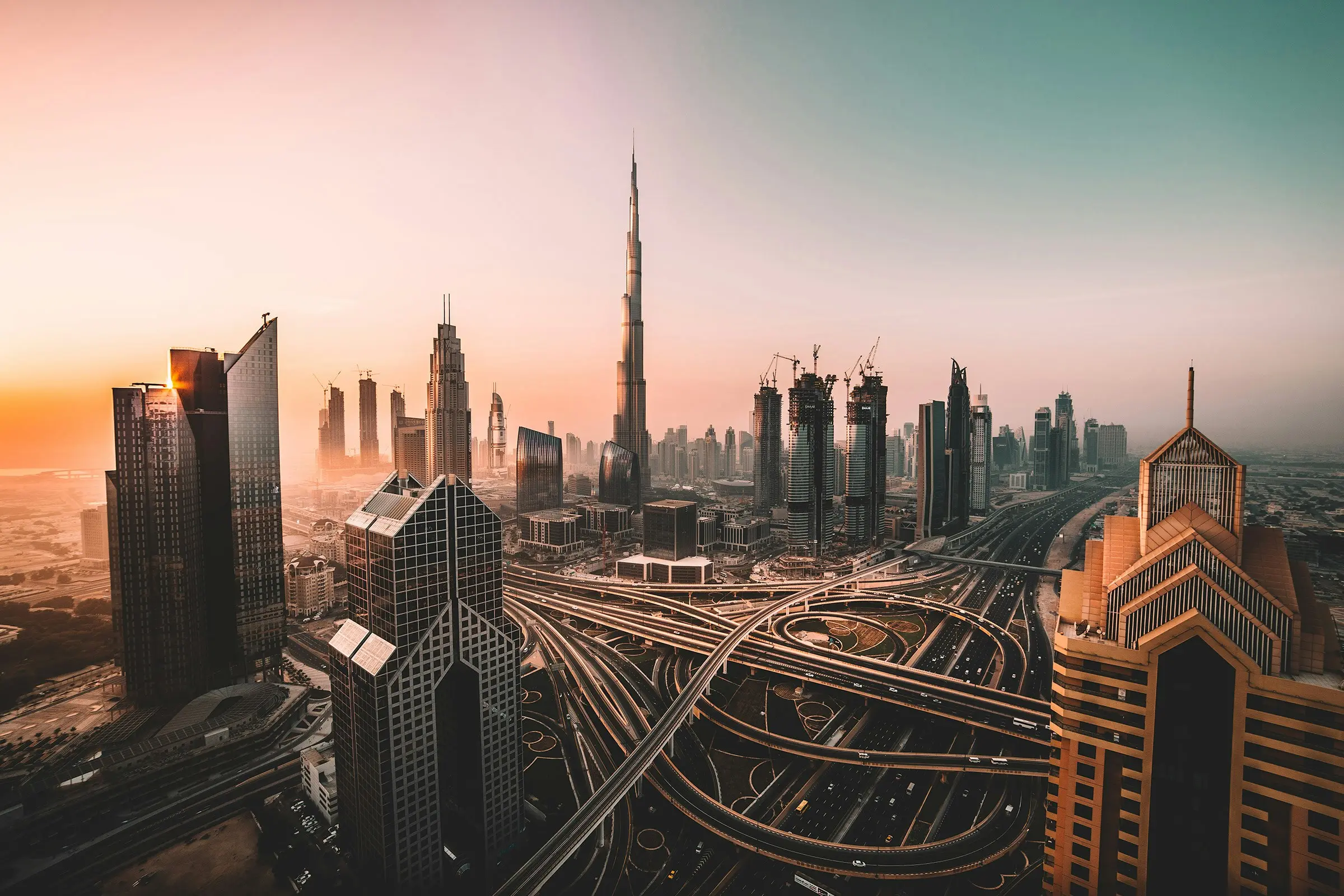
Dubai Off-Plan Property Demand Surges 25% Driven by Expat Buyers
According to recent market data, Dubai off-plan property demand increased by 25% in early 2026, with expatriate buyers leading the surge in investment activity.

Key Takeaways
- Dubai's off-plan property sector experienced a major surge in early 2026, representing approximately 70% to 76% of total residential transaction volume.
- Indian nationals consistently lead foreign property investment in Dubai (22% of purchases), followed by UK (17%) and Chinese (14%) buyers.
- The AED 2-5 million price bracket dominates off-plan demand (40%) due to its eligibility for the 10-year UAE Golden Visa residency program.
- Established developers like Emaar, DAMAC, and Nakheel drive the highest sales absorption rates, with buyers prioritizing developer credibility and escrow safety.
Dubai Off-Plan Property Demand Surges 25% Driven by Expat Buyers
TL;DR: Dubai's off-plan property market has recorded an exceptional 25% year-on-year demand surge in early 2026. This growth is heavily driven by international expatriates, with Indian nationals leading at 22% of purchases, followed by British (17%), Chinese (14%), Saudi (10-11%), and Russian (9%) investors. Properties in the AED 2–5 million range represent the sweet spot (40% of demand) as buyers leverage the UAE Golden Visa threshold of AED 2 million.
The real estate market in Dubai shows no signs of slowing down in 2026. The off-plan property sector has emerged as the primary growth engine for the city's real estate ecosystem. According to transactional data recorded by the Dubai Land Department (DLD), off-plan demand surged by a massive 25% year-on-year in early 2026. This follows a record-breaking 2025 where the market witnessed between 132,000 and 149,290 off-plan transactions, generating a total sales value ranging from AED 293 billion to AED 448.1 billion.
Today, off-plan properties represent the overwhelming majority of all residential sales in Dubai, accounting for 70% to 76% of total transactions in the first few months of 2026. For example, in January 2026 alone, the off-plan residential sector registered approximately 10,623 transactions valued at AED 25.98 billion—representing a 45% year-on-year growth in value. By April 2026, off-plan sales continued to dominate, capturing 76.48% of total volume and 76.39% of sales value, with 9,990 transactions worth AED 28.55 billion recorded in a single month.

Global Expatriate Nationalities Driving the Market
Dubai's global appeal as a secure, tax-free haven with world-class infrastructure has attracted a diverse pool of international expatriates. Real estate sales analysis for 2025 and 2026 reveals a highly concentrated international buyer profile:
1. Indian Nationals (22%)
Indians consistently rank as the top buyers of Dubai real estate. Proximity, historical business ties, favorable currency exchange patterns, and a large resident diaspora drive this demand. Indian buyers actively target mid-market apartments in communities like Jumeirah Village Circle (JVC) as well as luxury villas in family-centric suburban areas.
2. British Investors (17%)
UK nationals represent the second-largest foreign buyer group. High inflation and tax pressures in the UK have prompted British investors to reallocate capital to Dubai's high-yield, tax-free market. British buyers strongly favor prime waterfront locations and luxury golf communities.
3. Chinese Buyers (14%)
Chinese buyers have made a massive comeback in the off-plan sector, supported by strong bilateral ties and corporate relocations under the "Belt and Road" initiatives. Chinese investors are highly yield-focused, primarily purchasing modern, high-rise apartments in Business Bay, Downtown Dubai, and Dubai Creek Harbour.
4. Saudi Arabian Investors (10% - 11%)
GCC demand remains robust, led by Saudi nationals. Saudi buyers primarily seek spacious villas, townhouses, and branded luxury apartments to serve as secondary vacation homes or long-term wealth preservation assets.
5. Russian Investors (9%)
While Russian capital inflow has stabilized compared to the massive spikes of 2022–2023, Russian buyers remain key players. They show a clear preference for premium, ready-to-move-in assets or short-term off-plan properties in high-end locations like Palm Jumeirah, Dubai Marina, and new luxury branded towers.
Collectively, these top five buyer groups account for approximately 72% of all off-plan residential property purchases in Dubai.
Analysis of Popular Price Segments
The off-plan market in 2026 is highly segmented by price, with specific buyer demographics targeting different brackets:
| Price Range | Demand Share | Typical Buyer Profile | Primary Motives |
|---|---|---|---|
| AED 1 - 2 million | 35% | First-time investors, mid-level expats | High rental yields, capital growth |
| AED 2 - 5 million | 40% | Golden Visa applicants, family end-users | UAE residency, primary home |
| AED 5 - 10 million | 18% | Wealthy expats, portfolio diversifiers | Premium upgrade, luxury rental |
| Above AED 10 million | 7% | High-Net-Worth Individuals (HNWIs) | Branded residences, wealth shelter |
The Sweet Spot: AED 2 - 5 Million (40% Share)
This price bracket leads the market. The primary catalyst is the UAE Golden Visa program, which awards a 10-year renewable residency visa to anyone investing at least AED 2 million in Dubai real estate. For expats, this has shifted property purchases from speculative short-term flips to long-term residency options.

Top Master Developers Dominating Off-Plan Sales
Three major master developers dominate Dubai's off-plan landscape, accounting for the highest project absorption rates:
Emaar Properties
Emaar remains the undisputed market leader by both volume and value. Known for quality construction, master-planned community lifestyles, and high capital retention, Emaar attracts the widest demographic of global buyers. Key active hubs include Dubai Hills Estate, Downtown Dubai, and their new master community The Oasis.
DAMAC Properties
DAMAC has solidified its position as a luxury pioneer, focusing heavily on branded residences (in partnership with global fashion and automotive brands) and massive resort-style master communities. The success of DAMAC Lagoons and the recently launched DAMAC Islands has drawn significant interest from HNWIs and overseas European buyers.
Nakheel
Famous for the iconic Palm Jumeirah, government-backed Nakheel focuses on prime luxury waterfront assets. With the revival of Palm Jebel Ali and the rapid development of Dubai Islands, Nakheel remains a dominant force for ultra-luxury beachfront villas and high-end residential land plots.
Leading Areas for Off-Plan Investment
If you are looking to invest in Dubai's off-plan market, these five locations lead in transaction volumes and developer launches:
- Jumeirah Village Circle (JVC): The top location for affordable to mid-market developments. It features over 340 active projects, offering excellent rental yields (often exceeding 8% gross) and lower price per square foot entry points.
- Business Bay: The primary location for professional expats seeking city living. High-rise luxury apartments and branded residences dominate this area, offering close proximity to the Downtown corporate hub.
- Downtown Dubai: A timeless premium address. High-rise developments here command premium rental rates and capital appreciation due to proximity to the Burj Khalifa and Dubai Mall.
- Dubai Marina: Waterfront lifestyle apartments that attract European and British buyers. The limited remaining land plots mean new off-plan launches command major premiums.
- Al Furjan: A rapidly expanding, family-friendly community located near the Expo City corridor and Al Maktoum International Airport, offering highly competitive townhouses and mid-rise apartments.
Why Expatriates Prefer Off-Plan Assets in 2026
The structural advantages of Dubai's off-plan properties make them highly attractive to foreign buyers compared to global counterparts:
- Highly Flexible Payment Plans: Unlike ready properties that require 20-25% down payments plus transaction costs, off-plan properties are sold with flexible, interest-free construction-linked milestones (e.g., 10% booking, 40% during build, 50% on handover).
- Capital Appreciation Potential: Purchasing during the initial launch phase allows investors to benefit from price growth as construction progresses. Historically, well-located projects appreciate by 15% to 25% by handover.
- Lower Entry Capital: The initial cash outlay is significantly lower, allowing buyers to lock in current market prices with minimal immediate capital deployment.
- Zero Property Tax and High Yields: The UAE does not levy capital gains tax, rental income tax, or annual property tax, allowing investors to keep 100% of their rental yields (which average a robust 7% to 9% for mid-market assets).
Off-Plan Due Diligence Checklist for Expat Buyers
Investing in off-plan properties carries development risks, such as construction delays or quality discrepancies. Buyers must perform targeted due diligence before signing a Sales and Purchase Agreement (SPA):
- Verify Developer Credibility: Research the developer's historical track record of project delivery, handover timelines, and building maintenance quality.
- Confirm Escrow Account Registration: By UAE law, every off-plan project must have a registered escrow account under the Dubai Land Department (DLD). Ensure all payments are made directly to this official project account, never to a broker's personal account.
- Check Construction Milestones: Review the current site progress through the DLD's REST mobile app to confirm construction aligns with the developer's estimated timeline.
- Understand Service Charges: Ask for realistic service charge estimates (invoiced per square foot) as this directly impacts your net rental yield calculations.
- Analyze Exit Liquidity: Ensure the location and project type have high resale demand should you need to sell the contract before handover.
Related AiGentsRealty resources
What to verify before you act
Before making an investment decision, verify the latest pricing, transaction evidence, rental demand, service charges, payment-plan terms, and exit liquidity for the specific property. Market-wide guidance can help you shortlist opportunities, but final due diligence should happen at project, building, and unit level. Compare the total cost of ownership and avoid assuming that historic returns will repeat automatically.
Sources and further reading
Practical due diligence checklist
Use this article as a shortlist filter, then validate the specific asset before making a decision. Confirm the current asking price against recent transactions, check the total acquisition cost rather than only the headline price, and review service charges, payment-plan obligations, handover assumptions, and resale liquidity. For off-plan purchases, verify escrow registration, construction progress, developer delivery history, and the exact clauses in the sales and purchase agreement. For ready property, inspect the unit condition, building maintenance, occupancy profile, parking, views, and realistic rental demand.
Before committing, compare at least three alternatives in the same budget band. The strongest option is usually the one where location, entry price, floor plan, developer quality, future supply, and exit strategy all align. Avoid relying on generic area averages or marketing brochures when unit-level evidence is available.
How to turn this guide into a decision
Use this article to form a shortlist, then test each option against current evidence. Check recent transactions, live asking prices, payment terms, service charges, handover assumptions, rental demand, and resale liquidity. A good Dubai property decision depends on the exact asset, not only the area, developer, or broad market narrative.
For investors, compare total acquisition cost and holding cost before looking at headline returns. Include DLD fees, agency fees, service charges, maintenance, vacancy, furnishing, management, and potential exit costs. For end users, compare livability factors such as commute, noise, parking, amenities, building quality, and future construction nearby.
The safest decision process has four steps: verify the data, compare alternatives, pressure-test the downside, and confirm all terms in writing. If a property still looks attractive after those checks, it is a stronger candidate. If the numbers only work under optimistic assumptions, keep searching or negotiate better terms.
Frequently Asked Questions
By how much did Dubai's off-plan property demand increase in early 2026?
Dubai's off-plan property market witnessed a substantial demand surge of approximately 25% year-on-year in early 2026. Off-plan residential sales represented over 70% of all real estate transactions, showing sustained interest from international buyers.
Which nationalities are the top buyers of off-plan property in Dubai?
Indian nationals remain the leading buyer demographic, accounting for roughly 22% of foreign property purchases. They are followed by British (17%), Chinese (14%), Saudi Arabian (10-11%), and Russian (9%) investors.
What is the minimum investment for a Dubai Golden Visa through property purchase?
To qualify for a 10-year renewable UAE Golden Visa through real estate, the minimum property investment value must be AED 2 million or more. This can be met via single or multiple properties, including off-plan units with verified registration.
Why do expat buyers prefer off-plan properties over ready properties in Dubai?
Expat buyers prefer off-plan properties because of their flexible, interest-free payment plans during construction (often structured as 10/40/50 or similar), potential for 15-25% capital appreciation upon completion, lower initial capital requirements, and eligibility for the Golden Visa residency program.
Genie AI
AI Property AdvisorGenie AI is an advanced artificial intelligence system that analyzes thousands of data points to provide personalized real estate investment recommendations. Powered by Dubai Land Department data, market trends, and sophisticated algorithms, Genie AI helps investors make data-driven decisions.
Related Articles
Dubai Property Market News: This Week's Transaction, Listing and Source Dates
A date-aware Dubai property market news guide separating DLD registration reporting, portal asking-price observations, and developer availability snapshots for the 17–22 August 2026 reporting period.
Market NewsCedre Villas in Dubai Silicon Oasis: Buyer Research Guide
A source-aware guide to researching Cedre Villas in Dubai Silicon Oasis: documented home formats and sizes, dated portal asking-price examples, comparison questions and unit-specific due diligence.
Market NewsHow to Ask Sophia a Property Research Question in Dubai
A practical Dubai property-research framework: define your goal, location, requirements, budget, timing, constraints and desired output, then separate published information from details needing advisor or official confirmation.
Ready to Invest in Dubai?
Use Sophia AI to compare Dubai property options based on your budget, goals, and preferences.
Ask Sophia AI