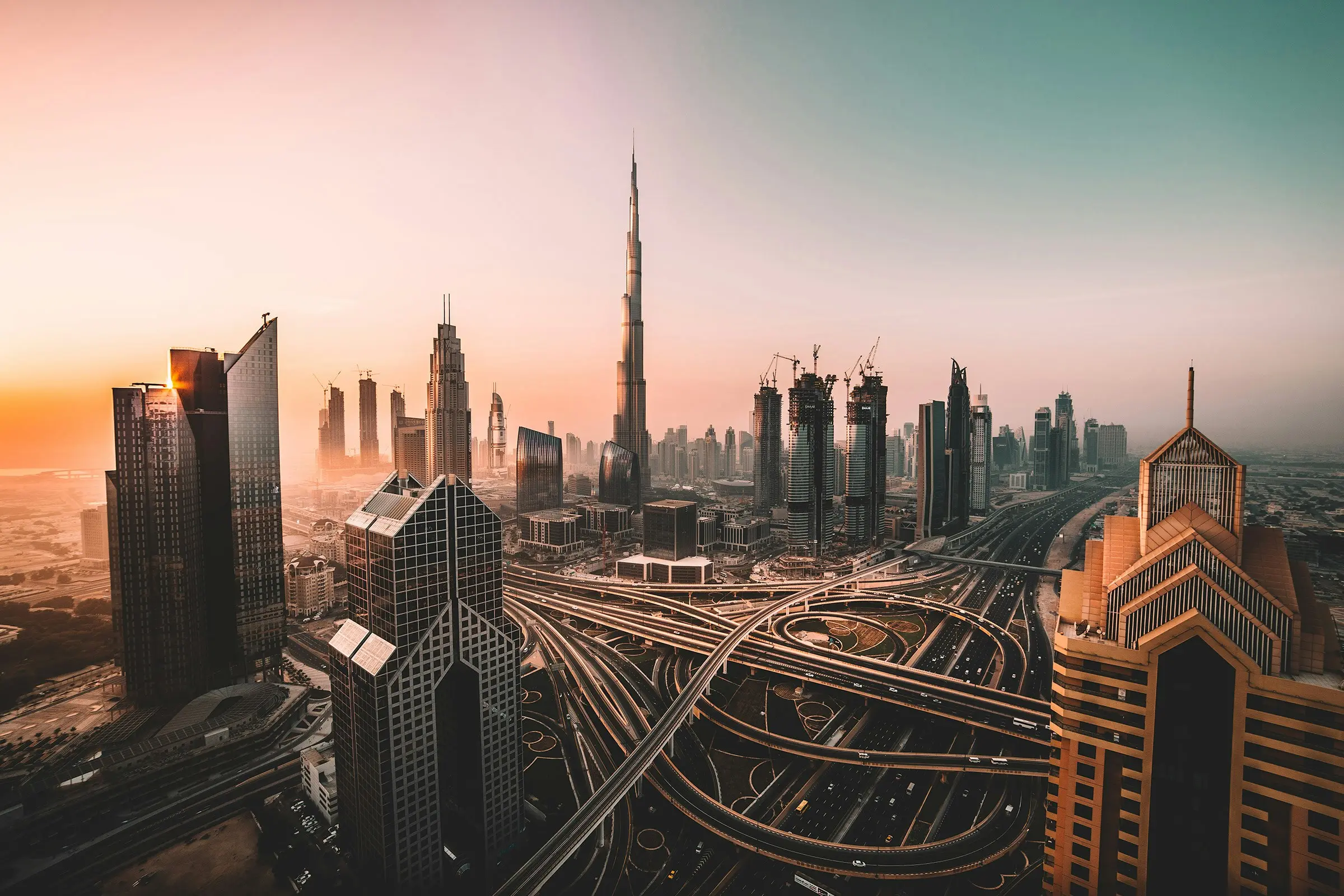
Dubai Commercial Property ROI 2026: Yields vs Residential

Key Takeaways
- Yield Premium: Dubai commercial property offers higher average yields than residential, with offices producing 6%–8%, retail 5%–9%, and industrial assets yielding 7%–10%.
- Transaction Explosion: 2025 saw a massive commercial real estate surge, with office sales transaction values more than doubling to AED 13.1 billion.
- Stricter Financing: Commercial mortgages require LTV ratios of 50%–60% with higher interest rates compared to more accessible residential mortgages.
- Zone Regulations: Commercial ownership is highly dependent on specific freezones (such as DIFC or JAFZA), each having distinct business licensing and property rules.
Dubai Commercial Property ROI 2026: Office, Retail & Industrial Yields vs Residential
Dubai's commercial market is evolving. New flex-office concepts, community retail formats, and logistics-driven warehouse demand are creating opportunities that yield more — sometimes significantly more — than residential property.
But higher yields come with higher risk. This guide gives you the data to decide whether commercial property fits your investment profile in 2026.

Commercial vs Residential: The Core Differences

Before comparing yields, understand the fundamental differences between commercial and residential investment:
| Factor | Commercial | Residential |
|---|---|---|
| Lease terms | 1-5 years | 1 year (standard) |
| Tenant profile | Businesses | Individuals/families |
| Management intensity | Higher (maintenance, compliance) | Lower (standard property management) |
| Financing | 50-60% LTV, higher rates | 75-80% LTV, lower rates |
| Liquidity | Lower (fewer buyers) | Higher (large buyer pool) |
| Vacancy risk | Higher (longer empty periods) | Lower (consistent demand) |
| Yield range | 6-10% | 4-9% |
| Capital appreciation | Moderate | Strong in premium areas |
The yield premium is real, but it compensates for higher risk. Understanding this tradeoff is the foundation of commercial investment decisions.
Office Yields by Area 2026

Dubai's office market has shifted from traditional long-lease formats to flexible, modern workspace. Here's the yield landscape by area:
DIFC — 7-8% Yield, 95%+ Occupancy
The Dubai International Financial Centre commands the highest office yields and near-full occupancy. Demand is driven by financial institutions, fintech companies, and professional services firms that require DIFC's regulatory jurisdiction.
- Price range: AED 2,500-4,000 per sqft
- Occupancy: 95%+
- Rental growth: 8-12% annually
- Tenant quality: Financial sector, high creditworthiness
- Risk: Premium pricing limits buyer pool; regulatory compliance requirements
Business Bay — 6-7% Yield, 85-90% Occupancy
Business Bay offers the most accessible commercial entry point. Modern office towers with flexible lease terms attract SMEs, tech companies, and regional headquarters.
- Price range: AED 1,500-2,500 per sqft
- Occupancy: 85-90%
- Rental growth: 5-8% annually
- Tenant quality: Mixed — SMEs to mid-size corporates
- Risk: New supply in 2026-2027 may compress yields temporarily
JLT — 6-7% Yield, 80-85% Occupancy
Jumeirah Lake Towers offers value-oriented office space with established tenant base and cluster-specific demand (DMCC freezone for commodity traders).
- Price range: AED 1,200-2,000 per sqft
- Occupancy: 80-85%
- Rental growth: 4-6% annually
- Risk: Older building stock; some clusters face vacancy pressure
Dubai Silicon Oasis — 5-6% Yield, 75-80% Occupancy
DSO targets tech companies and startups with competitive pricing and freezone benefits. Yields are lower but entry prices are accessible.
- Price range: AED 800-1,500 per sqft
- Risk: Niche tenant pool; limited resale liquidity
The 2025–2026 Commercial Boom: By the Numbers
The commercial real estate market in Dubai entered 2026 on a historic high. Data from 2025 reveals that commercial transactions reached their highest level since 2014, with total office sales transaction volumes hitting approximately 4,600 units, reflecting a 53.6% growth year-on-year. More impressively, the total value of office sales transactions more than doubled to AED 13.1 billion. This growth was fueled by international corporate relocations, regional headquarters expansions, and an influx of foreign capital targeting high-yield yield-producing assets in core zones. Moving through the first half of 2026, this momentum has stabilized into a mature phase where Grade A office space remains under tight occupancy limits, sustaining high rental rates in premium hubs.

Retail Yields by Type 2026

Retail yields vary significantly by format and location:
Mall Retail — 5-7% Yield
Mall units in established centers (Dubai Mall, Mall of the Emirates, Ibn Battuta) offer stable footfall but premium pricing. Yields are moderate but occupancy is reliable.
- Risk: High entry cost; mall management restrictions; footfall dependency on tourism cycles
Street Retail — 6-9% Yield
Street-facing retail on main roads (Sheikh Zayed Road, Al Wasl, JBR Walk) offers higher yields but more tenant turnover.
- Risk: Higher vacancy risk; tenant quality varies; no anchor tenant support
Community Retail — 6-8% Yield
Community retail centers in residential areas (JVC, Dubai Hills, Arabian Ranches) offer the most stable retail returns. Supermarket anchors provide consistent footfall.
- Risk: Limited to local demand; smaller unit sizes; moderate growth ceiling
Industrial/Warehouse Yields 2026
This is the highest-yielding commercial segment in Dubai, driven by e-commerce growth and logistics demand:
Dubai Investment Park — 8-10% Yield
DIP offers the best industrial yields with growing demand from e-commerce fulfillment, cold storage, and light manufacturing.
- Price range: AED 400-800 per sqft
- Occupancy: 85-90%
- Rental growth: 6-10% annually
- Risk: Limited resale market; longer lease negotiation periods
JAFZA — 8-9% Yield
Jebel Ali Free Zone combines port proximity with freezone benefits, attracting logistics companies, distributors, and trading firms.
- Risk: Freezone-specific regulations; port-area traffic congestion
Dubai South — 7-9% Yield
Dubai South (near Al Maktoum Airport) is positioned as the next logistics hub, with growing demand from aviation-related businesses and last-mile delivery operators.
- Risk: Early-stage development; infrastructure still maturing
Residential Benchmark: What You're Comparing Against
Before choosing commercial, know the residential baseline:
| Area | Property Type | Yield | Capital Appreciation |
|---|---|---|---|
| JVC | Apartment | 7-9% | Moderate |
| Business Bay | Apartment | 6-8% | Moderate |
| Dubai Marina | Apartment | 5-7% | Strong |
| Dubai Hills | Villa | 4-6% | Very strong |
| Palm Jumeirah | Apartment/Villa | 3-5% | Premium |
Residential yields are lower in premium areas but capital appreciation is stronger. Commercial yields are higher but appreciation is more modest.
ROI Comparison: The Decision Framework
| Property Type | Yield | Capital Growth | Vacancy Risk | Management Cost | Liquidity | Overall Risk |
|---|---|---|---|---|---|---|
| Office (DIFC) | 7-8% | Moderate | Low | High | Low | Medium |
| Office (Business Bay) | 6-7% | Moderate | Medium | Medium | Medium | Medium |
| Retail (community) | 6-8% | Low | Low | Medium | Low | Medium |
| Retail (street) | 6-9% | Low | High | Medium | Low | Medium-High |
| Industrial (DIP) | 8-10% | Low | Medium | Low | Very low | Medium |
| Residential (JVC) | 7-9% | Moderate | Low | Low | High | Low |
| Residential (Marina) | 5-7% | Strong | Low | Low | High | Low |
Key insight: Industrial/warehouse offers the highest yields but the lowest liquidity. DIFC office offers the best risk-adjusted commercial return. Community retail offers the most stable commercial income.
Risk Profile Comparison
Tenant Default Risk
- Commercial: Higher. Business tenants can fail, relocate, or renegotiate. Legal recourse exists but recovery takes time.
- Residential: Lower. Individual tenants are easier to replace, and DLD/RERA provides strong eviction frameworks.
Lease-Break Risk
- Commercial: Moderate. Commercial tenants may break leases early if business conditions change. Early-termination clauses are negotiable.
- Residential: Low. Standard 1-year leases with RERA-regulated notice periods.
Regulatory Risk
- Commercial: Area-specific. DIFC has its own legal framework. Freezone areas have specific business licensing requirements. Stay informed about zone-specific regulations.
- Residential: Standardized. RERA regulations apply uniformly across freehold residential areas.
Market-Cycle Sensitivity
- Commercial: Higher. Office and retail demand correlates with economic cycles and business confidence.
- Residential: Lower. Housing demand is more stable, driven by population growth rather than business cycles.
Financing Commercial Property
Commercial mortgage terms are significantly stricter than residential:
| Factor | Commercial | Residential |
|---|---|---|
| LTV ratio | 50-60% | 75-80% |
| Interest rate | 6-8% | 5-7% |
| Loan tenure | 10-15 years | Up to 25 years |
| Processing time | 4-8 weeks | 2-4 weeks |
| Eligible lenders | Fewer options | Multiple banks |
Practical implication: Most commercial investors either buy with cash or use equity-heavy financing. If you need high-LTV financing, residential is more accessible.
Who Should Buy Commercial in Dubai
The Yield-Seeker
You prioritize rental income over capital appreciation. You have cash or low-leverage financing available. You can tolerate 3-6 month vacancy periods between tenants.
Best fit: Industrial/warehouse (DIP, JAFZA) or community retail
The Portfolio Diversifier
You already own residential property and want to diversify into a different asset class with different risk-return characteristics.
Best fit: DIFC office or Business Bay flex-office — moderate risk with decent yields
The Owner-Occupier
You run a business in Dubai and want to own your premises rather than rent. This eliminates tenant risk and provides business stability.
Best fit: Office in your business area (DIFC for finance, DSO for tech, JLT for trading)
The Institutional Investor
You have significant capital and want large-format commercial assets with professional management.
Best fit: Grade-A office towers, mall retail units, or large industrial complexes
Recommendation: If you're a first-time Dubai investor, start with residential. Commercial is best for investors who already understand the market, have cash available, and can manage higher risk.
Frequently Asked Questions
What is the average ROI on Dubai commercial property?
Commercial yields vary by type: office 6-8%, retail 5-9%, industrial 7-10%. These are generally higher than residential yields (4-9%) but come with higher vacancy risk and lower liquidity. The highest-yield commercial segment is industrial/warehouse property in JAFZA and Dubai Investment Park.
Is commercial property better than residential in Dubai?
It depends on your investor profile. Commercial offers higher yields (6-10% vs 4-9% residential) but higher risk: longer vacancy, tenant default, and lower liquidity. Residential offers more stable occupancy and easier resale. For yield-focused investors with risk tolerance, commercial is compelling. For stability-focused investors, residential is safer.
Can non-residents buy commercial property in Dubai?
Yes. Non-residents can buy commercial property in designated freehold commercial zones. DIFC has specific ownership regulations for financial-sector businesses. Freezone areas like JAFZA and Dubai Silicon Oasis allow foreign commercial ownership. Always verify the specific zone's ownership rules before purchasing.
What are typical commercial lease terms in Dubai?
Office leases are typically 1-3 years, retail 3-5 years, and industrial 3-5 years. All commercial leases are subject to RERA-regulated rent increases. Longer leases provide more stability but reduce flexibility for renegotiation.
How do commercial property mortgages work in Dubai?
Commercial mortgages have stricter terms than residential: LTV is 50-60% (vs 75-80% residential), interest rates are higher (6-8% vs 5-7%), and loan tenures are shorter (10-15 years vs 25 years). Many commercial investors prefer cash or equity-heavy financing to avoid these constraints.
Genie AI
AI Property AdvisorGenie AI is an advanced artificial intelligence system that analyzes thousands of data points to provide personalized real estate investment recommendations. Powered by Dubai Land Department data, market trends, and sophisticated algorithms, Genie AI helps investors make data-driven decisions.
Related Articles
Dubai Building Age Data: What Construction Year Can and Cannot Tell a Buyer
A buyer-method guide to separating reported building dates from completion, condition, and transaction evidence in Dubai.
Investment GuidesDubai Real Estate Price Index: Read Market Movement Without Valuing a Unit
How to distinguish an official Dubai market-price series from the evidence needed for a unit-specific valuation.
Investment GuidesDubai School Commute Data: Compare Route Windows Before Choosing a Property
Use a documented, like-for-like route-window method to compare candidate Dubai homes with a selected school without turning estimates into guarantees.
Ready to Invest in Dubai?
Use Sophia AI to compare Dubai property options based on your budget, goals, and preferences.
Ask Sophia AI