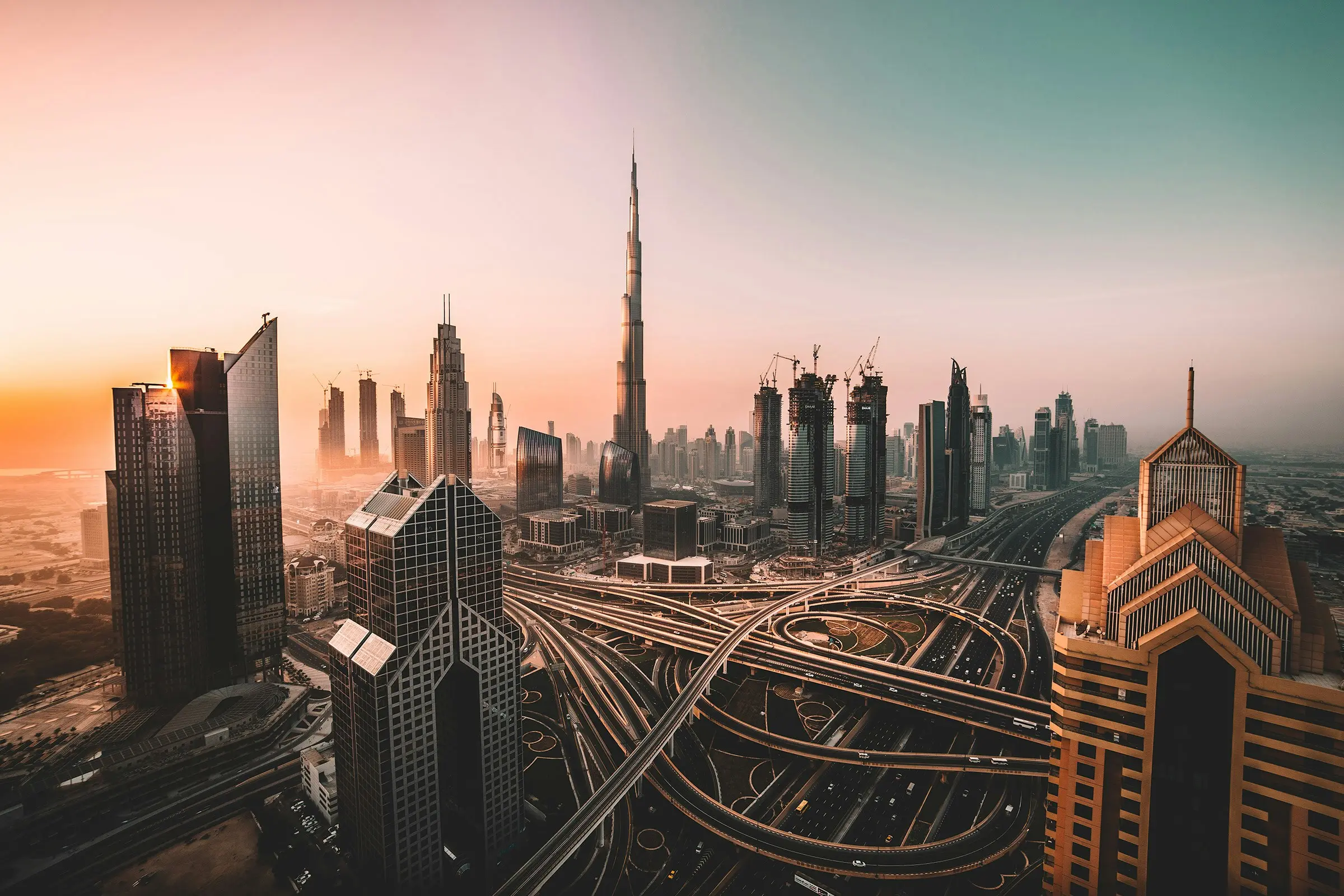
Is the Boom Over? The Truth About Dubai Real Estate Market Trends in 2026
A comprehensive analysis of the Dubai real estate market trends in 2026. Discover how the market has shifted to sustainable maturity and what the latest Bayut data reveals.

Key Takeaways
- Sustainable Growth Phase: The Dubai real estate market has transitioned from speculative 'FOMO' buying to calculated, sustainable growth, with prices appreciating by 5% to 10% in early 2026.
- JVC Leads in Yield and Volume: Jumeirah Village Circle (JVC) continues to be the most liquid mid-market community, offering exceptional gross rental yields between 7.0% and 9.0%.
- High Resale Demand: Resale property values in established communities like Dubai Marina and Downtown Dubai are growing faster than off-plan prices (up to 11.3% vs 6.7%), signaling a strong preference for ready-to-move-in properties.
- Demographic Price Floor: Dubai's official population crossing the 4 million milestone, combined with expanded 10-Year Golden Visa eligibility (minimum AED 2M investment), has created a permanent buyer base that keeps transaction volumes robust.
Is the Boom Over? The Truth About Dubai Real Estate Market Trends in 2026
TL;DR: Dubai's real estate market has officially transitioned from the aggressive, speculation-heavy "FOMO" surge of recent years into a phase of "sustainable maturity" in early 2026. Data from the Dubai Land Department (DLD) and major portals shows that average capital appreciation has stabilized to a logical 5% to 10% annual rate. Underpinned by a structural population milestone crossing 4 million residents and the popularity of the 10-year UAE Golden Visa, housing demand remains exceptionally robust. While a massive pipeline of 452,101 units is under construction, construction lags mean only 35,000 to 45,000 units are projected for delivery in 2026, protecting existing asset values and keeping rental yields strong at 6% to 9% gross.
Investors searching for bayut dubai real estate market trends 2026 are all asking the same central question: Is the boom over?
Following five consecutive years of historic expansion—culminating in an extraordinary AED 917 billion in real estate transactions in 2025—speculation of a sharp correction has been widespread. However, the data reveals a different story. The Dubai property market has not entered a decline; instead, it has entered a healthy phase of market maturation. The double-digit price increases and instant speculative flips of 2023–2024 have been replaced by strategic, logical growth. This shift toward stability is exactly what institutional investors and conservative family offices have been waiting for.
Analyzing the Bayut Dubai Real Estate Market Trends 2025–2026 Data
A comparative analysis of portal data highlights a distinct divergence in sentiment between off-plan project launches and ready resale properties. In 2025, off-plan sales dominated transaction activity, accounting for approximately 69% of all transaction volume (worth AED 448.1 billion). However, price movements tell a more nuanced story: resale (secondary market) property values appreciated at a faster rate, rising 11.3% year-over-year (to a median of AED 1,481 per square foot), compared to off-plan price growth of 6.7% year-over-year (to a median of AED 1,718 per square foot).
This trend indicates that buyers are placing a high premium on immediate occupancy and proven, established communities. Speculators are finding fewer opportunities for rapid gains, while end-users and long-term yield-focused investors are becoming the primary drivers of transaction volume.

Segment Breakdown: Apartments vs. Villas
The performance of the market varies significantly by segment, with villas and townhouses continuing to show different dynamics compared to the apartment market.
1. Villas and Townhouses: Persistent Undersupply
The villa and townhouse segment continues to outperform the broader market due to a chronic undersupply of ready, family-sized homes in premium master communities. While master developers have launched several new townhouse communities, these projects require three to four years to deliver. Consequently, ready villas in established areas like Arabian Ranches, Dubai Hills Estate, and DAMAC Hills remain highly sought after, with prices projected to grow by 12% to 18% in 2026.
2. Apartments: Price and Yield Stabilization
The apartment sector is where price stabilization is most apparent. High-density areas like Jumeirah Village Circle (JVC), Business Bay, and Dubai Marina are seeing steady demand but more moderate appreciation rates, projected at 4% to 8% for 2026. This stabilization has given buyers slightly more negotiating power, with some developers offering payment incentives, such as post-handover terms or waivers on the 4% DLD registration fee, to maintain sales momentum.
Key Performance Indicators: Price per Square Foot by Community
Understanding where to allocate capital requires analyzing community-level performance metrics. According to Bayut's 2025 market data, average price-per-square-foot metrics for apartments highlight the distinct segmentation between affordable, mid-market, and luxury districts:
- Jumeirah Village Circle (JVC): The leading community for transaction volume, JVC recorded a median price of AED 1,469 per square foot for apartments. Its entry-level pricing and central location make it a preferred choice for mid-market buyers.
- Dubai Marina: A premier waterfront location, apartments in Dubai Marina averaged AED 2,085 to AED 2,150 per square foot, supported by high occupancy rates and tourist demand.
- Downtown Dubai: Commanding the highest premiums for luxury high-rises, Downtown apartments reached average sales values of AED 3,134 to AED 3,168 per square foot.
These figures illustrate that while entry prices in mid-market areas like JVC are accessible, luxury districts command significant premiums due to land constraints and their global profile.
The 4 Million Population Milestone
The most significant structural factor supporting Dubai real estate trends in 2026 is demographic. Dubai's official resident population has officially crossed the 4 million mark.
This population growth is not transient. The UAE government's strategic reforms—particularly the introduction of the 10-Year Golden Visa for property investments of AED 2 million or more—have changed the demographic profile of the city. Expats are increasingly choosing to settle permanently in Dubai rather than treating it as a short-term employment hub. This shift from "renters" to "end-user property owners" provides a stable foundation for the housing market, ensuring consistent demand for completed properties.
Yield Projections: Gross vs. Net Rental Returns
Dubai continues to offer some of the highest rental yields of any major global city. However, yields vary by community and segment:
| Community | Property Type | Gross Rental Yield | Investment Role |
|---|---|---|---|
| JVC | Mid-Tier Apartments | 7.0% – 9.0% | Cash flow generator, high-yield |
| Dubai Marina | Luxury Apartments | 5.0% – 7.0% | Balanced yield, high liquidity |
| Downtown Dubai | Premium Apartments | 4.0% – 6.0% | Capital preservation, prestige |
| DAMAC Lagoons | Luxury Villas | 8.5% – 10.4% | Outperforming villa average |
Calculating Net Rental Yield
While developers and brokers frequently highlight gross rental yields of 8% or 9%, investors must calculate realistic net yields by deducting all holding costs:
- Service Charges: Paid annually to the homeowners' association, these range from AED 12 to AED 30+ per square foot depending on building quality and amenities.
- Property Management Fees: Professional management companies typically charge 5% to 8% of the annual rent.
- Maintenance Accruals: Setting aside 1% to 2% of rental income for repairs and upkeep.
- Property Insurance and Vacancy Reserves: Accruing for potential lease transitions.
After accounting for these expenses, a gross yield of 8% in JVC typically translates to a net return of 6.0% to 7.5%, which remains highly competitive compared to global gateway cities like London or New York, where net yields often fall below 3%.
Supply Pipeline and the Delivery Lag Fact
A common concern among market observers is the threat of oversupply. With 452,101 units across 1,464 projects under construction in Dubai's development pipeline, the raw numbers suggest potential saturation. However, analyzing the completion stages reveals a different reality:
- 0% to 20% Complete: This early stage represents 65% of the total pipeline. These projects will not reach completion until 2027, 2028, or later.
- 21% to 40% Complete: Accounting for 12% of the pipeline, scheduled for delivery in late 2026 or 2027.
- Above 40% Complete: Representing 23% of under-construction projects, scheduled for delivery in late 2025 and 2026.
Historically, developer delays, supply chain constraints, and utility connection timelines mean that actual handovers lag behind nominal schedules. While developers have announced approximately 120,000 units for 2026 delivery, actual completions are projected to range between 35,000 and 45,000 units. This controlled supply influx acts as a price floor, protecting property values from sudden drops.

Infrastructure Catalysts Driving Search Trends
Search patterns on property portals like Bayut indicate that infrastructure investment directly influences buyer demand. Several major projects are driving interest in specific development corridors:
1. The Dubai Metro Blue Line Corridor
The AED 18 billion Dubai Metro Blue Line, spanning 30 kilometers and featuring 14 stations, is scheduled for completion in 2029. However, it is already impacting property values along its planned route. Communities like Dubai Creek Harbour, Ras Al Khor, Festival City, and International City are seeing increased search volume, with property prices projected to appreciate by up to 25% near future stations.
2. Al Maktoum International Airport Expansion
The planned expansion of Al Maktoum International Airport (DWC) to become the world's largest passenger hub has directed significant investor interest toward Dubai South and Al Furjan. Search volume for properties in these areas has increased, driven by their competitive pricing and proximity to the future logistics and aviation hub.
Risk Mitigation and Due Diligence Checklist for 2026
While the market outlook remains stable, navigating Dubai's real estate sector requires careful due diligence. Investors should follow these key steps:
- Verify Escrow Accounts: Ensure all payments for off-plan properties are made directly into the project's official escrow account registered with the Dubai Land Department (DLD). Never transfer funds directly to a broker or developer's corporate account.
- Assess Developer Track Records: Research the developer's history of completing projects on time and the quality of their completed developments.
- Review Service Charges: Request the RERA-approved service charge index for the building or community to calculate accurate holding costs before purchasing.
- Check Construction Progress: Use the DLD's REST app to view construction photos and progress reports for off-plan projects.
- Evaluate Resale Liquidity: Focus on locations with established infrastructure and access to major highways or public transport to ensure resale options remain viable.
Related AiGentsRealty resources
What to verify before you act
Before making an investment decision, verify the latest pricing, transaction evidence, rental demand, service charges, payment-plan terms, and exit liquidity for the specific property. Market-wide guidance can help you shortlist opportunities, but final due diligence should happen at project, building, and unit level. Compare the total cost of ownership and avoid assuming that historic returns will repeat automatically.
Sources and further reading
Practical due diligence checklist
Use this article as a shortlist filter, then validate the specific asset before making a decision. Confirm the current asking price against recent transactions, check the total acquisition cost rather than only the headline price, and review service charges, payment-plan obligations, handover assumptions, and resale liquidity. For off-plan purchases, verify escrow registration, construction progress, developer delivery history, and the exact clauses in the sales and purchase agreement. For ready property, inspect the unit condition, building maintenance, occupancy profile, parking, views, and realistic rental demand.
Before committing, compare at least three alternatives in the same budget band. The strongest option is usually the one where location, entry price, floor plan, developer quality, future supply, and exit strategy all align. Avoid relying on generic area averages or marketing brochures when unit-level evidence is available.
How to turn this guide into a decision
Use this article to form a shortlist, then test each option against current evidence. Check recent transactions, live asking prices, payment terms, service charges, handover assumptions, rental demand, and resale liquidity. A good Dubai property decision depends on the exact asset, not only the area, developer, or broad market narrative.
For investors, compare total acquisition cost and holding cost before looking at headline returns. Include DLD fees, agency fees, service charges, maintenance, vacancy, furnishing, management, and potential exit costs. For end users, compare livability factors such as commute, noise, parking, amenities, building quality, and future construction nearby.
The safest decision process has four steps: verify the data, compare alternatives, pressure-test the downside, and confirm all terms in writing. If a property still looks attractive after those checks, it is a stronger candidate. If the numbers only work under optimistic assumptions, keep searching or negotiate better terms.
Frequently Asked Questions
Is the Dubai property boom over in 2026?
No. While the market has shifted away from aggressive double-digit speculative price jumps, it has stabilized into a healthy growth cycle. Capital appreciation for 2026 is projected at 5% to 10% on average, backed by robust transaction volumes, a growing population, and strong rental yields ranging from 6% to 9%.
What do Bayut's 2026 search trends show for Dubai property?
Bayut search trends show a 25% year-on-year increase in search volumes for terms like 'off-plan' and 'payment plan.' JVC leads searches for affordable to mid-market apartments, while Dubai Marina and Downtown Dubai dominate search volumes for luxury waterfront and premium properties.
Should I buy Dubai property now or wait for a price drop?
Waiting carries significant opportunity cost. With Dubai's population growing by approximately 1,000 new residents daily, chronic undersupply of ready villas, and infrastructure projects like the Metro Blue Line corridor driving long-term value, prices are supported by solid fundamentals. Investors can expect 5-10% appreciation and 6-9% yields, making immediate entry more profitable than waiting.
Which areas in Dubai offer the best rental yields in 2026?
For apartment cash flow, JVC leads with gross yields between 7% and 9%, followed closely by Arjan and Dubai Silicon Oasis (up to 9-10% in affordable pockets). In the luxury segment, Dubai Marina yields 5% to 7%, while Downtown Dubai averages 4% to 6% gross yields but offers superior capital preservation.
Genie AI
AI Property AdvisorGenie AI is an advanced artificial intelligence system that analyzes thousands of data points to provide personalized real estate investment recommendations. Powered by Dubai Land Department data, market trends, and sophisticated algorithms, Genie AI helps investors make data-driven decisions.
Related Articles
Dubai Property Market News: This Week's Transaction, Listing and Source Dates
A date-aware Dubai property market news guide separating DLD registration reporting, portal asking-price observations, and developer availability snapshots for the 17–22 August 2026 reporting period.
Market NewsCedre Villas in Dubai Silicon Oasis: Buyer Research Guide
A source-aware guide to researching Cedre Villas in Dubai Silicon Oasis: documented home formats and sizes, dated portal asking-price examples, comparison questions and unit-specific due diligence.
Market NewsHow to Ask Sophia a Property Research Question in Dubai
A practical Dubai property-research framework: define your goal, location, requirements, budget, timing, constraints and desired output, then separate published information from details needing advisor or official confirmation.
Ready to Invest in Dubai?
Use Sophia AI to compare Dubai property options based on your budget, goals, and preferences.
Ask Sophia AI