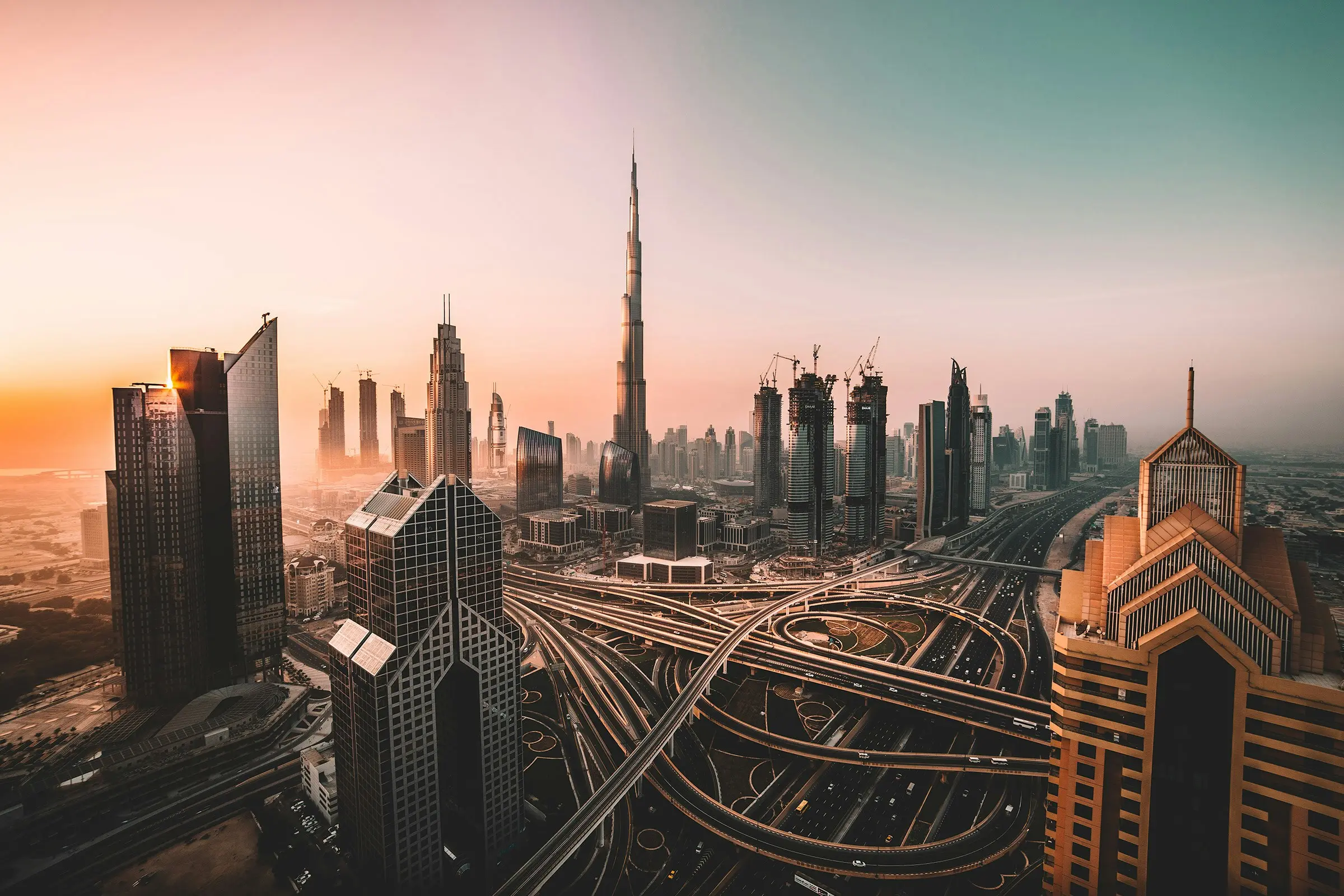
Buying Off-Plan Property in Dubai: A First-Time Investor's Guide (2026)
Everything first-time investors need to know about buying off-plan property in Dubai — from payment plans and escrow protections to developer due diligence and exit strategies.

Key Takeaways
- Construction Influx: Over 60% of Dubai's residential transactions involve off-plan properties, representing a stable trend going into 2026.
- Financial Advantages: Off-plan purchases offer lower per-square-foot entry points, flexible installment structures, and capital appreciation potential before handover.
- Strict Escrow Laws: Under UAE Law No. 8 of 2007, developer escrow accounts are highly regulated, releasing funds only upon verified construction milestones.
- Comprehensive Vetting Required: Key risk mitigation includes checking developer track records via the Dubai REST app and verifying active RERA project numbers.
Written by Genie AI | AI Property Advisor at AiGentsRealty
Published: May 12, 2026
Dubai's real estate market runs on off-plan. In 2024 and 2025, roughly 60% of residential transactions involved properties still under construction — and that share is holding steady into 2026. For investors, off-plan offers lower entry prices, flexible payment schedules, and the potential for capital appreciation before handover. But it also carries risks that on-ready purchases do not. For a broader market perspective, see our Dubai real estate market trends for 2026.
This guide walks through the entire process: what off-plan means, how payment plans work, the legal framework that protects your money, how to vet a developer, and what to expect from returns. Whether you are an expat living in the UAE or an overseas buyer considering Dubai for the first time, this is the framework you need before signing a reservation form.
What Does "Off-Plan" Mean?
Off-plan property is real estate purchased before the building is completed — in many cases, before construction has started. You buy based on architectural plans, renderings, and the developer's track record, rather than a finished unit you can walk through.
In Dubai, off-plan is not a niche. It is the primary way residential inventory reaches the market. Major developers such as Emaar, Damac, Nakheel, and Sobha launch projects in phases, and early buyers typically pay less per square foot than those who wait for completion.
The trade-off is time and uncertainty. Your capital is committed for two to four years, and the finished product may differ from the brochure in small ways. The sections below explain how Dubai's regulatory system mitigates those risks — and where your own due diligence still matters.
For a broader overview, see our off-plan investment guide.
Payment Plan Structures
One of the biggest draws of off-plan in Dubai is the payment plan. Instead of paying the full price upfront, you spread the cost across the construction timeline and sometimes beyond handover. For specific projects with accessible entry points, see our guide to off-plan projects under AED 1M in Dubai.
Common Payment Plan Types
70/30 Plan The most traditional structure. You pay 70% during construction (in installments tied to milestones such as foundation, superstructure, and fit-out) and the remaining 30% on handover. This plan suits buyers who want to clear most of the cost before moving in or renting out.
50/50 Plan An even split — 50% during construction, 50% on handover. Popular with mid-market developers and increasingly common in secondary off-plan resales.
Post-Handover Payment Plans You pay a smaller portion during construction (sometimes as little as 10-20%) and the balance over two to five years after you receive the keys. These plans lower the barrier to entry significantly, but they also mean you are paying for the property while already owning it — which changes the ROI math.
1% Monthly Plans A marketing-friendly variant where you pay roughly 1% of the purchase price per month during construction. Functionally similar to a 50/50 or 60/40 plan, but the monthly framing makes budgeting easier for salaried buyers.
Choosing the Right Plan
The right plan depends on your cash flow and investment strategy. If you plan to flip before completion, a low initial outlay (post-handover or 1% plan) maximizes leverage. If you intend to hold for rental income, a 70/30 plan means you own the property debt-free at handover, improving net yields.
Always confirm the exact milestone schedule with the developer and have your agent review the payment plan clause in the Sale and Purchase Agreement (SPA) before committing.
Legal Safeguards: Escrow Law and RERA
Dubai's off-plan market was not always well-regulated. The 2008 crisis exposed gaps that allowed developers to spend buyer funds on unrelated projects. The government responded with legislation that now makes Dubai one of the more protected off-plan markets globally.
Law No. 8 of 2007 (Escrow Law)
This is the cornerstone of buyer protection. Under the Escrow Law:
- Developers must deposit all buyer payments into a RERA-regulated escrow account for the specific project.
- Funds can only be released to the developer against certified construction milestones, verified by an independent engineer approved by the Dubai Land Department (DLD).
- A developer cannot access escrow funds for any purpose other than constructing the project they were collected for.
This means your money is ring-fenced. If a developer defaults, the escrow balance remains available for project completion — either by the original developer or a replacement appointed by RERA.
RERA Registration
Every off-plan project must be registered with RERA (the Real Estate Regulatory Agency) before units can be sold. RERA checks the developer's land ownership, financial capacity, and project viability before granting a registration number. You can verify a project's RERA status through the Dubai REST app or the DLD website.
Red flag: If a developer cannot provide a RERA registration number for the project, do not proceed.
DLD and the Dubai Land Department
The DLD oversees property registration, title deed issuance, and the broader regulatory framework. When you buy off-plan, your purchase is registered with the DLD and you receive an Oqood (pre-title deed) certificate confirming your ownership of the under-construction unit. This is a legally recognized ownership document that can be traded or used as collateral.

Developer Due Diligence Checklist

Regulation protects you from fraud, but it cannot protect you from a developer who is simply slow or delivers a lower-quality product than promised. Your own research is essential.
Track Record
- How many projects has the developer completed?
- Were they delivered on time? (Check RERA's project completion records.)
- Visit completed projects by the same developer if possible — talk to residents about build quality and after-sales service.
Financial Health
- Is the developer a publicly listed company? If so, review their annual reports.
- Private developers: ask for bank guarantees or proof of project funding beyond buyer payments.
- A developer relying solely on off-plan sales to fund construction is higher risk than one with institutional backing.
Project-Specific Checks
- RERA registration number — verify it independently.
- Escrow account details — your payments should go to a named escrow account, not the developer's operating account.
- SPA terms — review the delivery date, grace period for delays, penalty clauses for late delivery, and the specification sheet (what finishes and fittings are included).
- Master community status — is the surrounding infrastructure (roads, metro, retail) already built, or is it also off-plan? Delays in community infrastructure can affect your property's value even if the building itself is on time.
Warning Signs
- No RERA registration or "registration pending" for a project already accepting reservations.
- Pressure to pay large sums directly to the developer (not an escrow account).
- Vague or missing specifications in the SPA.
- A developer with multiple stalled or cancelled projects on their record.
DLD Fees and Registration Costs
Buying property in Dubai involves mandatory government fees that are separate from the purchase price. For a detailed breakdown, see our DLD fees guide for 2026.
- DLD transfer fee: 4% of the purchase price, split equally between buyer and seller (in practice, the buyer usually pays the full 4% on off-plan purchases).
- Oqood registration fee: Approximately AED 4,000-5,000 for registering the off-plan unit.
- Admin fees: AED 2,000-5,000 for processing and NOC (No Objection Certificate) charges.
On a AED 1,000,000 off-plan unit, expect roughly AED 46,000-55,000 in total government and registration costs. Factor this into your budget from the start — it is not negotiable.
Risks and How to Mitigate Them
Construction Delays
Delays are the most common off-plan risk. Dubai law allows developers a grace period (typically 6-12 months) beyond the stated handover date before penalties apply. After that, the SPA usually stipulates compensation — often a percentage of the purchase price per month of delay.
Mitigation: Choose developers with a strong on-time delivery record. Read the delay penalty clause carefully. Consider that even reputable developers occasionally slip by 3-6 months on large projects.
Market Downturn
If property values decline between your purchase date and handover, your unit may be worth less than you paid — and you are still obligated to complete the payment plan.
Mitigation: Buy in established locations with proven demand (Dubai Marina, Business Bay, JVC) rather than speculative fringe areas. Maintain a cash reserve so you are not forced to sell at a loss if the market softens.
Developer Default
While the Escrow Law protects your funds, a developer default can still mean years of delays while RERA arranges a replacement builder.
Mitigation: Prioritize Tier 1 and Tier 2 developers with institutional backing. Diversify — do not put your entire investment budget into a single off-plan project.
Specification Changes
Developers reserve the right to make "reasonable" changes to layouts, materials, and amenities. Most changes are minor, but some can affect value — for example, a promised view blocked by a new tower in the same development.
Mitigation: Review the SPA clause on specification changes. Ask your agent to obtain the developer's standard position on material alterations. If specific features (view, floor, layout) are critical to your purchase decision, negotiate them as contractual commitments rather than relying on the brochure.
ROI Expectations and Exit Strategies
Capital Appreciation
Off-plan buyers typically aim for 10-20% capital appreciation between purchase and handover, driven by construction progress and market momentum. This is realistic in a rising market with a reputable developer, but it is not guaranteed. For strategies to maximise returns, see our guide to maximizing ROI on Dubai property in 2026.
Historical data from DLD shows that well-located off-plan units in Dubai have generally appreciated over a 3-5 year hold, but short-term fluctuations are normal. Treat projected appreciation as a best-case scenario, not a certainty.
Rental Yields
Dubai's gross rental yields range from 5% to 9% depending on location and unit type. Affordable communities (JVC, Dubai South, Arjan) tend to offer higher yields, while prime areas (Downtown, Palm Jumeirah) offer lower yields but stronger capital appreciation.
If you plan to rent out after handover, calculate your net yield by deducting service charges (typically AED 10-30 per sq ft annually), property management fees, and maintenance reserves from the gross rent.
Flipping Before Completion
Reselling an off-plan unit before handover (known as flipping or assigning) is common in Dubai. You sell your Oqood contract to a new buyer, ideally at a premium reflecting construction progress.
Key considerations:
- Most developers charge an assignment fee (1-3% of the original price or the resale price).
- Some developers restrict assignments until a certain percentage of the payment plan has been paid.
- The secondary market for off-plan is less liquid than the ready market — expect the sale to take longer.
Long-Term Hold
For investors with a 5-10 year horizon, buying off-plan in growth corridors and holding through multiple rental cycles can generate strong total returns (appreciation + cumulative rental income). This strategy benefits from Dubai's population growth trajectory and continued infrastructure investment.
Step-by-Step Purchase Timeline
1. Research and Shortlist (Weeks 1-3)
Identify your budget, preferred location, and investment goals. Shortlist 3-5 projects that match your criteria. Verify RERA registration for each.
2. Site Visit and Developer Meeting (Week 3-4)
Visit the sales center. Walk the site (or the surrounding area if construction has not started). Ask to see the show apartment or a completed project by the same developer. Request the SPA draft for review.
3. Reserve the Unit (Week 4)
Pay the booking amount (typically 5-10% of the purchase price) to the project's escrow account. Receive a booking confirmation and payment schedule.
4. Sign the SPA (Weeks 4-6)
Review the SPA with your agent or legal advisor. Confirm the payment plan, handover date, delay penalties, and specification commitments. Sign and register the Oqood with the DLD.
5. Pay Installments (Months 1-36+)
Follow the milestone-based payment schedule. Each payment goes to the escrow account. Track construction progress through site visits or the developer's updates.
6. Snagging and Handover (Month 36-48)
Before accepting the keys, conduct a snagging inspection (or hire a professional snagging company) to identify defects. The developer is obligated to fix snagging items before or shortly after handover.
7. Title Deed Registration (At Handover)
The Oqood is converted to a full title deed registered with the DLD. You now own the completed property outright (subject to any post-handover payment balance).
Getting Professional Help
Navigating the off-plan market alone is possible, but working with experienced professionals reduces risk and saves time.
A reputable brokerage can help you compare projects, negotiate with developers, and understand the fine print in the SPA. Look for a RERA-licensed broker who represents your interests — not just the developer's.
New to Dubai property? Read our first-time buyer guide.
Browse current off-plan projects to see what is available right now, or book a free consultation with our off-plan specialists to discuss your investment goals.
Frequently Asked Questions
Is buying off-plan property in Dubai safe?
Yes — when you follow the right precautions. Dubai's Escrow Law (Law No. 8 of 2007) requires all buyer payments to go into RERA-regulated escrow accounts, and funds are only released against verified construction milestones. Always confirm the project has a valid RERA registration number before committing.
What is the minimum down payment for off-plan in Dubai?
Most developers require a booking amount of 5-10% of the purchase price. The remaining payment schedule depends on the plan type — 70/30, 50/50, or post-handover. Some projects offer 1% monthly payment plans that lower the initial outlay further.
Can I sell my off-plan property before completion?
Yes, this is called assignment or flipping. Most developers allow it after a certain percentage of the payment plan has been paid, and they typically charge an assignment fee of 1-3% of the original or resale price. Check the SPA for your project's specific assignment terms.
What happens if the developer delays handover?
Dubai law allows a grace period (usually 6-12 months) beyond the stated handover date. After that, the SPA typically stipulates compensation — often a percentage of the purchase price per month of delay. If the developer defaults entirely, RERA can appoint a replacement builder using the remaining escrow funds.
How much are the additional costs on top of the purchase price?
Budget for the DLD registration fee (4% of the purchase price), Oqood registration (AED 4,000-5,000), admin fees (AED 2,000-5,000), and — after handover — annual service charges (AED 10-30 per sq ft). On a AED 1,000,000 unit, total additional costs at purchase are roughly AED 46,000-55,000.
Can foreigners buy off-plan property in Dubai?
Yes. Dubai allows foreign nationals to buy property in designated freehold areas with full ownership rights. Off-plan purchases in freehold zones grant the same ownership protections as ready properties, including Oqood registration and eventual title deed issuance.
What is the Oqood and how is it different from a title deed?
Oqood is the pre-title deed registration system for off-plan properties. It confirms your legal ownership of the under-construction unit and can be traded or used as collateral. When the building is completed and handed over, the Oqood is converted to a full title deed registered with the DLD.
How do I verify a developer's track record?
Check RERA's project completion records via the Dubai REST app or DLD website. Look at how many projects the developer has completed, their on-time delivery rate, and whether any projects have been stalled or cancelled. Visit completed developments by the same developer and talk to residents about build quality.
Disclaimer: This article is for general informational purposes only and does not constitute legal, financial, or investment advice. Regulations and market conditions may change. Always consult a licensed professional before making property investment decisions. References to RERA, DLD, and specific regulations are based on publicly available information as of 2026.
Sources and further reading
Practical due diligence checklist
Use this article as a shortlist filter, then validate the specific asset before making a decision. Confirm the current asking price against recent transactions, check the total acquisition cost rather than only the headline price, and review service charges, payment-plan obligations, handover assumptions, and resale liquidity. For off-plan purchases, verify escrow registration, construction progress, developer delivery history, and the exact clauses in the sales and purchase agreement. For ready property, inspect the unit condition, building maintenance, occupancy profile, parking, views, and realistic rental demand.
Before committing, compare at least three alternatives in the same budget band. The strongest option is usually the one where location, entry price, floor plan, developer quality, future supply, and exit strategy all align. Avoid relying on generic area averages or marketing brochures when unit-level evidence is available.
Frequently Asked Questions
Is buying off-plan property in Dubai safe?
Yes — when you follow the right precautions. Dubai's Escrow Law (Law No. 8 of 2007) requires all buyer payments to go into RERA-regulated escrow accounts, and funds are only released against verified construction milestones. Always confirm the project has a valid RERA registration number before committing.
What is the minimum down payment for off-plan in Dubai?
Most developers require a booking amount of 5-10% of the purchase price. The remaining payment schedule depends on the plan type — 70/30, 50/50, or post-handover. Some projects offer 1% monthly payment plans that lower the initial outlay further.
Can I sell my off-plan property before completion?
Yes, this is called assignment or flipping. Most developers allow it after a certain percentage of the payment plan has been paid, and they typically charge an assignment fee of 1-3% of the original or resale price. Check the SPA for your project's specific assignment terms.
What happens if the developer delays handover?
Dubai law allows a grace period (usually 6-12 months) beyond the stated handover date. After that, the SPA typically stipulates compensation — often a percentage of the purchase price per month of delay. If the developer defaults entirely, RERA can appoint a replacement builder using the remaining escrow funds.
How much are the additional costs on top of the purchase price?
Budget for the DLD registration fee (4% of the purchase price), Oqood registration (AED 4,000-5,000), admin fees (AED 2,000-5,000), and — after handover — annual service charges (AED 10-30 per sq ft). On a AED 1,000,000 unit, total additional costs at purchase are roughly AED 46,000-55,000.
Can foreigners buy off-plan property in Dubai?
Yes. Dubai allows foreign nationals to buy property in designated freehold areas with full ownership rights. Off-plan purchases in freehold zones grant the same ownership protections as ready properties, including Oqood registration and eventual title deed issuance.
What is the Oqood and how is it different from a title deed?
Oqood is the pre-title deed registration system for off-plan properties. It confirms your legal ownership of the under-construction unit and can be traded or used as collateral. When the building is completed and handed over, the Oqood is converted to a full title deed registered with the DLD.
How do I verify a developer's track record?
Check RERA's project completion records via the Dubai REST app or DLD website. Look at how many projects the developer has completed, their on-time delivery rate, and whether any projects have been stalled or cancelled. Visit completed developments by the same developer and talk to residents about build quality.
Genie AI
AI Property AdvisorGenie AI is an advanced artificial intelligence system that analyzes thousands of data points to provide personalized real estate investment recommendations. Powered by Dubai Land Department data, market trends, and sophisticated algorithms, Genie AI helps investors make data-driven decisions.
Related Articles
Dubai Building Age Data: What Construction Year Can and Cannot Tell a Buyer
A buyer-method guide to separating reported building dates from completion, condition, and transaction evidence in Dubai.
Investment GuidesDubai Real Estate Price Index: Read Market Movement Without Valuing a Unit
How to distinguish an official Dubai market-price series from the evidence needed for a unit-specific valuation.
Investment GuidesDubai School Commute Data: Compare Route Windows Before Choosing a Property
Use a documented, like-for-like route-window method to compare candidate Dubai homes with a selected school without turning estimates into guarantees.
Ready to Invest in Dubai?
Use Sophia AI to compare Dubai property options based on your budget, goals, and preferences.
Ask Sophia AI